Author: TartanVegan

  • Latest Weekend of Begging the Earth to Provide Me Its Bounty

    Latest Weekend of Begging the Earth to Provide Me Its Bounty

    I am at a point where I can verify that food is actually growing.

    There are still a lot of seedlings, though, and many of them look alike, so I have to be careful about what I pull out when weeding.

    My cucumber starts died, so I bought four new starts and planted those. The pole beans haven’t germinated yet, so I reseeded in the hopes of getting more than two beans this year.

    cucumber starts to replace the ones that didn't take
    The two middle cages are the new cucumber starts.

    I transferred my tomatillo starts to bigger containers. They were really leggy in the smaller ones and pretty floppy, so I’m not convinced these will thrive either. RIP tomatillos.

    Pepper transfers went well. I expect to plant those next week. After that, I’ll transfer my tomato starts to larger containers and start hardening them off outside.

    So far, I’ve been able to identify: carrots, lettuce, arugula, Swiss chard, chervil, dill, broccoli, Brussels sprouts, cilantro, clary sage, and lemon balm.

    chervil
    Voila! Chervil.

    To delineate the beds, I used a hoe to make sections. Then I realized that hoeing is actually the best way to get rid of weeds—if you don’t have to worry about destroying your hard-earned seedlings.

    The problem is that I can’t really hoe anything but the beds, because then I won’t know where the beds start and end anymore.

    One of the things I’m fighting is a clover cover crop (which I definitely didn’t plant), but I actually like it in between the beds. I think it looks cool. So I decided to just take out the bigger weeds in between the beds and let the clover stay.

  • Trying to find Jewish learning resources (and not ending up with a sermon about a donkey)

    Today I ventured into WordPress Reader, hoping to find a neat blog about Torah study, Talmud, Midrash, Rashi, Rambam… etc.

    So I started with the basic search: “Torah study.”

    Everything I got was either Christian commentary, or a Messianic blog that doesn’t really align with what I’m looking for.

    So… I tried Rambam, then Rashi, and somehow ended up with several Hindu websites. Baffling.

    Next, I thought maybe “Maimonides” would get me what I wanted. Nope! I got one hit for a dental society and another for a mental health center.

    “Talmud.” That brought up a blog post about how Jews and Muslims view Jesus. I scrolled a little further and got a post about Jesus riding a donkey into Jerusalem.

    jesus on a donkey
    This is when I knew I was in the wrong place.

    “Midrash.” A commentary on the Bible through a “womanist lens.”

    At that point, I had to give up. I don’t think WordPress Reader is going to get me the content I’m actually looking for, so I’m heading back to the Jewish learning websites I already know.

    Oh… and “Six Degrees of Kosher Bacon” was an interesting title, but I’m not sure that’s for me either. I am a vegan, after all. 😉

    Note: This post isn’t meant to criticize anyone’s beliefs—it’s just me being frustrated that clearly Jewish search terms don’t always return Jewish-focused results.

  • My First Coptic Binding Notebook (Mistakes Were Made)

    My First Coptic Binding Notebook (Mistakes Were Made)

    One thing I was determined to do last weekend was attempt a Coptic-bound notebook. I’ve made one with Japanese stab binding in the past, but I haven’t tried it again since then.

    So… I almost didn’t try this at all.

    When I went to cut my letter-sized paper in half using a Swingline paper guillotine, I discovered the ruler isn’t exactly… accurate. I lined the paper up at 5.75″ (half), and somehow ended up with one side at about 60% and the other at 40%.

    All the Amazon reviews talk about how accurate this thing is, so I have to assume they meant the cutting quality—not the measurements. I even watched a long tutorial on how to use it. There was a whole section on the ruler, and the creator never mentioned measurements—just that you can’t cut anything smaller than an inch.

    Not very helpful, right?

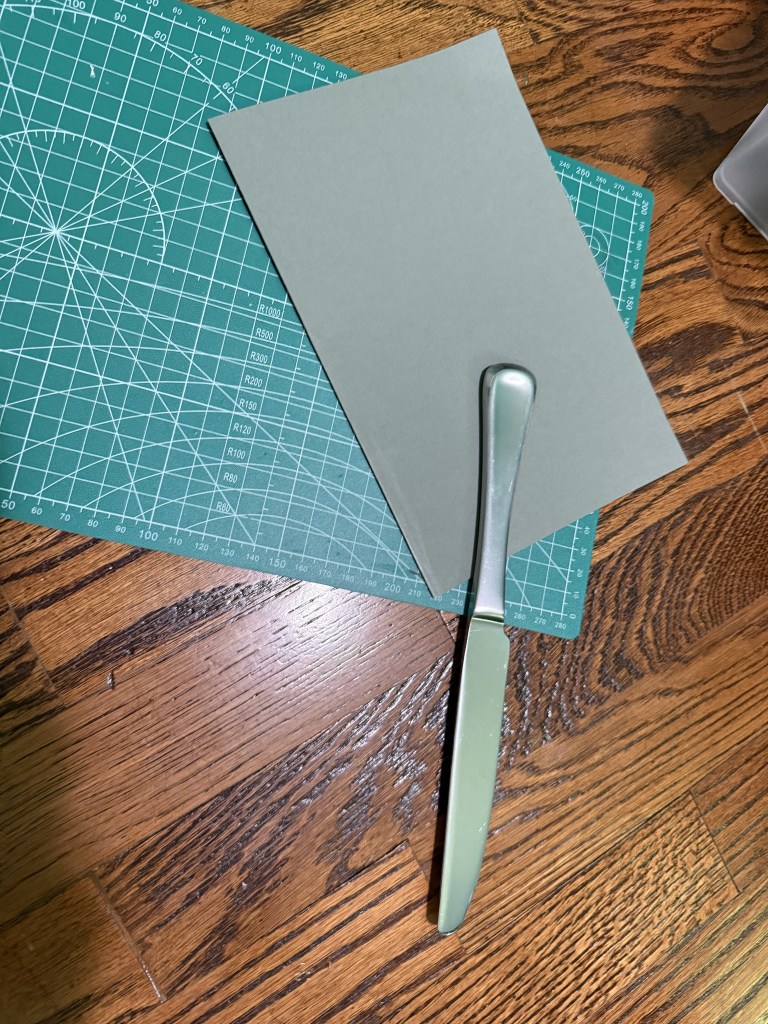
    At that point, I stopped fighting the guillotine and just folded the paper in half before cutting. Not ideal, but I also didn’t expect to need conversions just to cut paper.

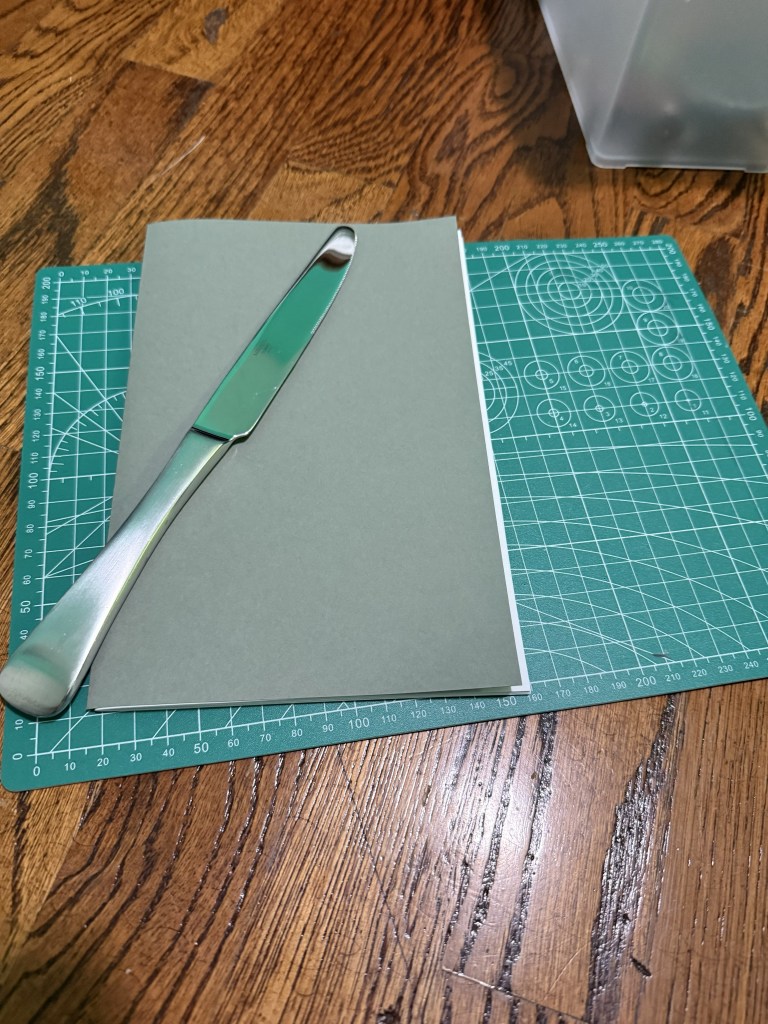
    I had already folded the signatures the night before and left them under a heavy book overnight. I added the freshly cut covers to the stack and briefly decided I wasn’t going to attempt the project at all.

    But then I finished everything else on my list.

    So I tried anyway—while watching my baseball game.

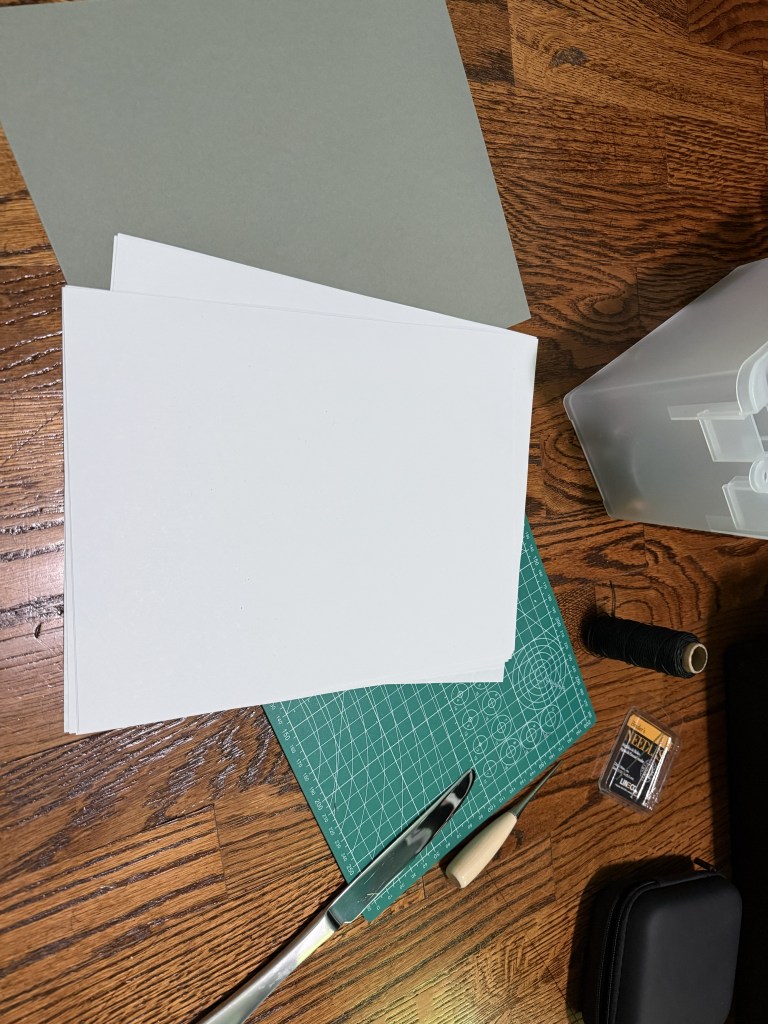
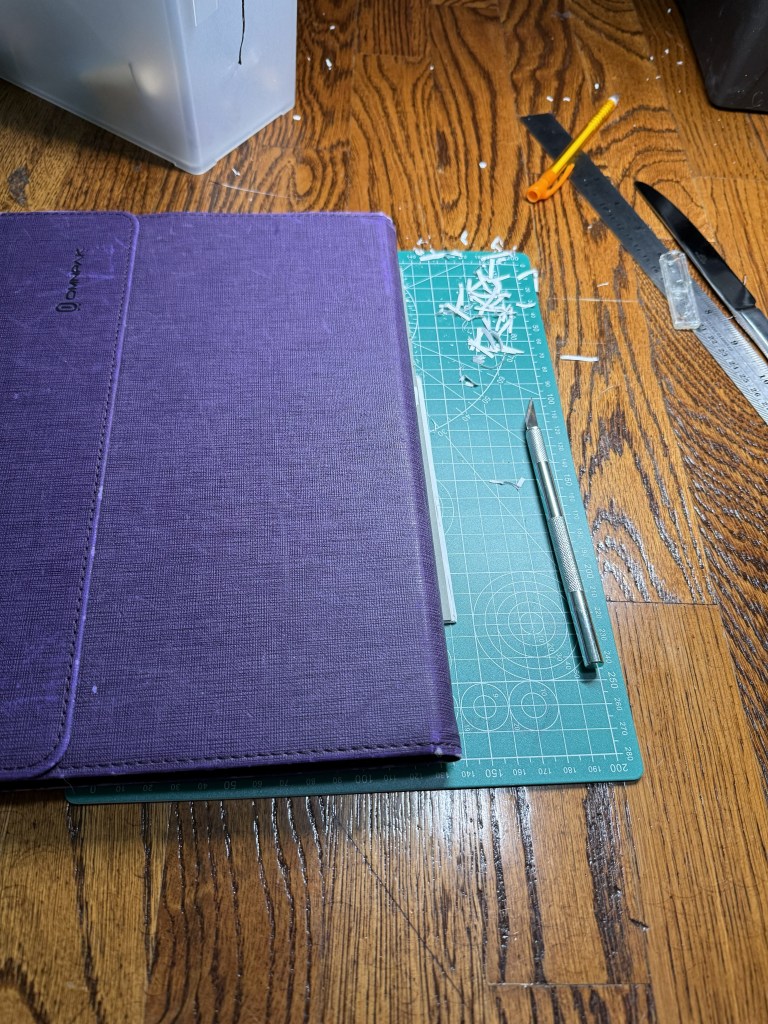
    I gathered what I needed: a pencil, an actual ruler, a cutting mat, my upholstery repair kit, and my bookbinding needles. The thread in the repair kit is waxed, and I figured that would be perfect since it’s strong.

    photo of bookbinding tools
    Bookbinding tools

    Spoiler: it was not perfect.

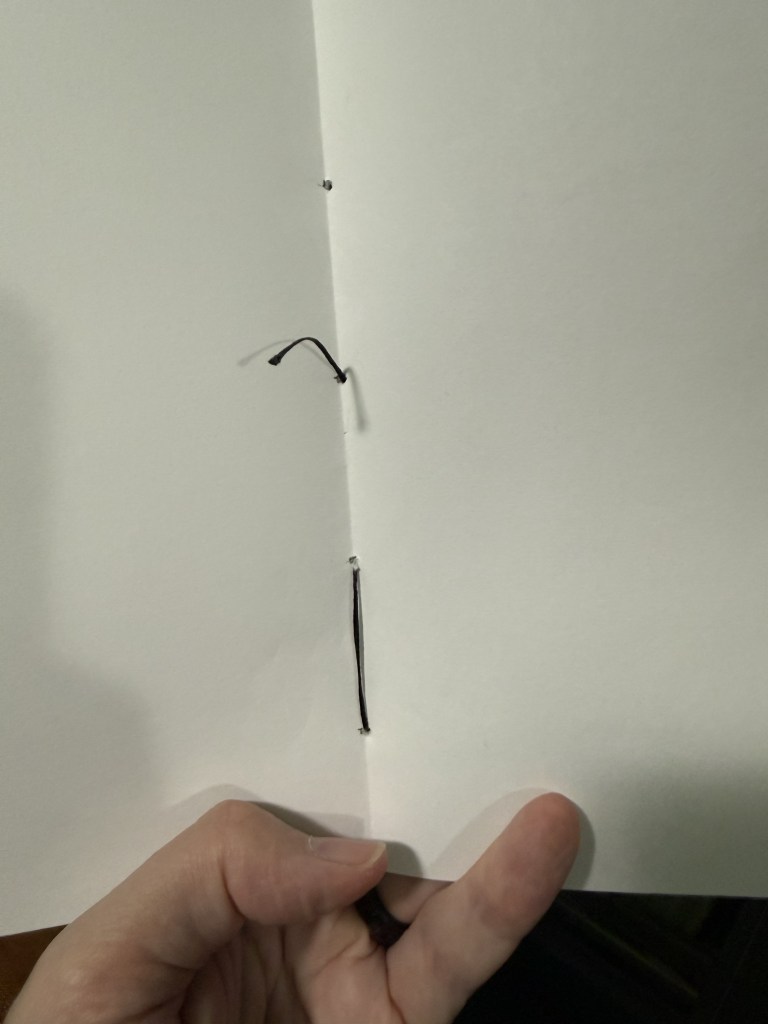
    I couldn’t get the stitching tight enough, and when I tried to force it, one of the holes in the cover ripped. At that point, I committed to the chaos—this was officially a prototype.

    Then I learned that your thread needs to be long enough for the entire notebook, not one piece per signature. So I had to add more thread partway through. It’s visible if you look for it, but honestly… not terrible.

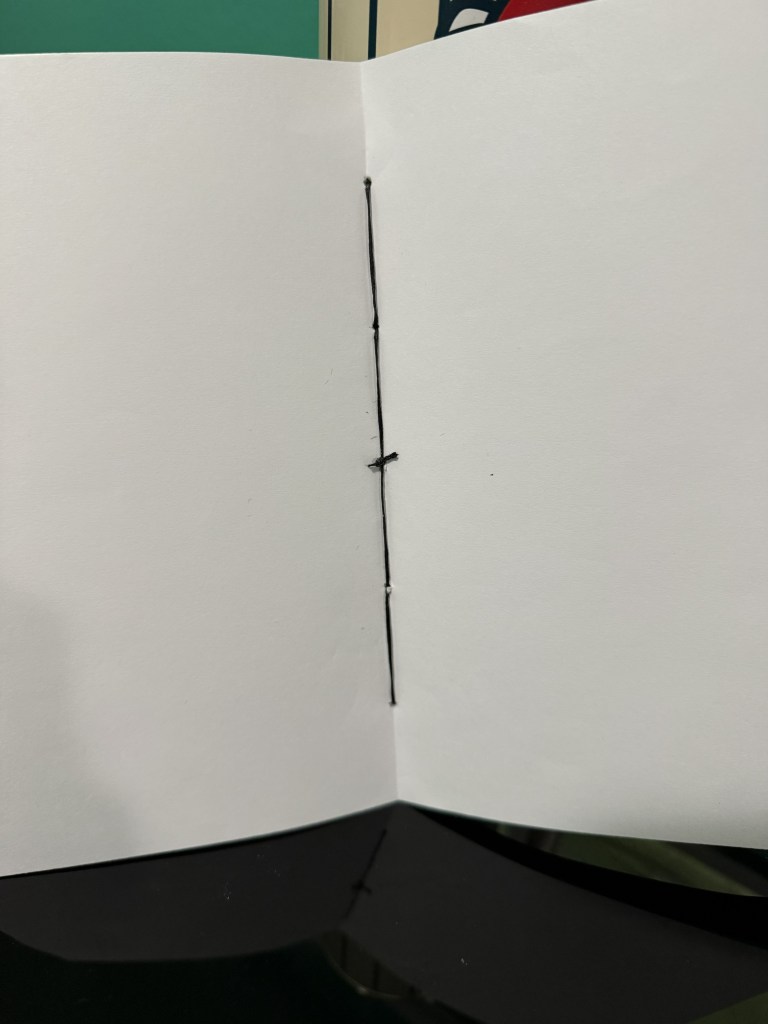
    By the time I finished and attached the cover, I had a notebook that definitely lays flat—but also has noticeable gaps between the signatures because of the loose tension.

    Trade-offs.

    notebook is laying flat and showing a gap between signatures due to the loose stitching
    Lays flat but thread is too loose

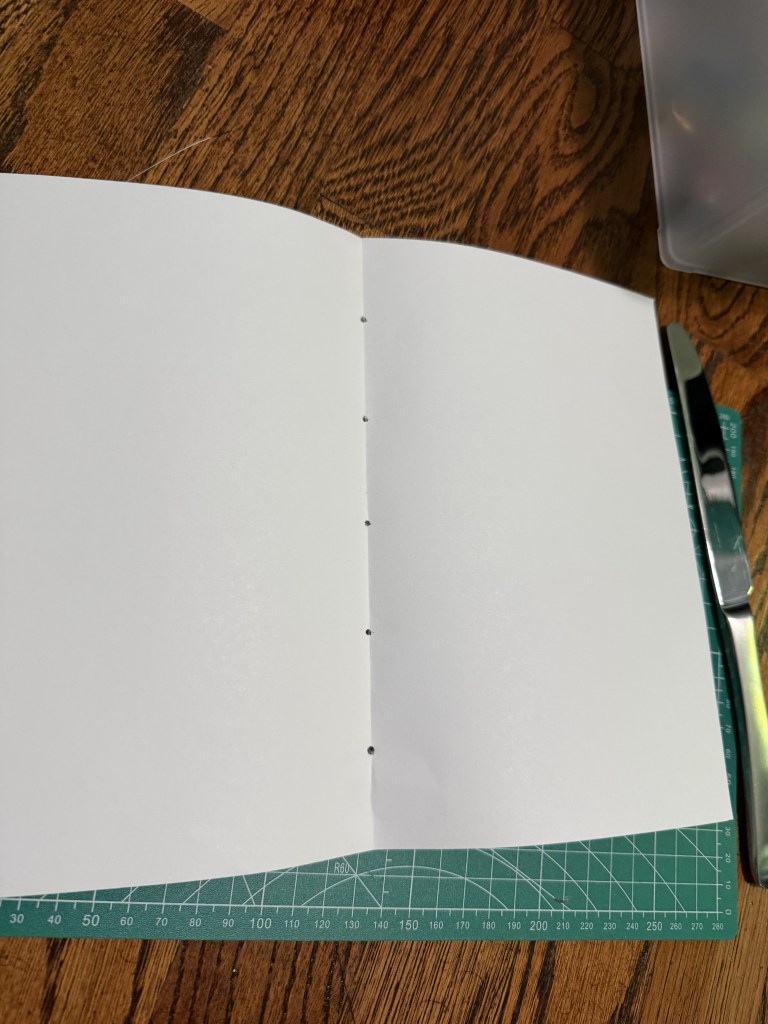
    Afterward, I made a template for poking holes in the covers and signatures, which actually turned out well. I used the awl from my upholstery kit for this.

    (Important note: DO THIS ON A CUTTING MAT or your hardwood floors will reject you forever. I, for once, made the correct life choice and used the cutting mat.)

    template to poke holes in the notebook covers and paper signatures
    Hole template

    What I learned:

    • Don’t use waxed thread on 92 lb cardstock and regular printer paper
    • Don’t trust a guillotine ruler to measure anything accurately
    • Don’t pull too hard unless you want your cover to fight back

    And finally… don’t be too hard on yourself.

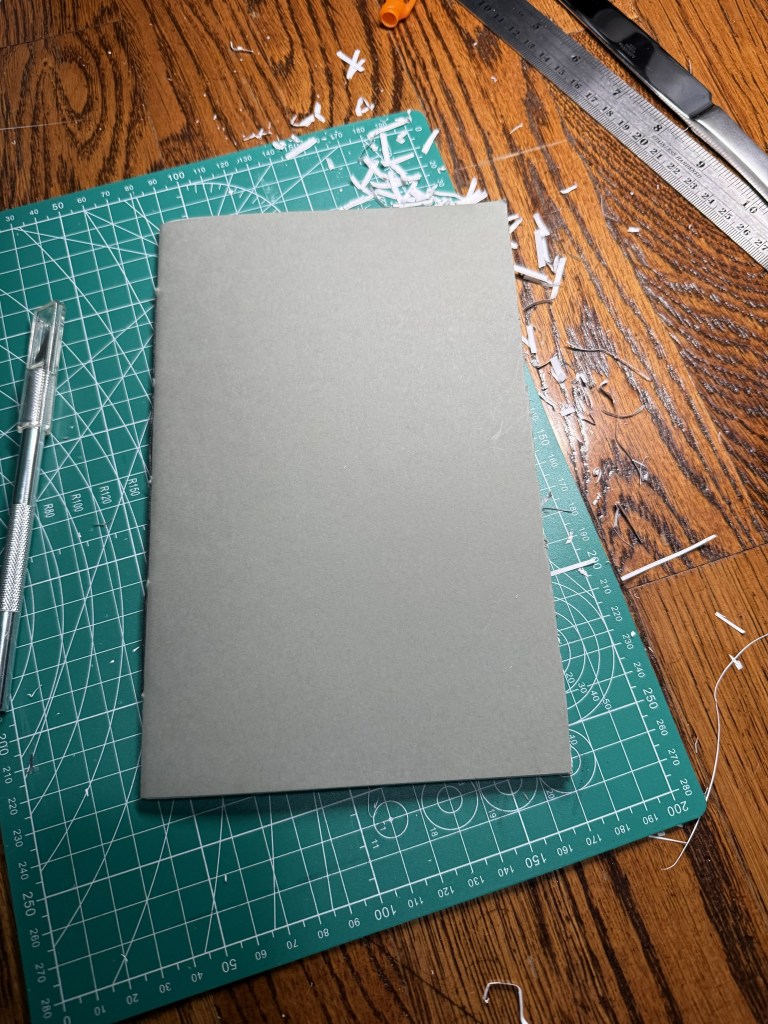
    It’s a prototype.

    picture of the finished prototype
    Finished prototype

  • Why Duolingo Frustrates Me as a Grammar Learner and Why I Still Think it Helps

    Why Duolingo Frustrates Me as a Grammar Learner and Why I Still Think it Helps

    I have an aptitude for languages, but I’ve always struggled with how they’re taught. Most resources either focus on memorizing phrases or bury you in grammar explanations before you can actually use anything. Duolingo sits somewhere in the middle – it gives you enough exposure to start seeing patterns, but not enough explanation to confirm what you’re noticing.

    That’s where the frustration starts.

    I’ll recognize a structure, test it across a few sentences, and start forming a rule in my head. Instead of confirming it, Duolingo just moves onto the next exercise. The hints are often too simplified or even wrong, which makes it worse – I’m not just confused, I’m second-guessing something I already noticed.

    And yet, I keep using it.

    One of the other methods I use for learning languages is listening to podcasts in that language, like something from NRK (Norwegian news and whatnot). Because of Duolingo, I have picked up on vocabulary that I normally wouldn’t have learned in a textbook until much later in my studies. So it does have its purpose. I wish you could take yourself out of the “league” competitions, since I don’t treat it as a game, but you have to have a public profile to have friends; that’s a nice feature because you can root each other on. However, I can do without Eddy yelling YOU’RE READY FOR HARD MODE WOOOOOOOO but it’s a minor inconvenience in the grand scheme of things.

    When learning a new language, you have to use multiple sources. You cannot depend on one particular app/book/whatever to get you to any kind of fluency. Speaking to a native is the best way to achieve your goals, but it can be hard to find a native speaker. If that is the case for you, just read out loud. Practice simple conversations with yourself so your mouth “remembers” what shape to form when you speak. The other day, I had a conversation in my head where I taught someone the French “-er” verb endings in Norwegian. Fun exercise!

    Duolingo isn’t perfect. The hints are questionable, the grammar is mostly implied, and Eddy is still yelling at me. But it’s useful in ways I didn’t expect – it gives me just enough input to start figuring things out for myself.

    And maybe that’s the point.

    It’s not the whole system. It’s just one part of it. And as long as I remember that, I’ll probably keep using it – whether I’m ready for hard mode or not.

  • My Garden System is Getting More Sophisticated (What’s Working)

    My Garden System is Getting More Sophisticated (What’s Working)

    in progress garden with no growth yet

    The garden overview photo was taken as I began this three-hour tour.

    On the left side is a cover crop of clover that I definitely did not plant. That is supposed to be a row of greens, but unfortunately nothing has grown enough for me to distinguish between actual food and the three-leaf version of a leprechaun’s dream.

    layout of garden with numbered beds and location of plants

    Why Everything Is Numbered

    I have a tendency not to plan things out, which becomes problematic when trying to grow food and medicinal herbs.

    So everything is divided into numbered beds. What you don’t see is why they were placed where they were.

    The bottom half is all herbs:

    • #1 loves water
    • #2 likes a moderate amount
    • #3 prefers it drier, grows taller, and would otherwise shade the others

    The rest is organized by nutrition, water needs, and companion planting.

    planting dates for 2026

    My Planting Spreadsheet

    This spreadsheet tracks:

    • frost dates
    • indoor starts
    • transfer dates
    • direct sow timing

    I had to start marking completed tasks with little stars because apparently I cannot be trusted to remember what I already did.

    Eventually I’ll rewrite it in fountain pen like the rest of the commonplace book, but growing actual food takes priority.

    journal with drawings of medicinal herbs and their uses

    The Commonplace Book

    This idea sprouted (yes, I did that intentionally) from a terrible mistake last year: I didn’t know what any of the herbs looked like beyond the seed packet photos.

    So I started drawing the herbs and writing what they’re useful for.

    I’m doing something similar with vegetables, but without pictures. If I can’t recognize a tomato by now, I clearly have other issues that need immediate attention.

    Also, I’m not sure why I decided to write my capital A’s like that. I appear to be passing notes in 7th grade English.

    3 types of tomato starts

    Starts Actually Worked This Year

    Last year my starts failed because I made too many mistakes to recover from and ended up buying starts.

    This year they germinated.

    I’d like that entered into the record.

    tomato cages repurposed for zucchini and cucumbers

    Improved Trellises

    I still haven’t built proper trellises because I refused to ruin my cozy “don’t leave the house” weekend by going to the home improvement store.

    Instead:

    • I flipped two tomato cages upside down and secured them to fence posts for cucumbers
    • I used another tomato cage for pole beans, buried to the first ring

    Elegant? No.

    Functional? We’ll find out.

    similar picture with the tomato cages but includes my cute dog

    Bonus Content

    This photo is similar to the previous one, but I believe everyone deserves to see my good boy.

  • How I Found My Family Tartan

    How I Found My Family Tartan

    A few years ago, I did the DNA thing that Ancestry.com offers. It came with a three month free trial, so I spent that time getting as much information as I could, going back as far as I could. My DNA results indicate that I have quite a bit of Scottish ancestry, so I dug into it some more, and found out that I am related to the Grays, dating back to the 15th century. I was so excited, I bought a clan pin to go with my earasaid (which I still haven’t worn…it is more difficult than I thought to put it on, mainly due to the space needed to lay out the fabric).

    I had been watching Outlander during this time, which got me excited about my heritage even more. I started researching traditional recipes and how to make them vegan. I have only tried a couple of them so far, but they have turned out well. I am learning to crochet (though I know they are knitted in the show) so I can reproduce Claire’s shawls, fingerless gloves, etc.

    Ultimately, I’d like to write a dissertation, but right now, I am still in the research phase. But during this journey, I’d like to document the things that I do, from crafting to gardening to cooking. And since I am vegan, everything will be done without using animal products (except maybe honey…I am a “beegan”).

    Also, I work slowly, so I imagine I won’t be updating this every day. Sorry.

    tartan of Clan Gray
  • A Weekend of Making Things (Bookbinding and Crafts)

    A Weekend of Making Things (Bookbinding and Crafts)

    Some weekends are for errands. Some are for recovery.

    This one feels like a weekend for making things.

    I’ll be in the garden, watching baseball, and practicing bookbinding with simple materials.

    Nothing glamorous—just the satisfying work of learning by doing.

    I ordered cardstock that should arrive tomorrow, and I plan to try Coptic binding for the first time. With luck, I’ll end the weekend with a notebook worthy of gifting to a friend. Realistically, it may take a few attempts—but who’s counting?

    I chose black cardstock along with a few shades of gray. Even if the work is simple, it suits my minimalist nature.

    There is plenty of gardening to do as well, assuming the weather cooperates. Some starts may be ready for larger containers, which feels like a small victory after I had to replant several when my cat decided to have a snack.

    Weeding is inevitable. So far, nothing I direct-sowed has germinated enough to distinguish itself confidently from the weeds.

    Baseball is inevitable too.

    If I can’t watch, I’ll listen while working outside. If I can watch, I can bind books at the same time. Either way, the game will be part of the weekend rhythm.

    And after baseball?

    Obviously, one turns to a Doctor Who binge.

    close up of a baseball laying next to home plate
  • I Don’t Need Form – I Need Function (Planner Setup)

    I Don’t Need Form – I Need Function (Planner Setup)

    When I first wrote about my commonplace book, it was mostly a place to gather notes and ideas. Since then, it has become something much more useful: part reference library, part creative workshop, and part record of what I’m learning now.

    Like most good tools, it changed as I changed.

    Commonplace books are often used to collect interesting information across many subjects. In my case, that has turned into several notebooks for several passions.

    I have one dedicated to Highland culture, where I once half-seriously decided I should write a dissertation. I have another for Torah study and Jewish learning. I even bought matching notebooks for continuity and built a reusable Traveler’s Notebook-style hardcover, which I turned into a replica of River Song’s diary from Doctor Who.

    My gardening notebook is one of the most practical. I drew the herbs I planted for easy identification, gave each herb and vegetable its own page with planting instructions and uses, and sketched a not-to-scale map of the garden with beds organized by water needs, height, and invasiveness.

    All of this eventually led me to planners.

    When I first discovered bullet journaling, planners, and sticker culture, I fell down the rabbit hole and bought far too much. Eventually I realized I am simply too minimalist for that world.

    I tried the much-loved Hobonichi Cousin. It had many good features, but the pages felt too busy and included sections I knew I would never use. I looked at other planners and couldn’t justify paying premium prices for branding.

    Then I found Wonderland222: clean, functional, and refreshingly minimal.

    Even so, it still wasn’t exactly what I wanted.

    So now I’m designing my own planner in Scribus. So far I have a daily page template and a calendar spread, but my goal is to arrange monthly, weekly, and daily pages in a way that makes sense to me. I’m also creating a custom baseball tracking section.

    I’ll print it myself, bind it myself, and design the cover myself.

    If it turns out well, I may even make a few for others someday.

    The real lesson in all of this is simple: use what works for you.

    Stickers didn’t work for me. Trend-driven planner culture didn’t work for me. Buying things because everyone else loved them didn’t work for me.

    What did work was learning my own preferences.

    I buy tools I can use for years. I choose quality over clutter. I build systems that support my actual life.

    I don’t need form.

    I need function.

    traveler's notebook-style homemade planner cover
  • I Thought This Was a Highland Blog (What I’m Actually Building)

    I Thought This Was a Highland Blog (What I’m Actually Building)

    Sometimes we begin with one interest and discover it was really a doorway.

    When I first created this site, I imagined it as a place to explore Highland culture, heritage, and plant-based recipes inspired by Scotland. That still matters to me. But over time, curiosity has a way of wandering.

    The deeper I looked into roots and tradition, the more I found myself drawn to gardens, language study, handmade books, seasonal rhythms, and the quiet satisfaction of learning for its own sake.

    So perhaps this was never only a Highland blog.

    Perhaps it was always meant to be a place for roots, research, and everyday beauty.

    Since beginning this endeavor, I’ve branched into many interests that may not seem connected at first glance—but I love finding the threads between them.

    Right now, I’m exploring gardening, canning, Torah study, language learning, baseball stat apps, planners and journals, designing my own planner, and crafting useful paper goods such as reusable notebook covers and hand-bound notebooks. I also enjoy finding creative ways to use what I already own.

    Future projects include learning to knit and experimenting with making fountain pen ink.

    As a neurodivergent person, I’m proud of learning how to nurture many interests at once rather than feeling pressured to choose only one.

    I hope you’ll keep reading and join me in learning along the way.

  • Building a Commonplace Book

    Building a Commonplace Book

    I don’t have any pictures to share yet, but I have been building a commonplace book for this endeavor. I have sections for gardening, recipes, and crafts. I have a separate one for learning Gaelic, so that is not included here. So far, I have a monthly task list for my garden (which I included because those are the ingredients I’ll be using in many of my recipes) and a vegan bannock recipe. One of these days, I will post photos, but right now I am shy about how messy it is. Which shouldn’t be a barrier, but it can take me a while to feel comfortable with that.

    I was going to highlight the sides of the pages in the colors I chose for the sections, but I quickly realized that won’t work if I have, say, one page of garden plans and then one page of recipes, and so on. No one would be able to see the differentiation. I will likely try washi tape next, even though the thought of putting a strip of washi tape on every page sounds tedious. If anyone has any suggestions, I would love to hear them.

    I do struggle with boring pages…there are people out there who are amazing artists and I love that they share that with the rest of us. I do not expect my pages to look like that, but I grow tired of just writing linearly down the page. So with my monthly garden tasks, I at least color-coded the months to break up the monotony. I also drew a couple strands of wheat on the bannock page and included a quote regarding bannocks by Robert Burns. That’s about the best I can come up with right now, but I am happy the pages are more interesting now.

    I’m currently using an Amazon Basics grid notebook. I have TONS of notebooks and I have to use them before I can justify buying more. I find the grids difficult to use though, because they are visually loud, and the substance of my information can get lost. I have decided that the next time I need a notebook, I will buy A5 paper and print out dotted pages. After that, I will bind them. This need became apparent when I was looking for notebooks with more pages; I found many with 50-100 sheets, but I’m looking for 200+ sheets (not pages). I don’t want dozens of books hiding around the house. As it stands, I have a few old planners, an old commonplace book, two black paper journals that I found near impossible to use, several notebooks of certification studying, etc. I don’t mind having a separate notebook for something like a network security certification, but I don’t need four of them to talk about one thing.

    Ugh, I just remembered the 8 brand-new engineering pads I bought before I changed my major to computer science.

    stock photo of an open notebook on a desk with a pen on top
    Creative desk camera notebook by Markus Spiske is licensed under CC-CC0 1.0