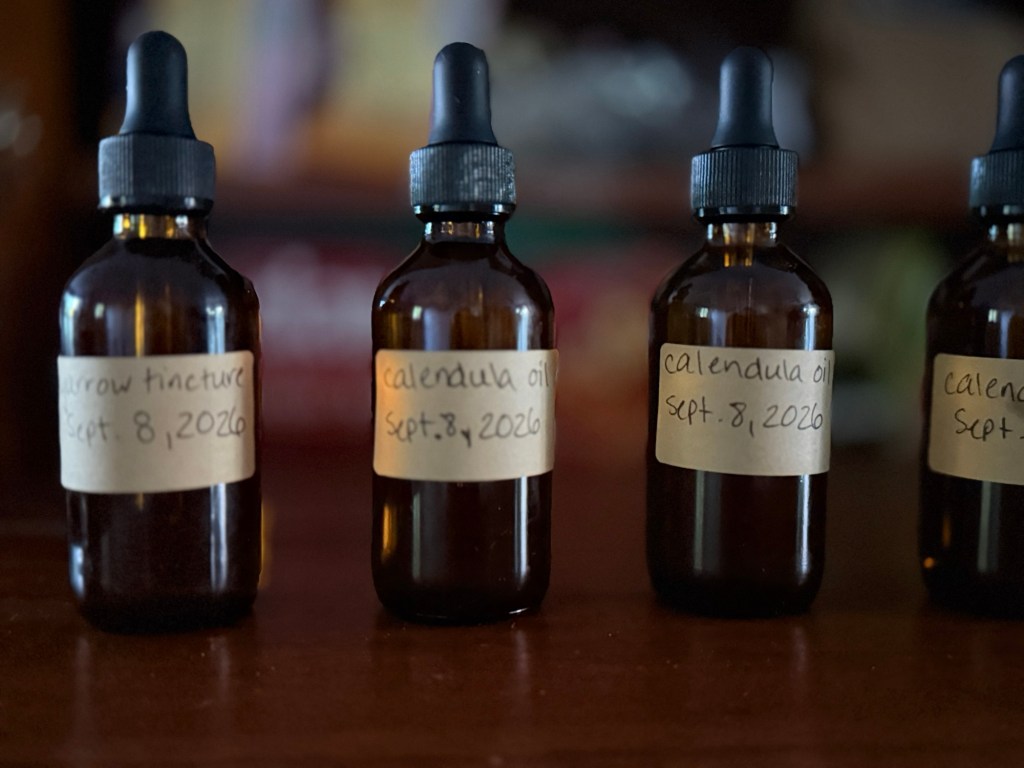
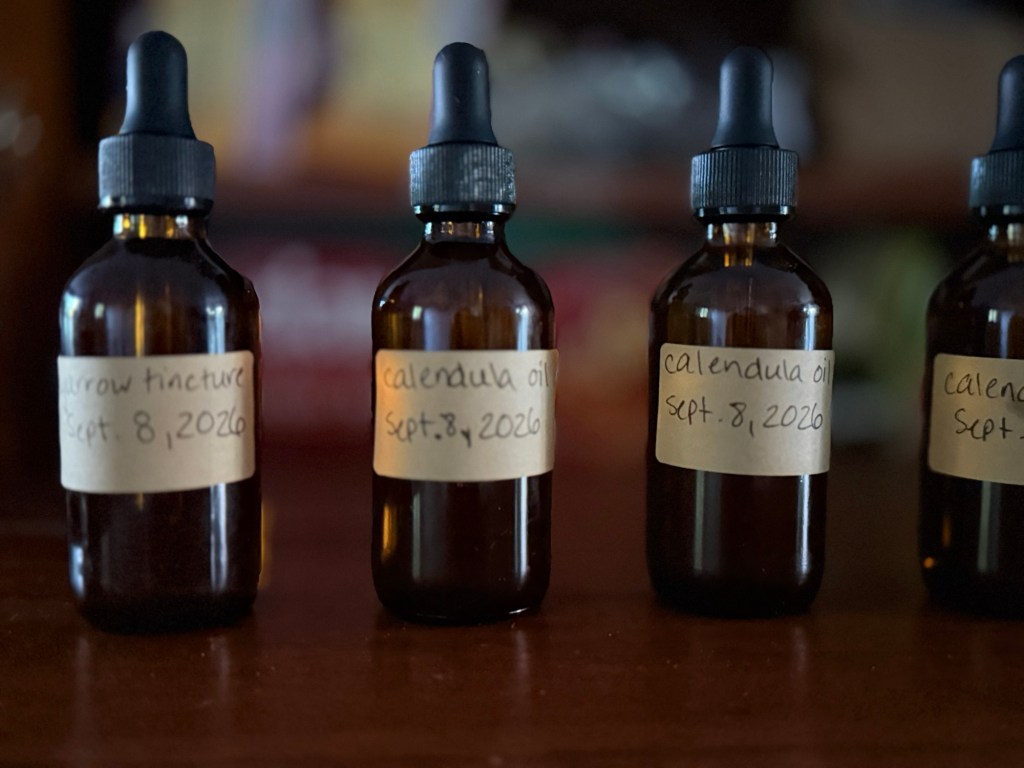
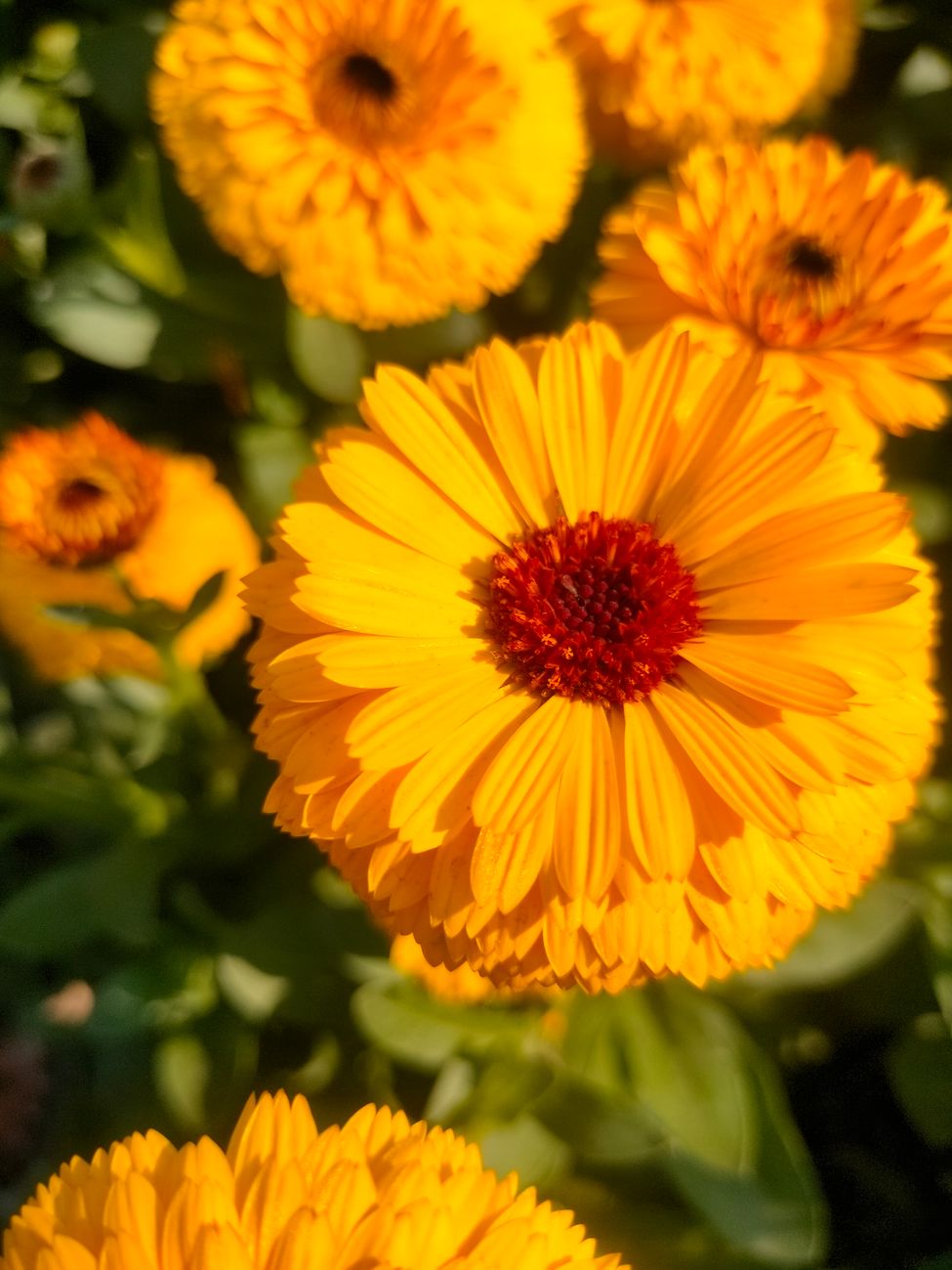
Notice the calendula bottles just keep going right off the photo…
My calendula-infused oil and yarrow tincture are finally finished and in tiny brown dropper bottles. I have been waiting what feels like an eternity and now the waiting is over.
One thing I learned: I don’t need to fill up 3/4 of a pint jar with olive oil. I ended up with four dropper bottles and a massive mess on my kitchen counter.
The yarrow was a lot easier to transfer because I had steeped it in a generic spice jar like you get at a grocery store. A quick pour later and it was settled into its own dropper bottle.
Please don’t take my words as any kind of suggestion, but I’m kind of hoping I get a bug bite or something so I can test these out. Totally normal reaction, right?
At some point, I’d like to turn some of that oil into a salve but right now, I’m just enjoying the row of brown dropper bottles.
*Disclaimer* The evidence for herbal remedies is mixed. I don’t consider my experiments medicine, and they’re definitely not a replacement for actual medical care.
This garden experiment/hobby/passion has shown me that the research never stops.
I thought I had enough information to have a flourishing garden, with a dozen tinctures, infused oils, and teas in the making.
But no.
Right now, I have one oil and about half an ounce of tea. I do have some other herbs drying, and I’ve had much better luck with the culinary herbs, but a lot of my medicinal herbs are looking kind of done for the year.
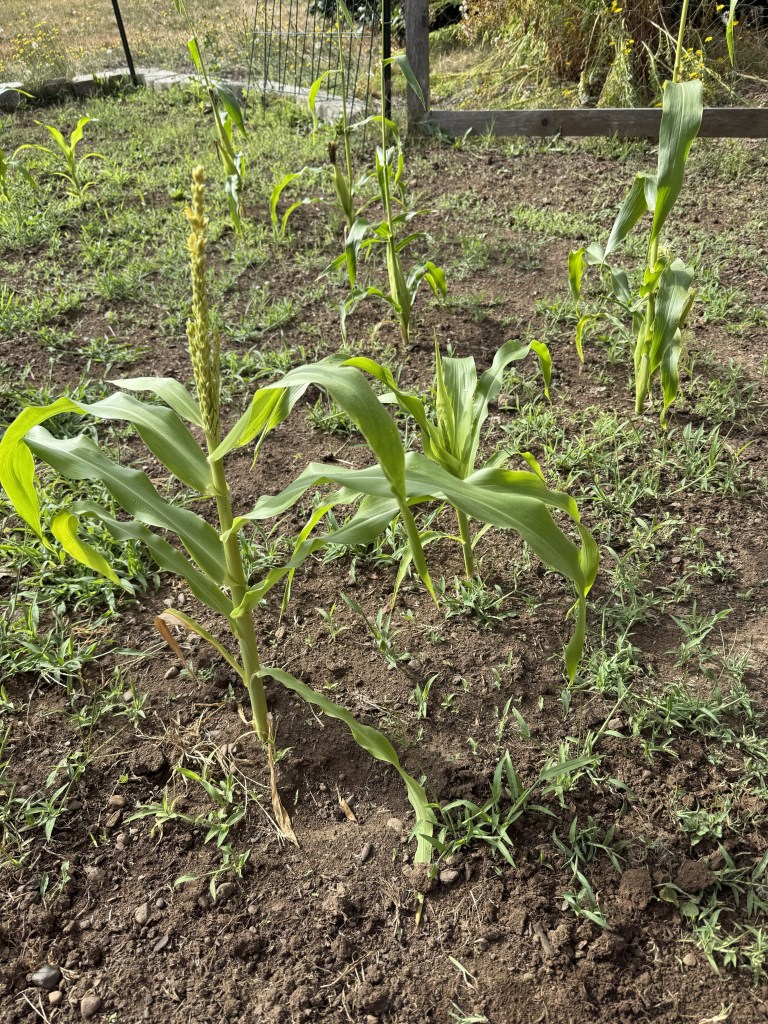
I planted 16 corn seeds, but I messed up the timing. When I measured the soil temperature, it was warm enough, but I failed to wait until after the last frost date. So I have a few small stalks that have produced ears, but the ears are tiny and I probably won’t be able to do anything with them except save the seeds.
I did plant some other corn later as an experiment, and those plants seem to be doing better. There are no ears yet—which is probably a good thing, because the stalks are still pretty short.
The jury is still out on the tomatillos. I have dozens of husks, but so far, no fruit inside. I need to do more research to figure out whether they’re still going to fruit or if I’m just getting a magnificent crop of empty husks this year.
However!
The tomatoes are looking pretty good. I have, I think, 12 plants, and only a couple of them don’t have fruit. The tomatoes are getting pretty big, and about seven of them are starting to turn orange.
So I think that in a week or two, I’ll be asking myself what the heck I am going to do with two dozen tomatoes that ripened at the same time.
And I will not complain about that!
And now it is time for me to log off and continue planning next year’s garden.
The garden compendium was originally meant to be a catch-all. It included medicinal herbs with drawings, uses, and recipes; planting, care, and harvest instructions for all of the herbs and vegetables I planted; a diagram of this year’s layout; a planting calendar; and a journal of what I did, what happened, and how I could fix my mistakes.
That plan hasn’t changed. The notebook will continue into next year, or however long it takes me to fill 300 sheets.
What has changed is everything else.
Originally, I wrote herb recipes on the back of each herb page. It didn’t take long to realize that a tincture is a tincture, my handwriting was getting messier, and my fountain pen was ghosting through onto the drawing on the other side. So the recipes are getting their own section, but only for the preparations I’ve actually made with herbs from my own garden. The herb pages themselves will stay as a high-level overview with drawings and uses.
Then there are the medicinal herbs.
I have become fascinated by them and have been researching them like crazy. That rabbit hole is deep enough to fill 300 sheets all by itself, which wasn’t the original purpose of the compendium. I wanted this notebook to be something I could leave behind someday—a record of the garden that my descendants could flip through and (hopefully) ooh and ahhh over.
So, naturally, I’m making another notebook.
Medicinal herbs deserve one of their own. The subject is practically endless, and if you’ve been reading my blog for any length of time, you’ve probably noticed that I’m incapable of leaving well enough alone.
I’ve also started color-coding the page edges. The notebook only came with two ribbon bookmarks, which isn’t nearly enough anymore. By highlighting the edges of each page based on the section—herbs, vegetables, diagrams, journal entries, and so on—I can find what I’m looking for without even opening the book.
And finally…
I did the one thing I swore I wasn’t going to do.
I started an Excel workbook to track planting and care information for vegetables I haven’t even decided if I’m going to grow yet.
No matter how much research I did before planting my garden (and I’m certainly not finished), there were still plenty of surprises. Some things completely failed, while others did far better than I ever imagined.
I organized my garden into separate beds based on companion planting, water needs, soil type, and a handful of other factors. It definitely created more weeding than I would have liked, but I needed to see what worked and what didn’t.
In some beds, none of it seemed to matter. I planted starts at the right time, paired them with their companion plants, and they promptly died. I direct sowed whatever I could, and sometimes nothing came up at all. I even moved some of those stubborn plants into bins with fresh potting soil. A few are thriving, while others are either refusing to grow or have become an all-you-can-eat buffet for whatever animal keeps digging them up.
Then there are the pleasant surprises.
The borage is so big that I’m honestly not sure what to do with all of it. I’ll keep tossing the flowers into salads, and the rest will probably go to seed. It’s one of the best bee attractors in the garden, though, so it’s earned its place. It also doesn’t hurt that it’s gorgeous.
The calendula is massive. I’m drying flower heads for a future tincture, chamomile for tea, and I have dill coming out of my ears. The lettuce just keeps producing, and the carrots have done far better than I expected.
All that being said, the garden has been a fruitful learning experience. (Fruitful. Get it?)
As the season goes on, I’m no longer fighting the garden. I’m letting it show me what works, what doesn’t, and how I can make next year’s garden even better.
And as the universe is my witness, I will not let the quince from hell win.
One of the things I’ve realized this year is that I don’t really collect hobbies.
From the outside, it probably looks like I bounce from one thing to another. Gardening. Bookbinding. Norwegian. Citation templates. Herbs. Cocktails. Ancient history.
They’re all over the place.
To me, though, they’re all the same hobby.
I like understanding how things work.
The garden has made that clearer than anything else. Before this year, companion planting was something I’d read about. Soil composition was something I’d heard people discuss. Medicinal herbs were mostly names in books.
Now I get to watch it happen.
I’m seeing why one bed dries out faster than another. Why some plants seem happier next to certain neighbors. Which herbs attract pollinators and which ones don’t. Which vegetables struggle through a heat wave while others barely notice. It’s no longer just biology in a textbook. It’s biology happening in my backyard.
That’s probably why my garden is organized the way it is. It isn’t the most efficient layout, and I’ve certainly spent more time weeding because of it. But separating plants by water needs, companion planting, shade, and other variables lets me see what works and what doesn’t. I’m treating the garden as one giant experiment.
The same thing happens with my other projects.
I didn’t start making notebooks because I thought notebooks were too expensive. I started because I wanted to understand how books are made. Every mistake teaches me something, and every notebook gets a little better than the last.
I originally started learning Norwegian because I had a reason to. Somewhere along the way, though, the language became the reward. I enjoy the grammar, I enjoy listening to it, and I was ridiculously proud of myself for using it in Oslo, even if it was only a little.
The citation bundles might be the clearest example of all. I don’t enjoy formatting bibliographies. I enjoy solving problems, and I kept thinking about how much easier graduate school would have been if I’d had something like this on my desk.
Maybe that’s why all of these projects seem connected to me, even if they don’t to anyone else.