One of the things I am most excited about is making paper to add to my shop. For now, I am using scraps straight from the paper shredder until I get better at this.
First, I bought a cheap papermaking kit online. It is A4 size and came with a mold, a deckle, couch sheets, a couple of loose screens, and a small sponge.
The mold has a fine mesh that catches the paper fibers from the water slurry. The deckle is a frame without a screen that helps define the size and edges of the paper. The loose screen can be placed between the mold and deckle to support the wet pulp and allow water to drain. The couch sheets are used to transfer the wet paper and absorb moisture, while the little sponge helps remove even more water before the paper is laid out to dry.
The first thing you need to do is soak your scraps. Having a paper shredder is very handy here; otherwise, you have to tear everything up by hand. Put however much paper you want to use into a container, then add enough water to completely cover it.
Let the scraps soak for a few hours to make sure they are soft. I soaked mine overnight so I wouldn’t have to worry about whether they were ready.
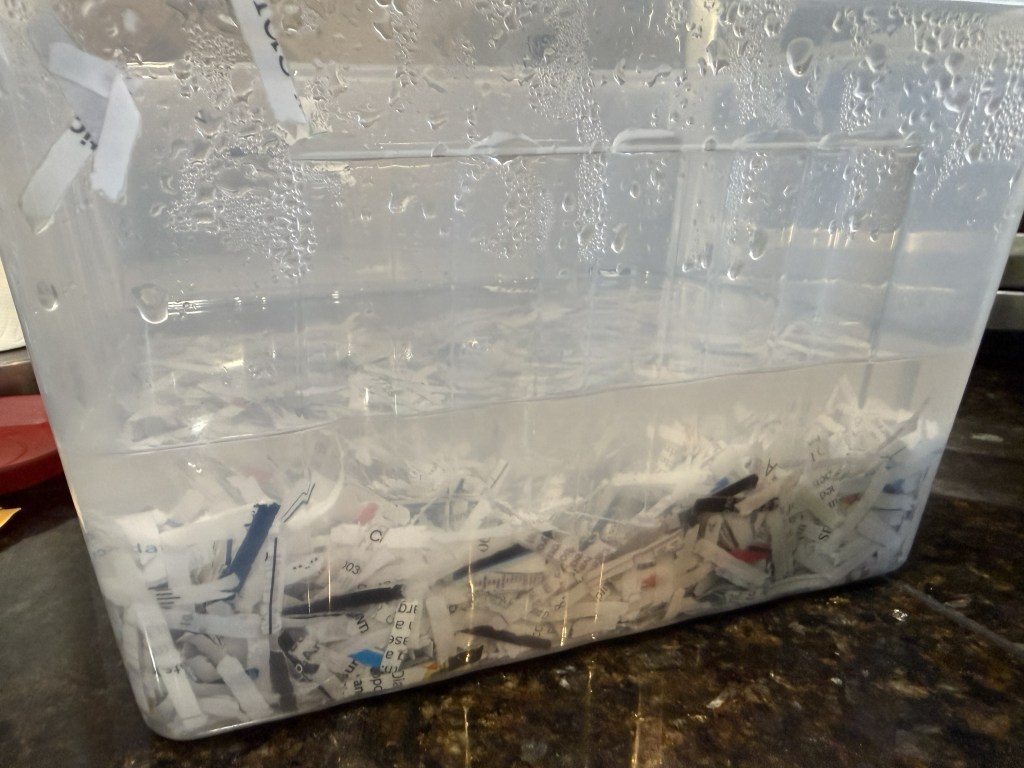
Once you feel the paper has soaked enough, it is time to turn it into pulp. I had a blender we weren’t using anymore, and using a blender is by far the easiest way to do this. Other suggestions I came across included using a potato masher or even a mallet.
Put a small amount of the soaked paper into your blender and add water until the blender is about three-quarters full. I recommend using a small amount of paper at a time so you don’t gum up the blades.
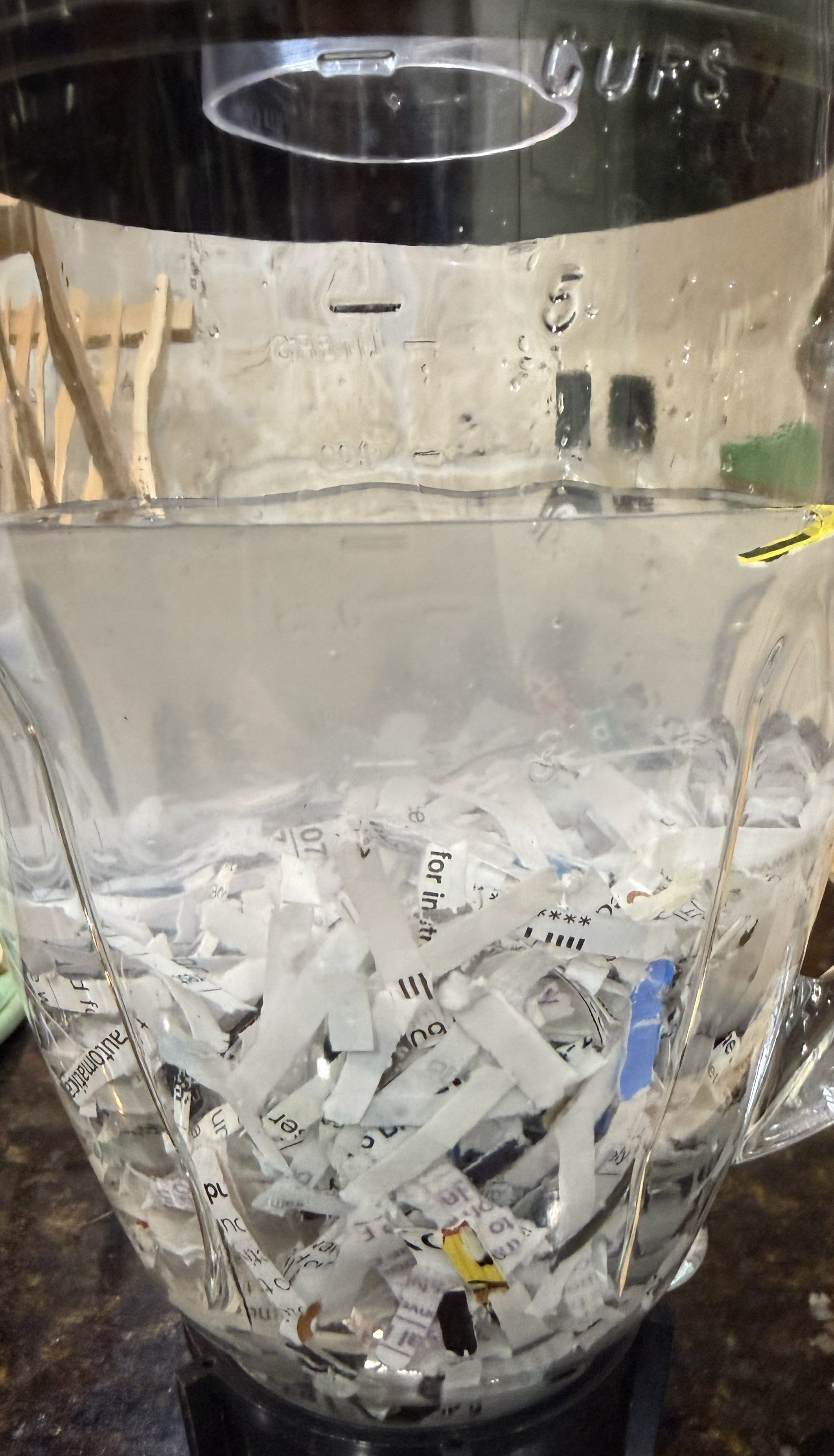
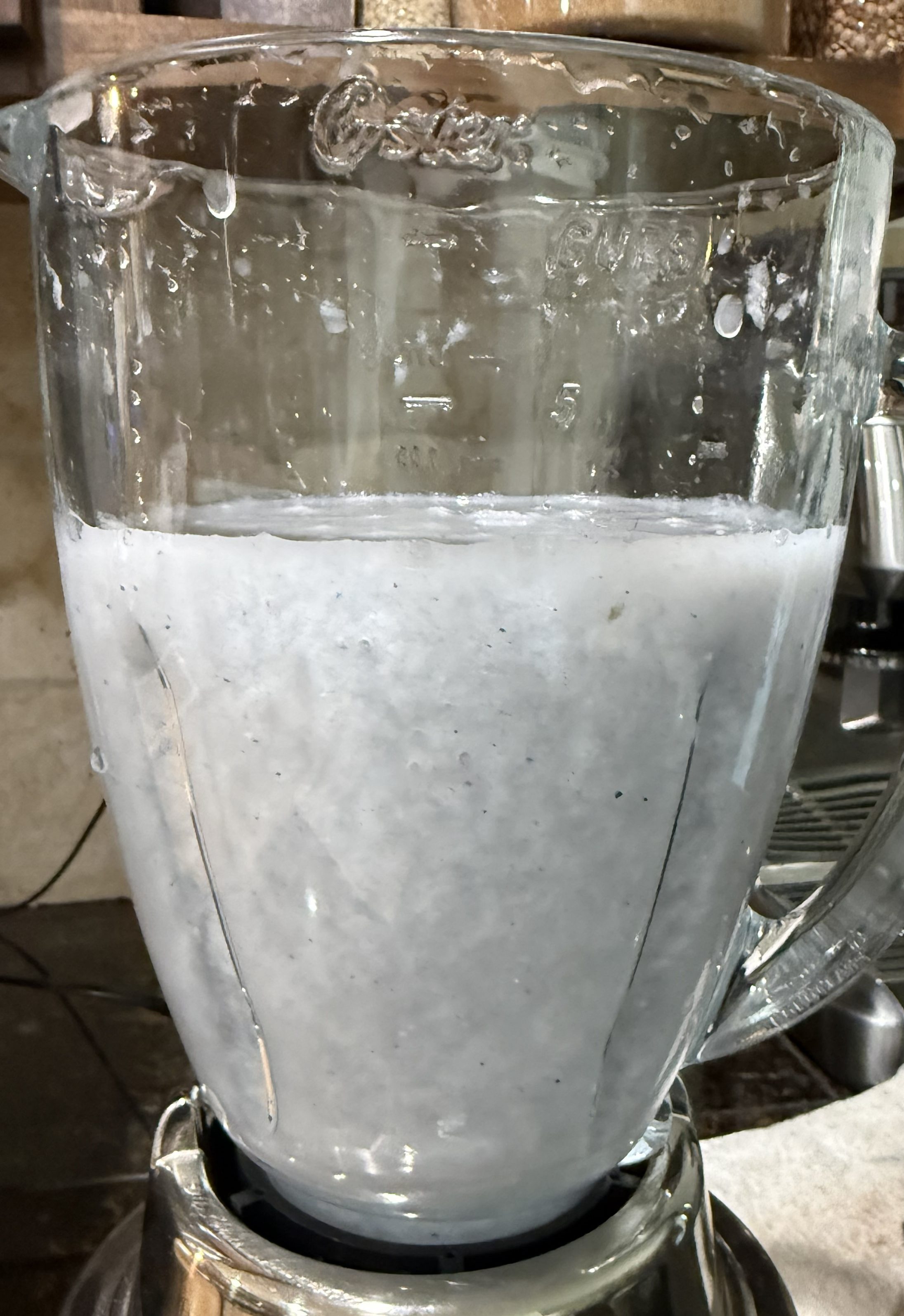
I set the blender at its lowest speed and pulsed it for about 30 seconds. You want the finished pulp to look kind of like oatmeal.
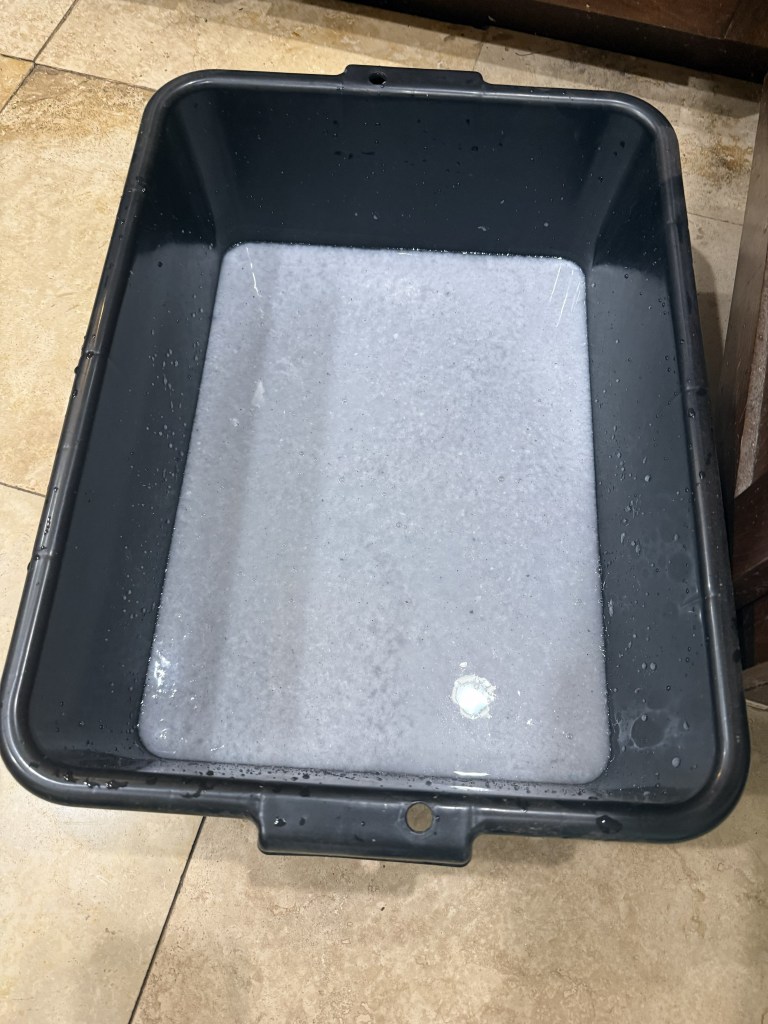
I had an empty dish bin that I decided to use as my papermaking vat. This turned out to be a little too small, but I made it work. As I blended each batch of pulp, I dumped it into the bin. Once all the scraps had been turned into pulp, I was finally ready to try making an actual sheet of paper.
The ChatGPT instructions had me put the deckle over the mold, then scoop the whole thing through the slurry. This leaves what will eventually become a piece of paper sitting on the mold. You can shake it gently from side to side, almost like you’re mining for gold, to distribute the pulp evenly.
I was a bit too heavy-handed with this part and had to do it multiple times before I managed to get the pulp to cover the entire mold.
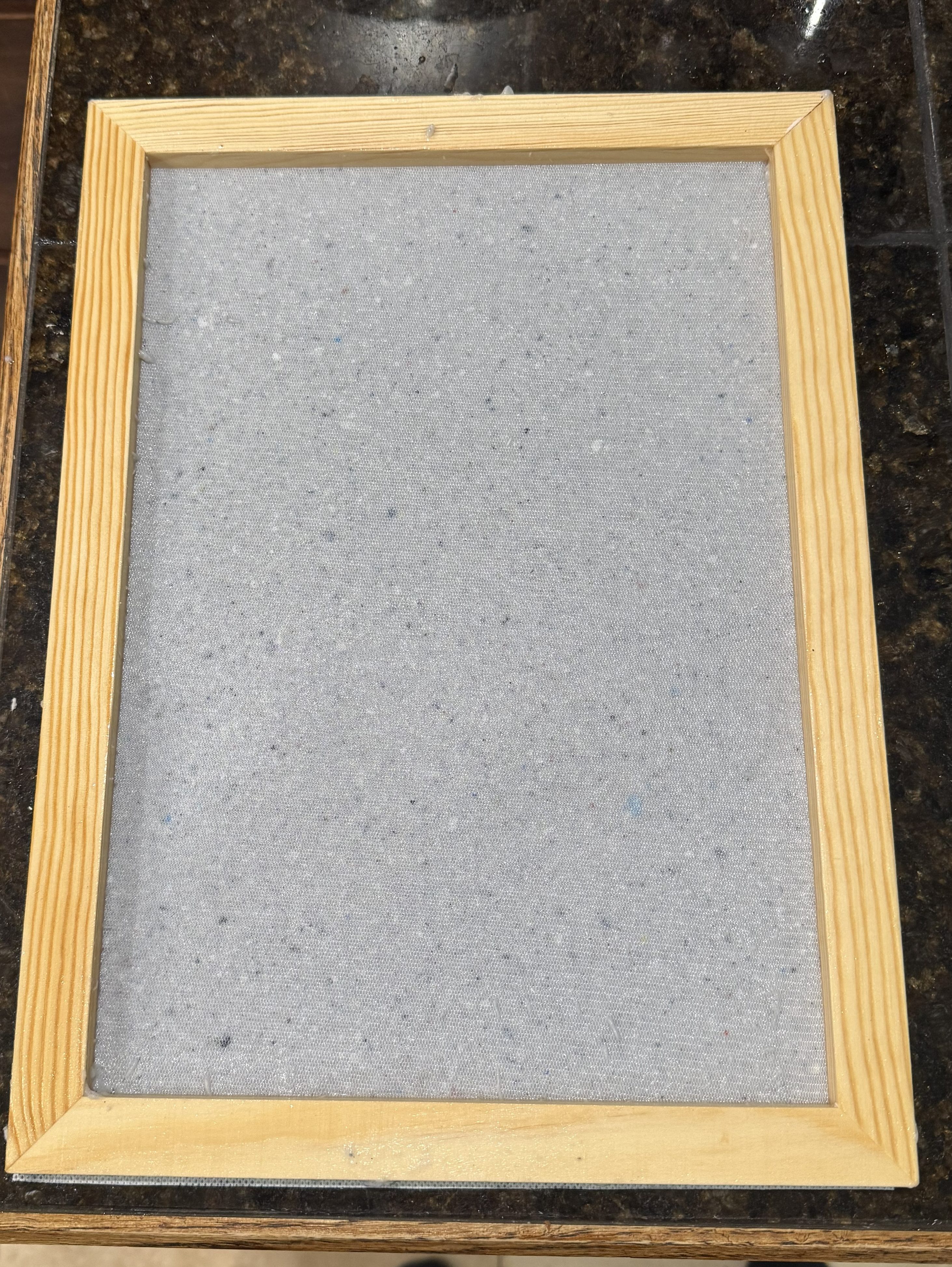
Once I finally had a decent sheet, I set the mold on the edge of the bin until the water slowed from flowing to dripping. Then I laid a couch sheet on top and flipped the whole thing over so the couch sheet was against the counter. I gently used the sponge to remove as much additional water as I could.
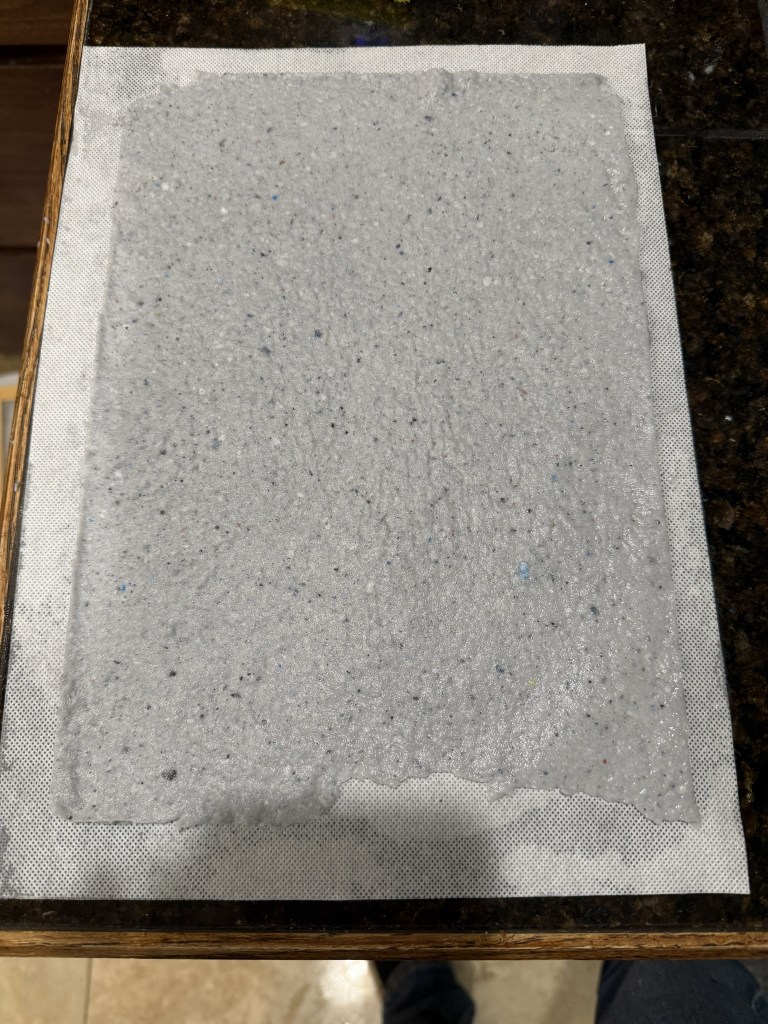
These instructions had me put one of the loose screens between the mold and deckle, but otherwise the scooping process was basically the same.
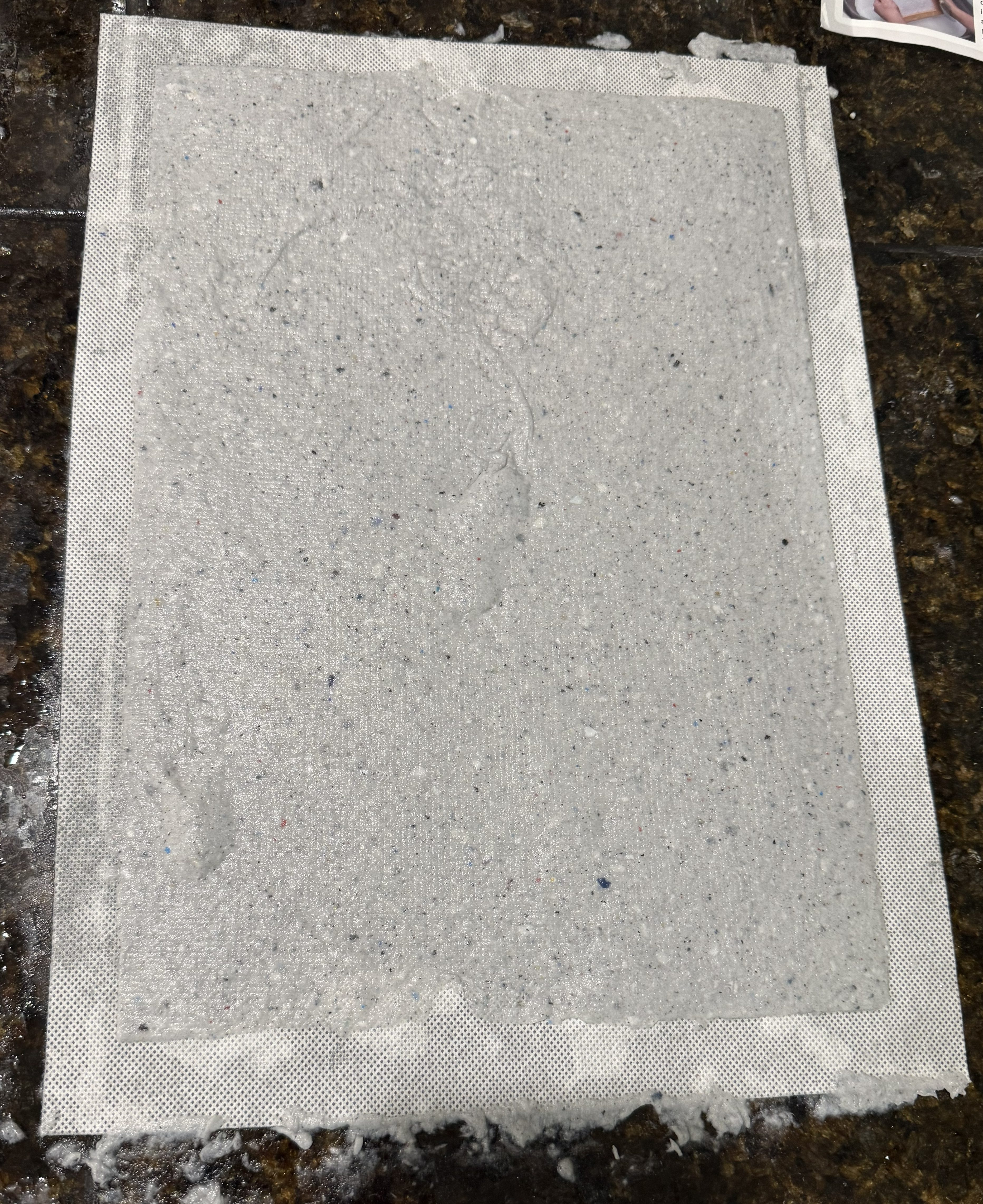
As you can see, that attempt left a bubble in the middle.
Silly me, I decided I could fix it with my finger.
I could not.
Instead of a bubble, I now had a hole.
I grabbed some pulp that was stuck to the frame, filled the hole back in, and pressed it down. You’ll see the results of that little repair later…
I took both sheets, still attached to their couch sheets, outside to dry. Unfortunately, it was a bit windy. Once everything started drying, I heard, “Hey, something just flew away outside.”
Luckily, I had set up a wind block, so the paper didn’t get far.
It was, however, definitely not flat anymore.
I brought both sheets back inside and laid them under some books to finish flattening.
So…here is the final result:
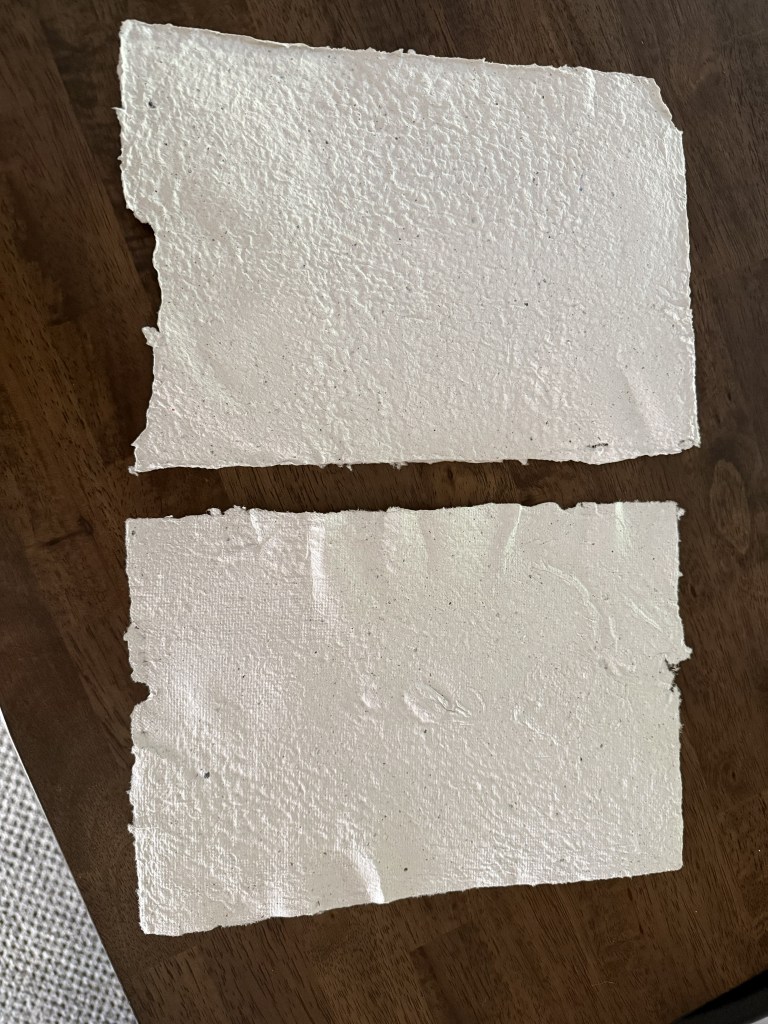
Overall, I am really pleased with how this turned out—especially for my first attempt. Neither sheet is perfect, but that’s part of why I wanted to start with shredded scrap paper instead of anything special.
Now that I know I can actually make paper, I can’t wait to try again with some of the other paper I have lying around!

