Tag: bookbinding

  • Another Coptic Attempt and Some Naughty Words

    Another Coptic Attempt and Some Naughty Words

    I don’t know what it is this week, but everything I’ve tried for the second time seems to have been far more difficult than the first.

    I managed a row of single crochet for the first time, then immediately discovered I was incapable of doing it again. And this notebook…

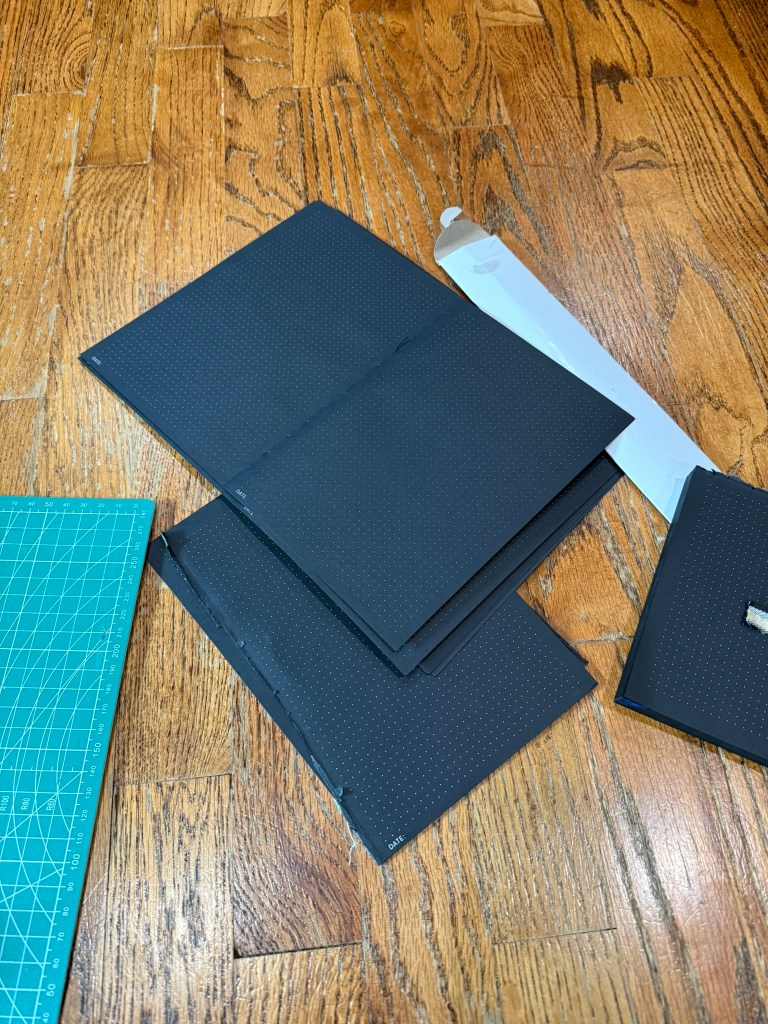
    When I made my River Song planner cover, I removed the paper block completely intact—glue, stitching, and all. Naturally, this led me to think, “Why not make a tiny, tiny A6 Coptic notebook?”

    I already knew black paper behaves more like cardstock than regular paper, so I planned accordingly: four signatures, two sheets per signature, plus some black cardstock I already had set aside for the covers.

    First, either the cardstock I bought is too heavy, or someone on the internet lied to me about how well it would work.

    Second, my bookbinding needles are apparently designed for projects much larger than a delicate little A6 notebook.

    Third, my only thread option was from an upholstery repair kit that, for reasons known only to the manufacturer, included regular sewing thread. That was probably a blessing for a notebook this small, but it’s definitely not going to hold up for anything larger or thicker.

    By the time I finished, I had used several words I wouldn’t say in front of my mother.

    The upside of making such a tiny notebook is that it’s difficult to see the sewing details. Since I don’t think my stitching was particularly impressive, that’s probably for the best.

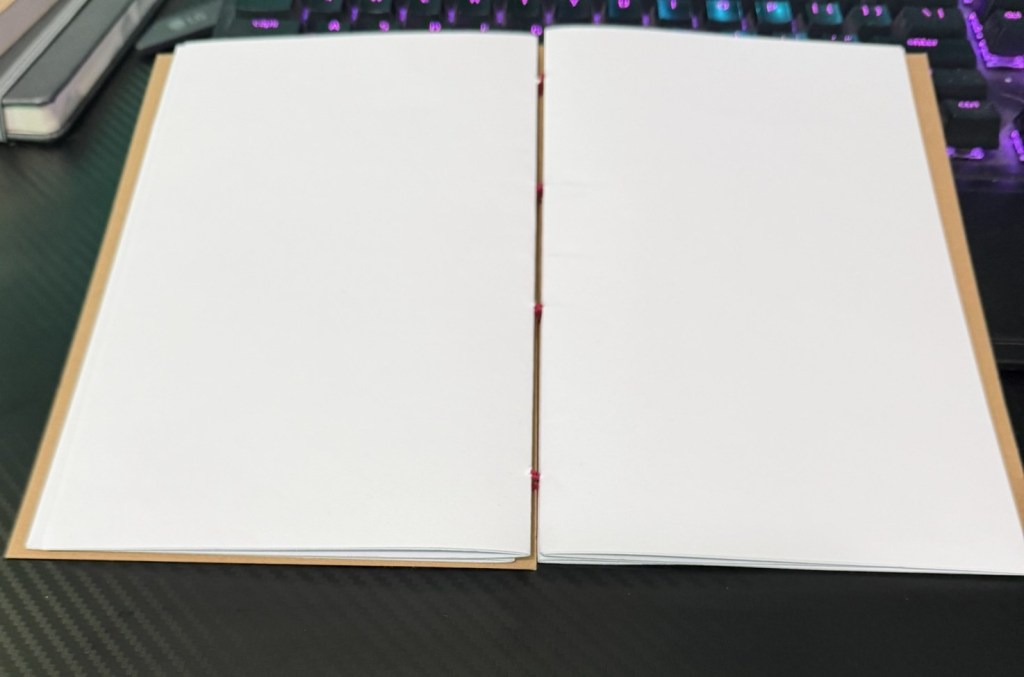
    But hey—once again, it lays flat.

    At this point, I’m beginning to think that’s becoming my signature accomplishment.

    Get it? Signature?

    pages torn from a different notebook
    Pages repurposed from a different notebook.
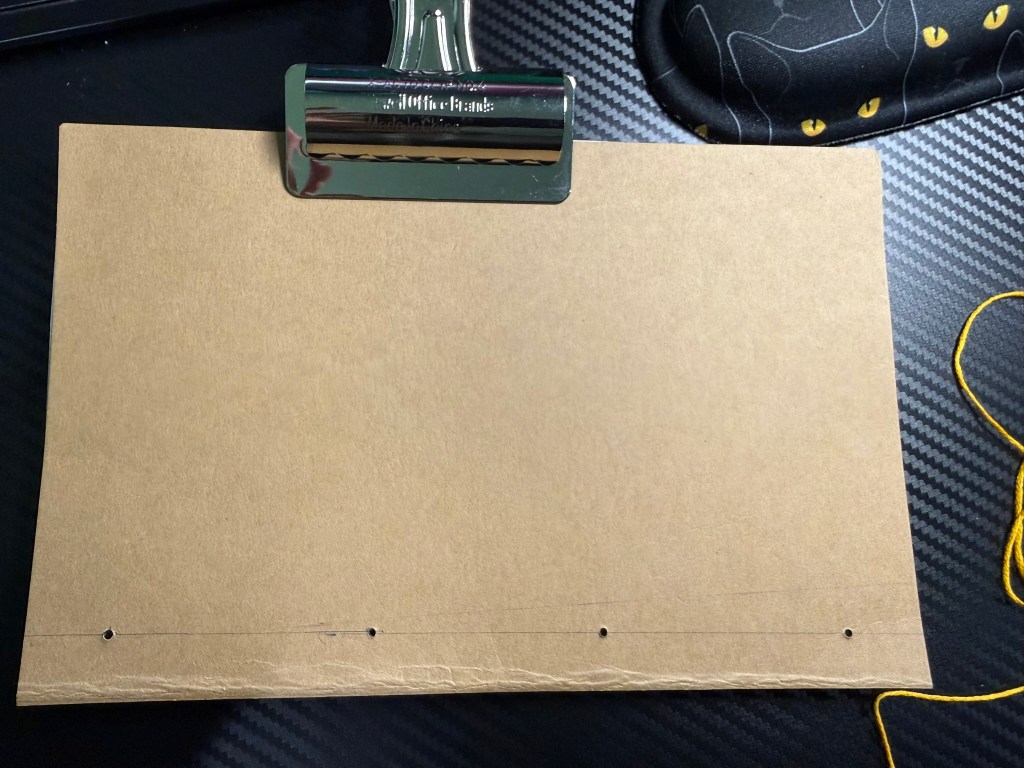
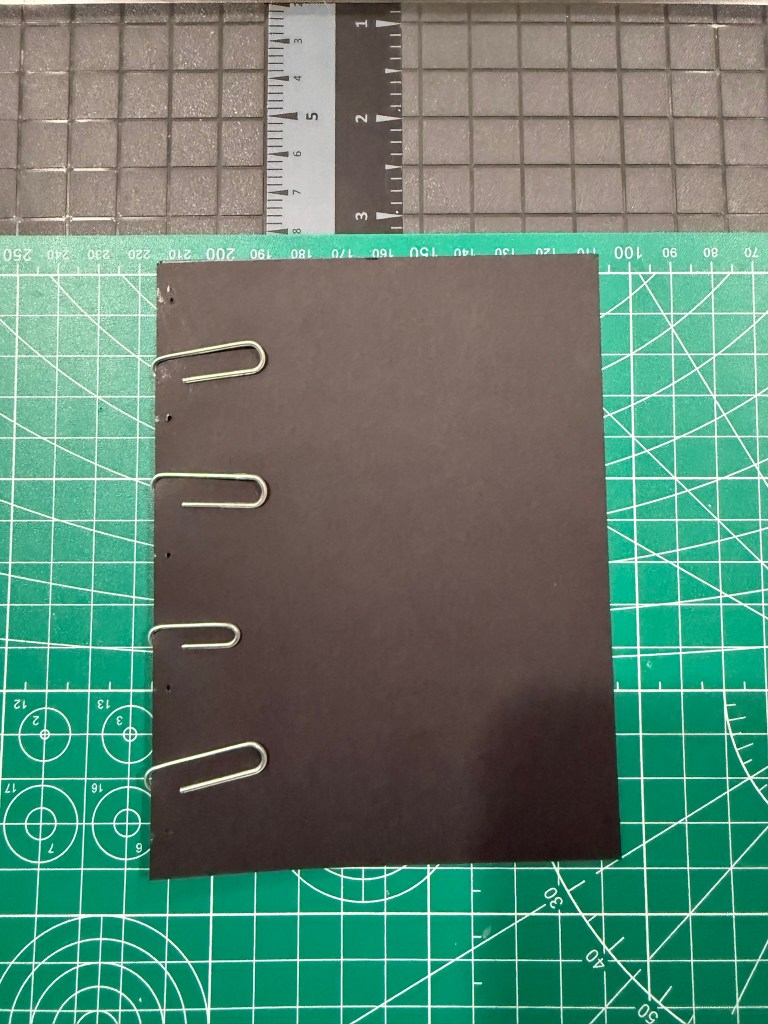
    hole prep on the cover
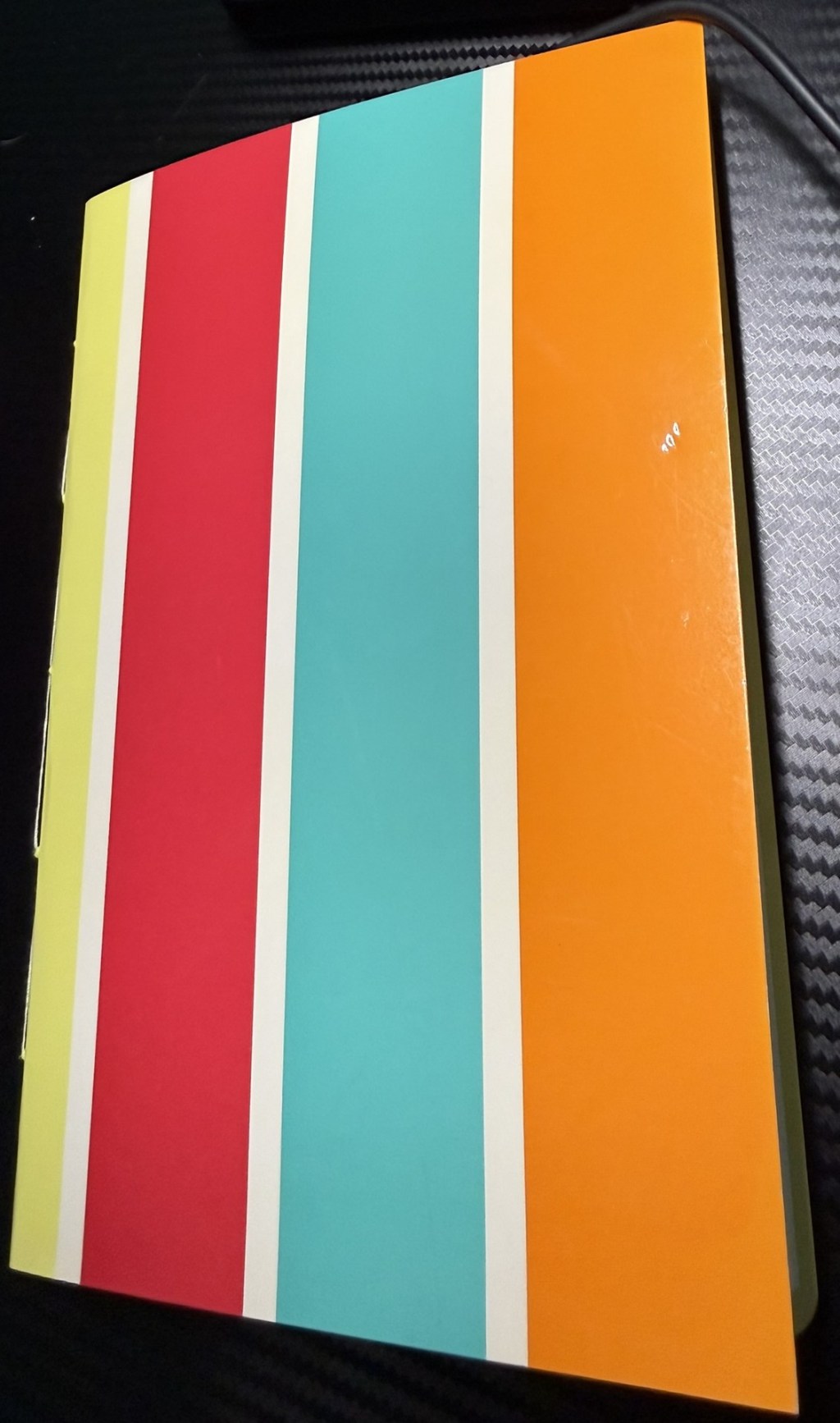
    Front cover with holes.
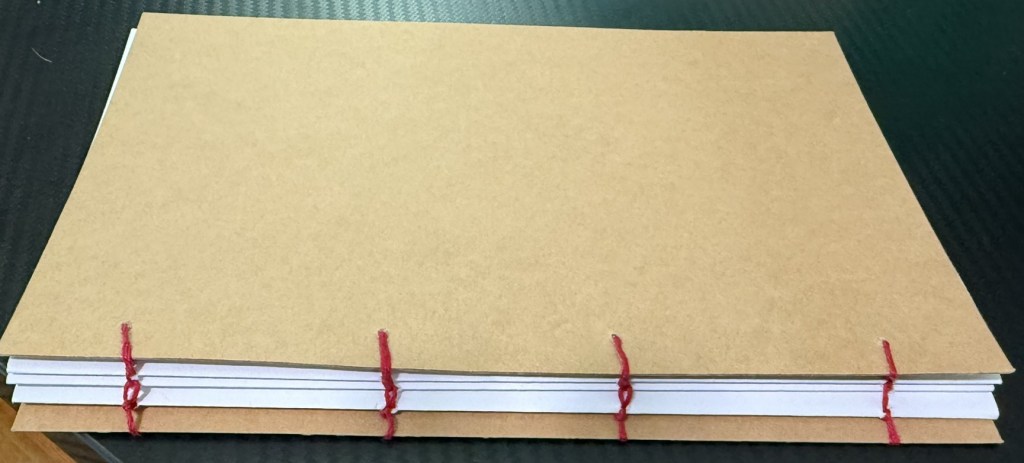
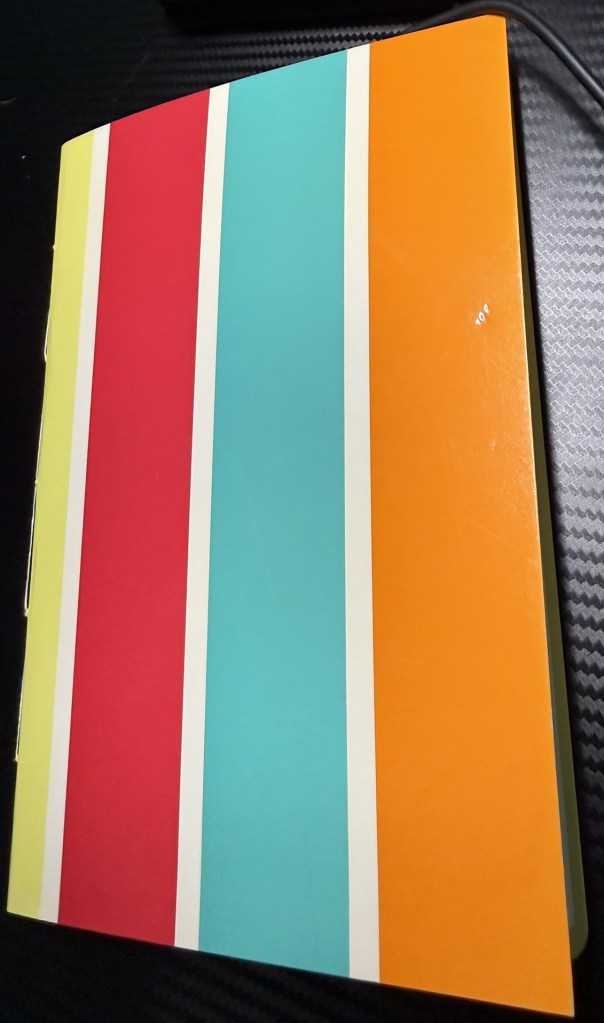
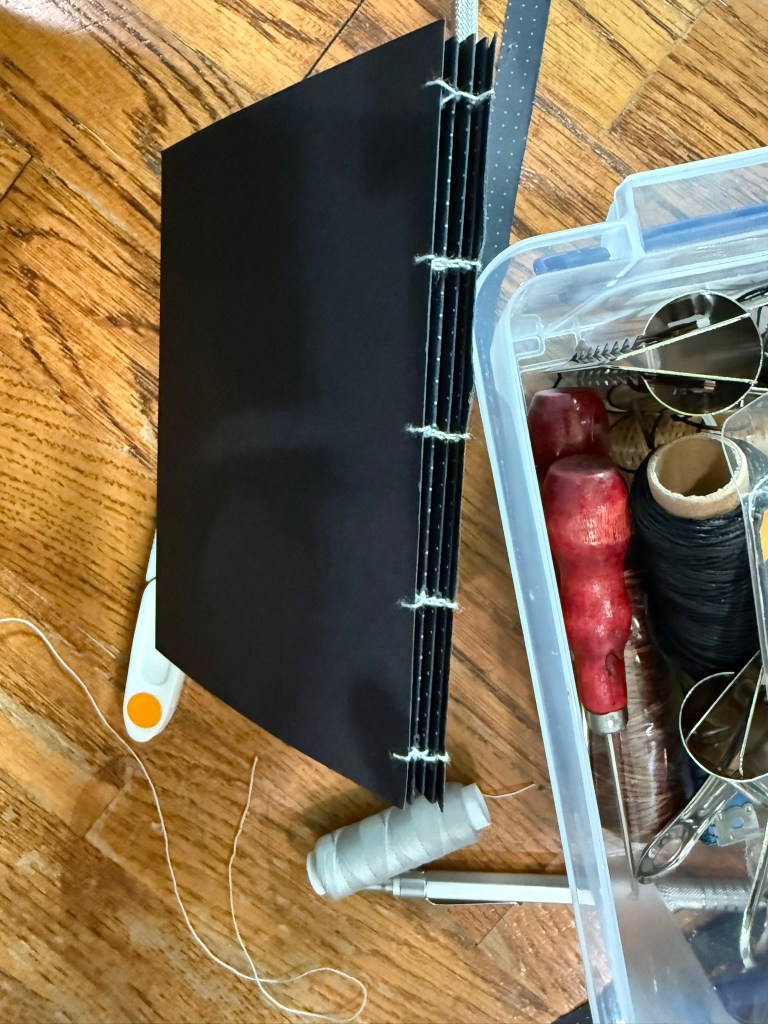
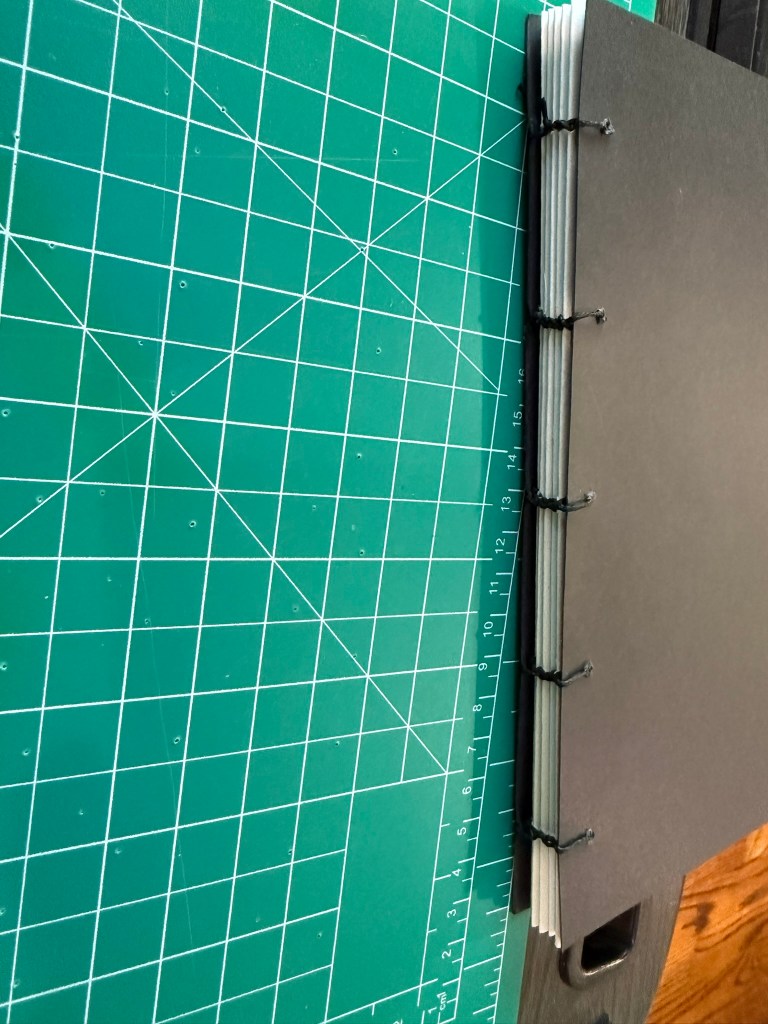
    finished edge
    Finished notebook from the side.
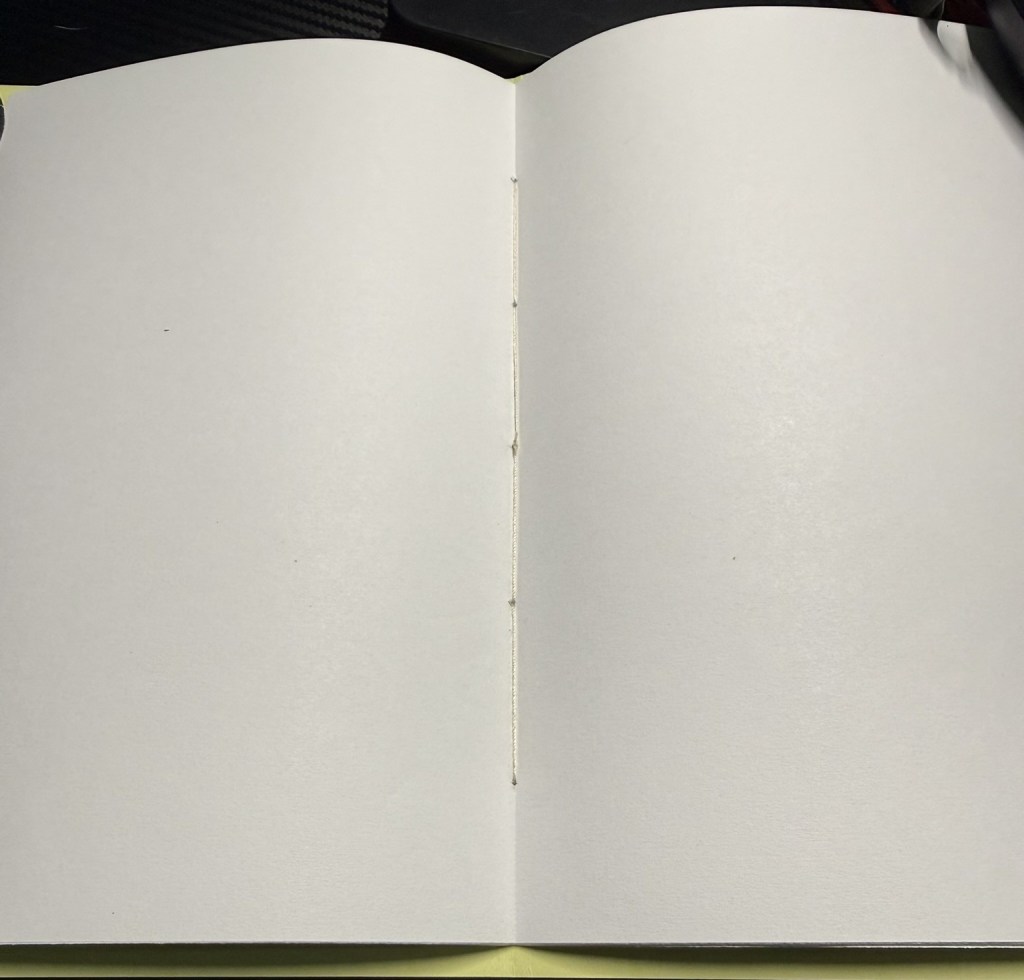
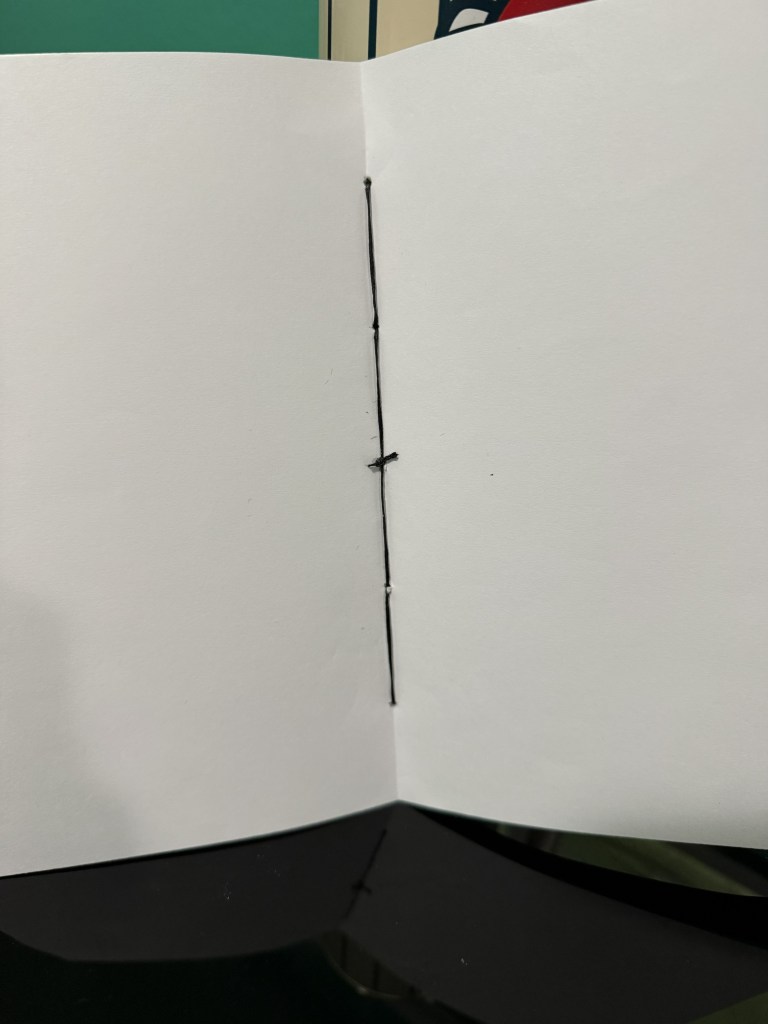
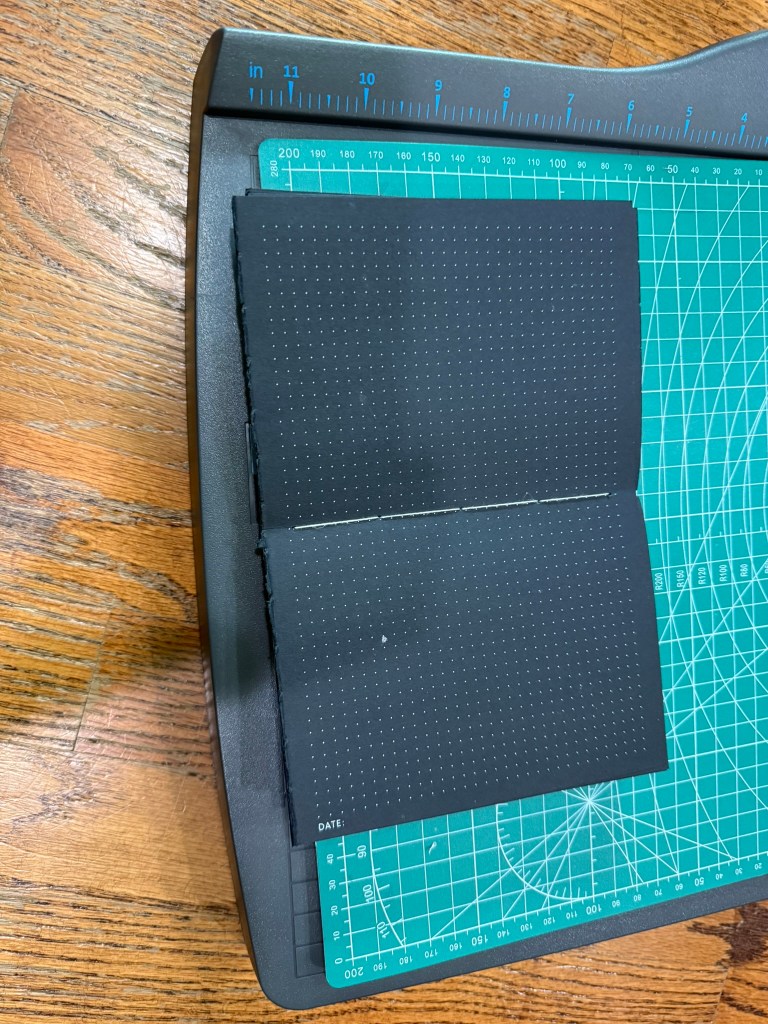
    notebook open
    It lays flat!
  • My First Coptic Binding Notebook (Mistakes Were Made)

    My First Coptic Binding Notebook (Mistakes Were Made)

    One thing I was determined to do last weekend was attempt a Coptic-bound notebook. I’ve made one with Japanese stab binding in the past, but I haven’t tried it again since then.

    So… I almost didn’t try this at all.

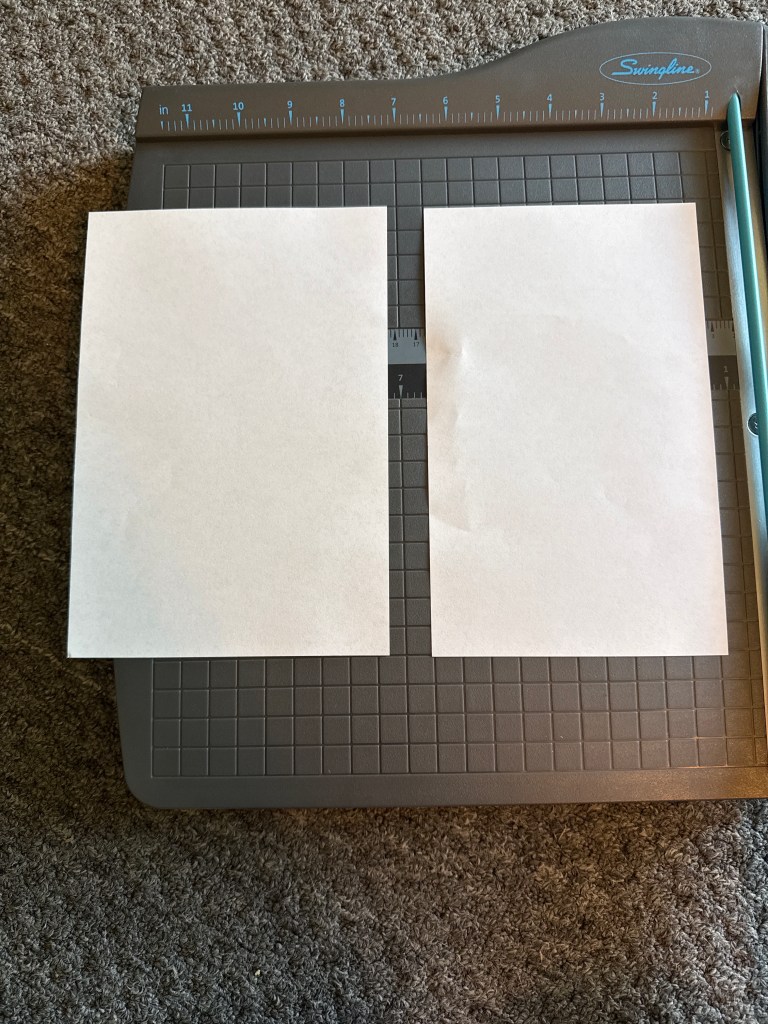
    When I went to cut my letter-sized paper in half using a Swingline paper guillotine, I discovered the ruler isn’t exactly… accurate. I lined the paper up at 5.75″ (half), and somehow ended up with one side at about 60% and the other at 40%.

    All the Amazon reviews talk about how accurate this thing is, so I have to assume they meant the cutting quality—not the measurements. I even watched a long tutorial on how to use it. There was a whole section on the ruler, and the creator never mentioned measurements—just that you can’t cut anything smaller than an inch.

    Not very helpful, right?

    At that point, I stopped fighting the guillotine and just folded the paper in half before cutting. Not ideal, but I also didn’t expect to need conversions just to cut paper.

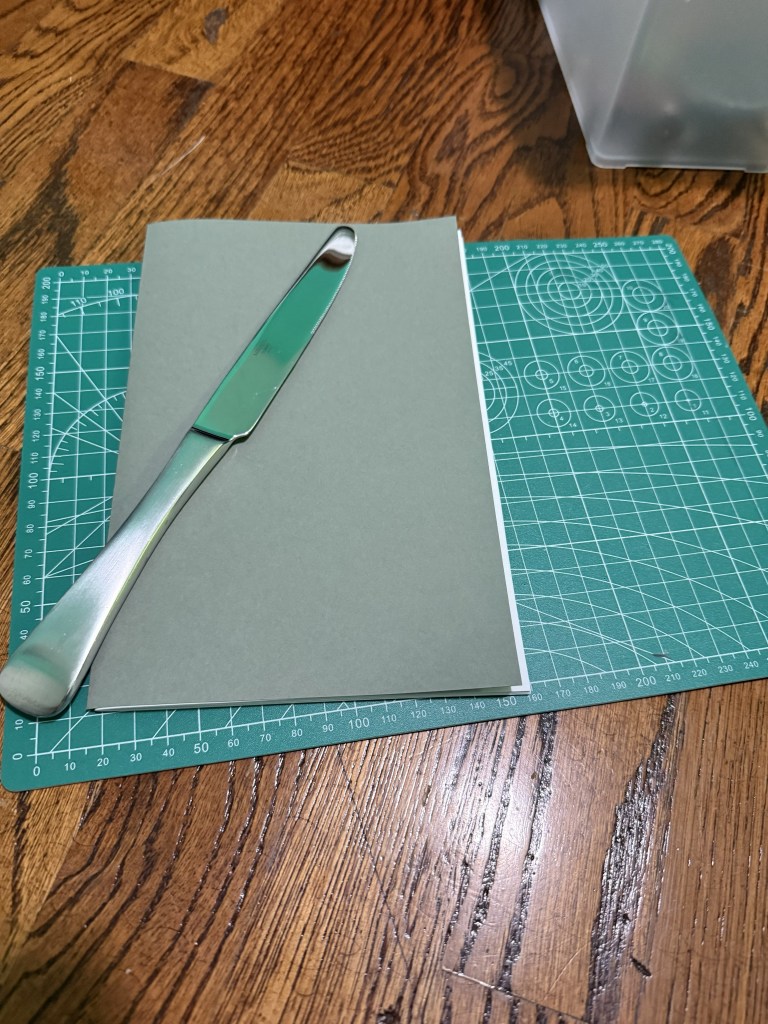
    I had already folded the signatures the night before and left them under a heavy book overnight. I added the freshly cut covers to the stack and briefly decided I wasn’t going to attempt the project at all.

    But then I finished everything else on my list.

    So I tried anyway—while watching my baseball game.

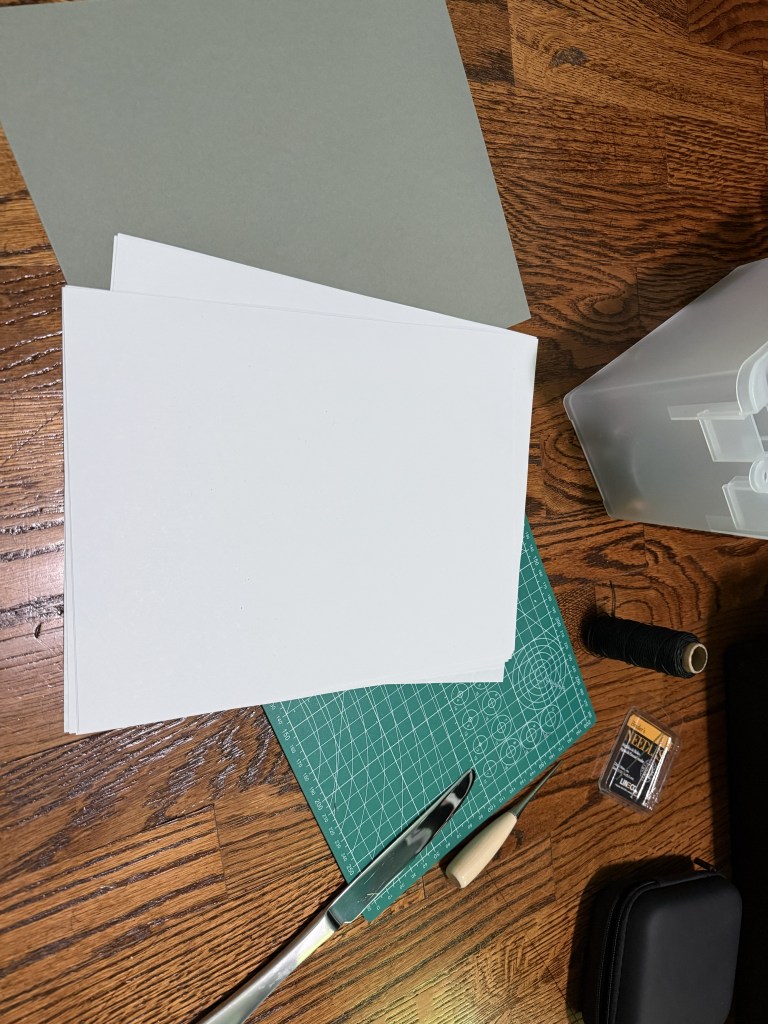
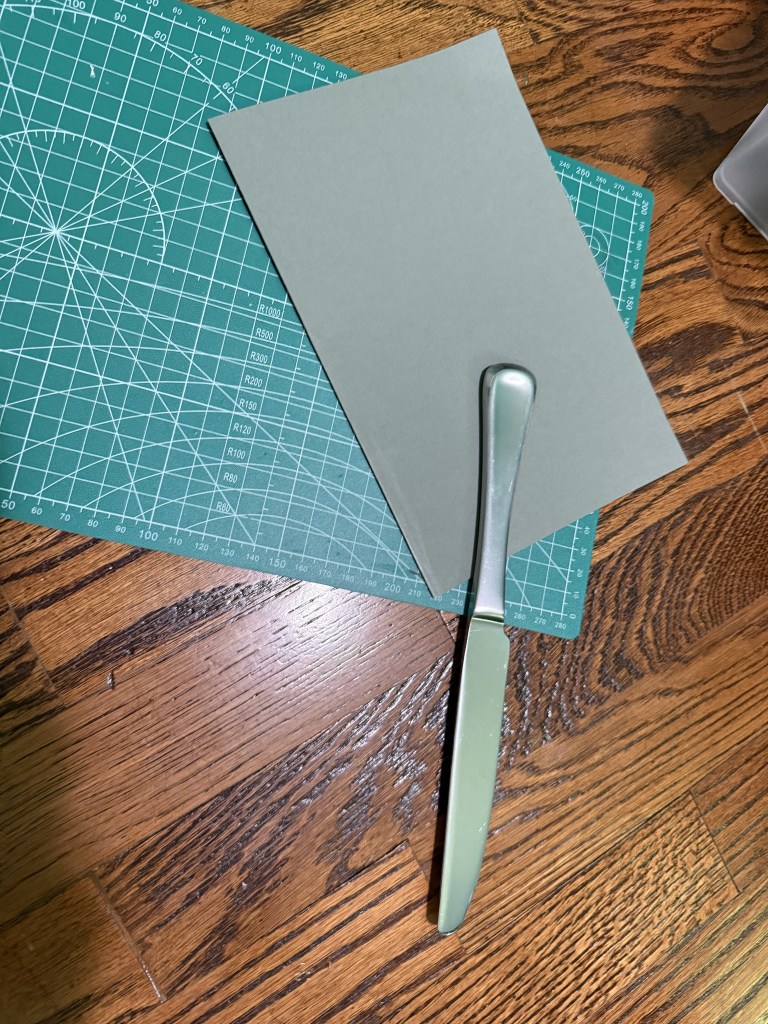
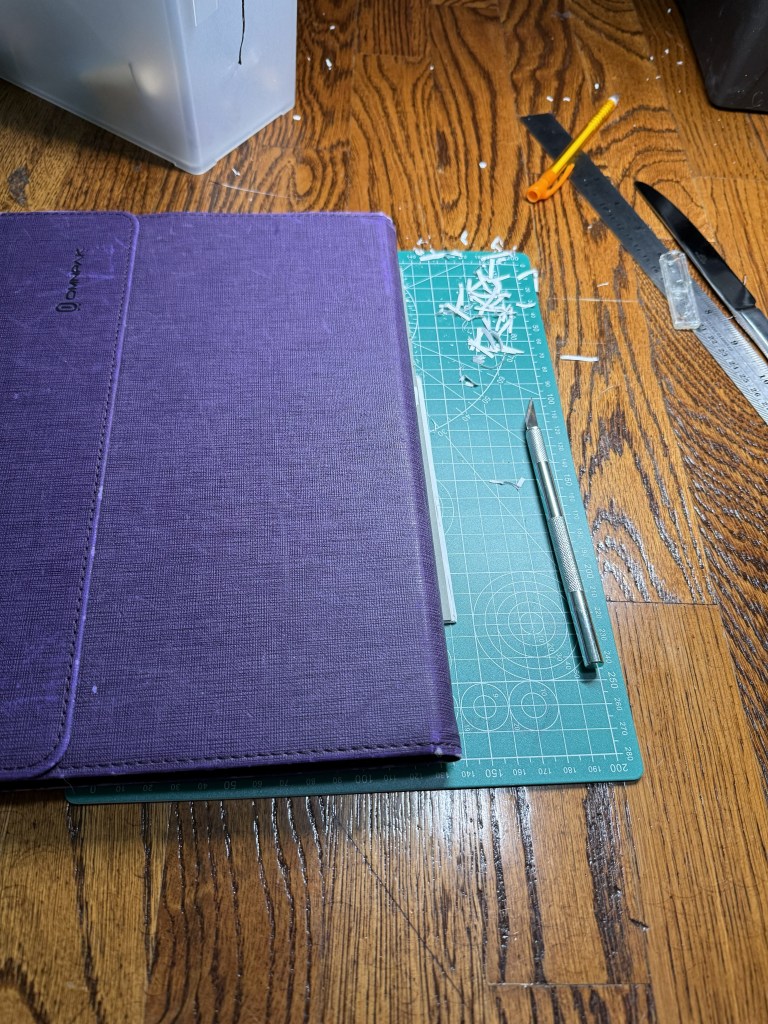
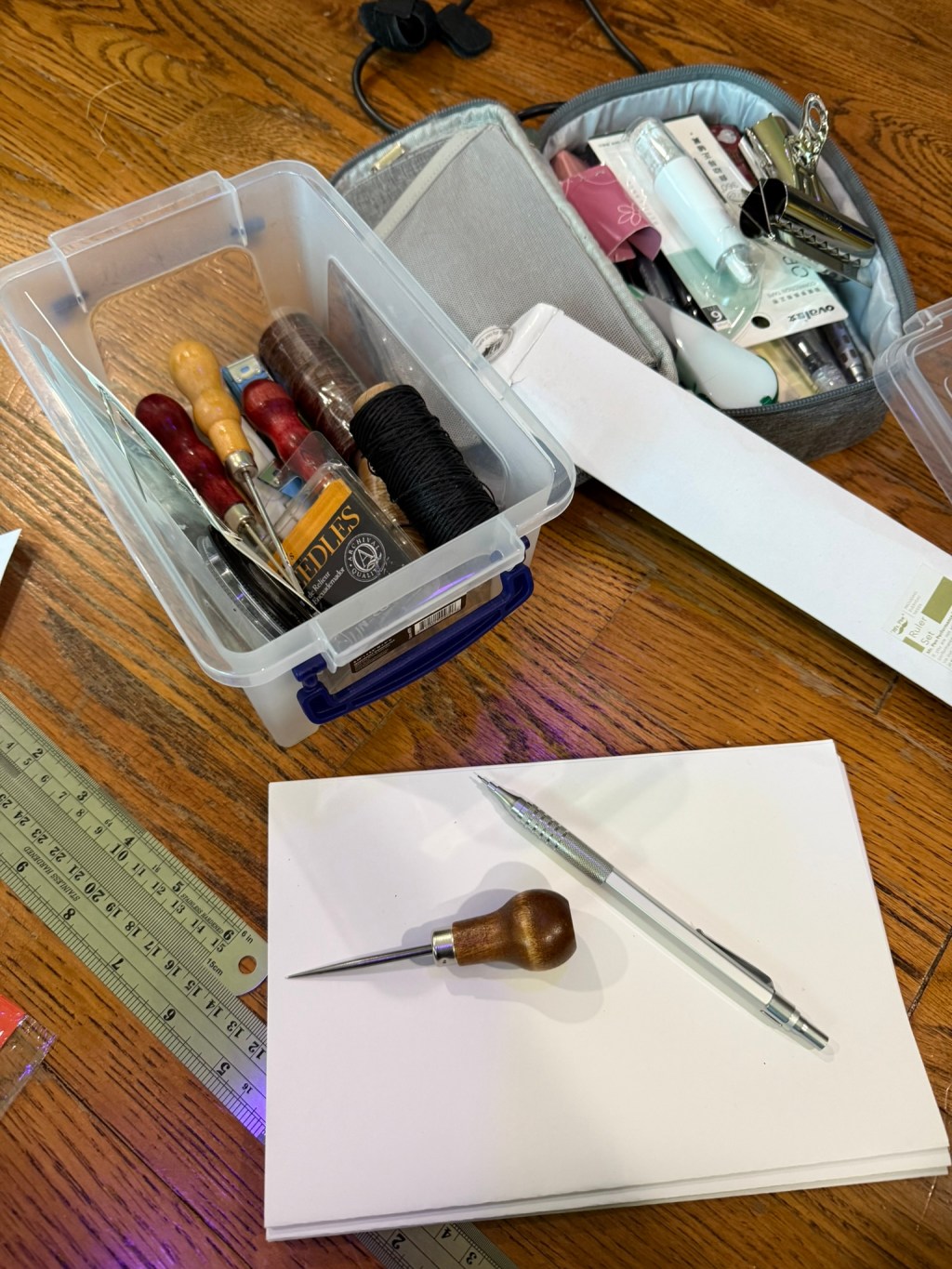
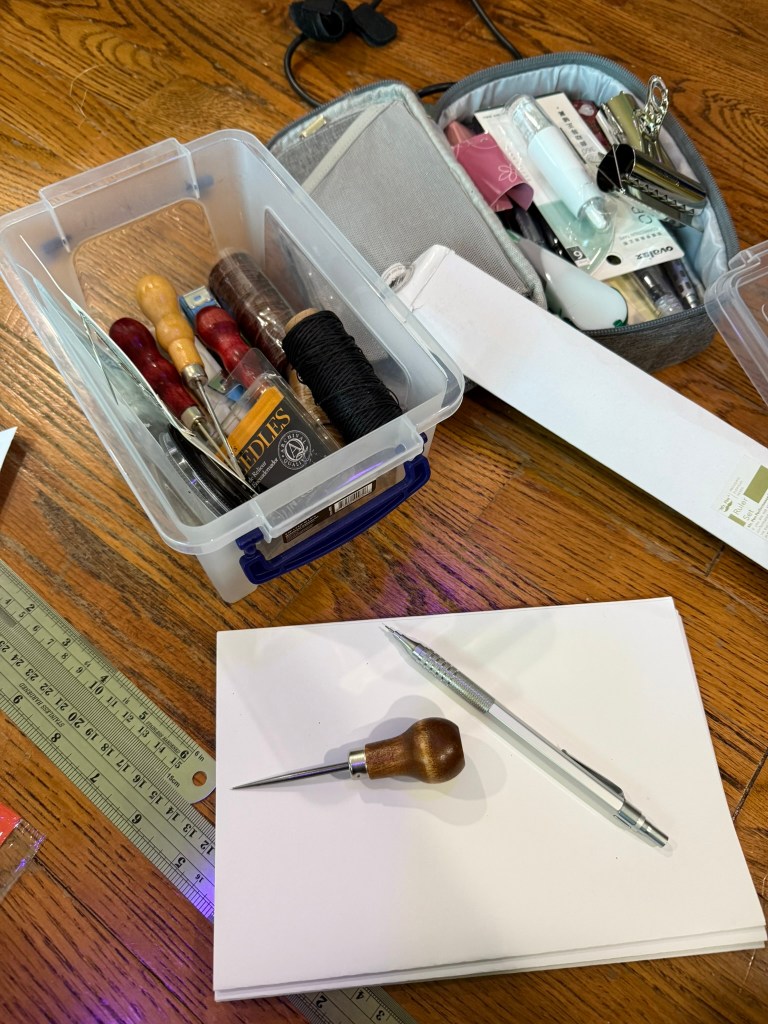
    I gathered what I needed: a pencil, an actual ruler, a cutting mat, my upholstery repair kit, and my bookbinding needles. The thread in the repair kit is waxed, and I figured that would be perfect since it’s strong.

    photo of bookbinding tools
    Bookbinding tools

    Spoiler: it was not perfect.

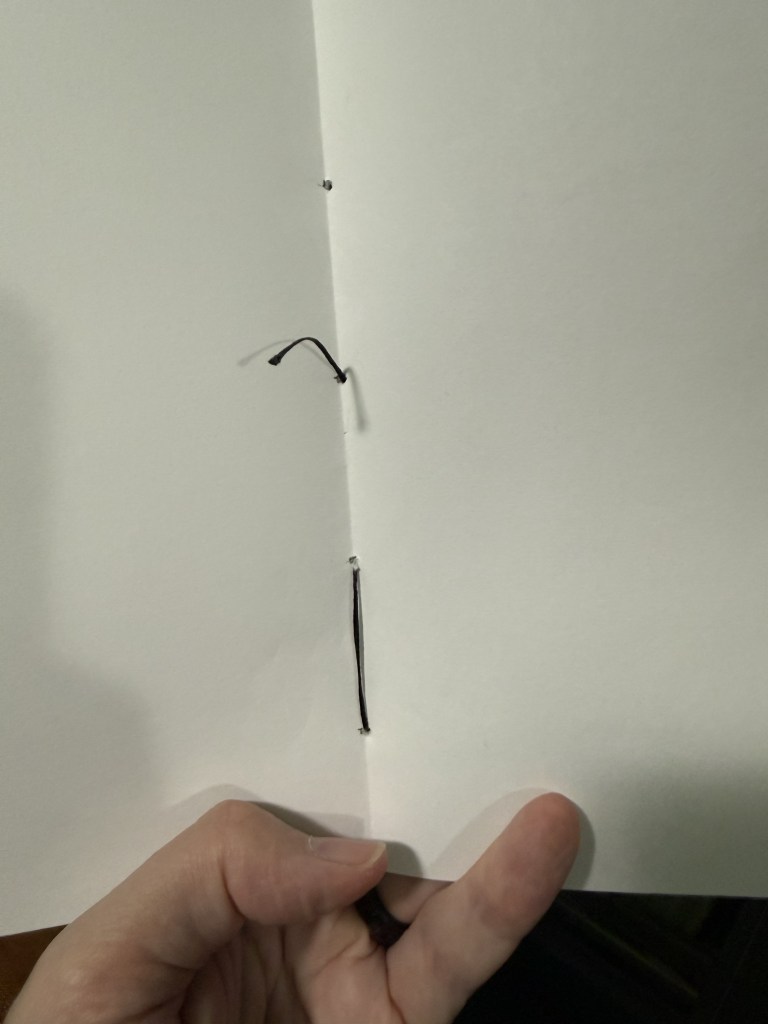
    I couldn’t get the stitching tight enough, and when I tried to force it, one of the holes in the cover ripped. At that point, I committed to the chaos—this was officially a prototype.

    Then I learned that your thread needs to be long enough for the entire notebook, not one piece per signature. So I had to add more thread partway through. It’s visible if you look for it, but honestly… not terrible.

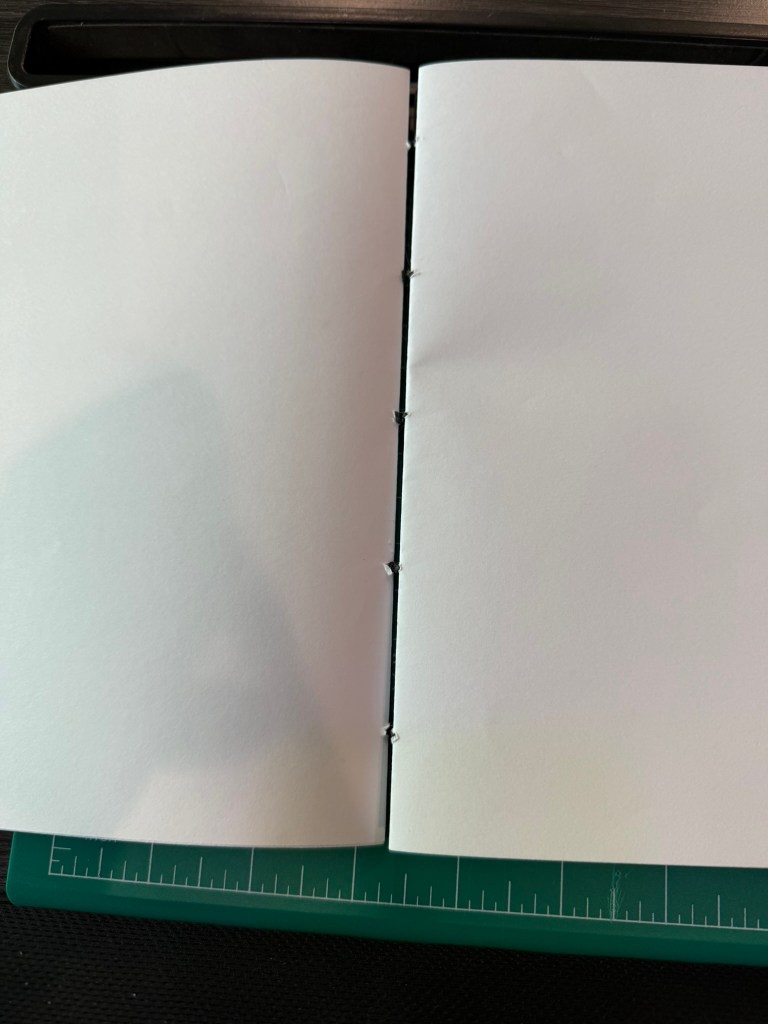
    By the time I finished and attached the cover, I had a notebook that definitely lays flat—but also has noticeable gaps between the signatures because of the loose tension.

    Trade-offs.

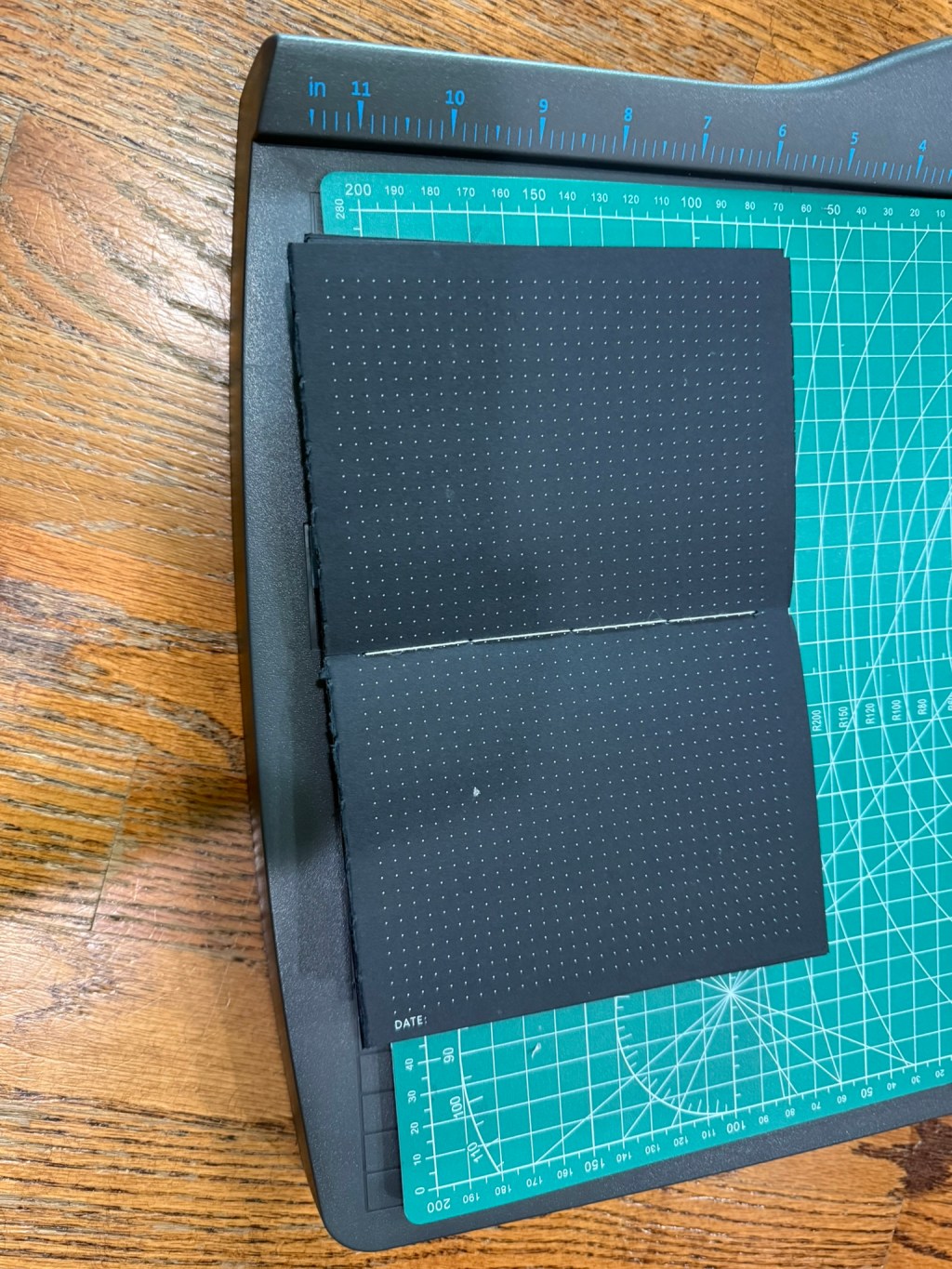
    notebook is laying flat and showing a gap between signatures due to the loose stitching
    Lays flat but thread is too loose

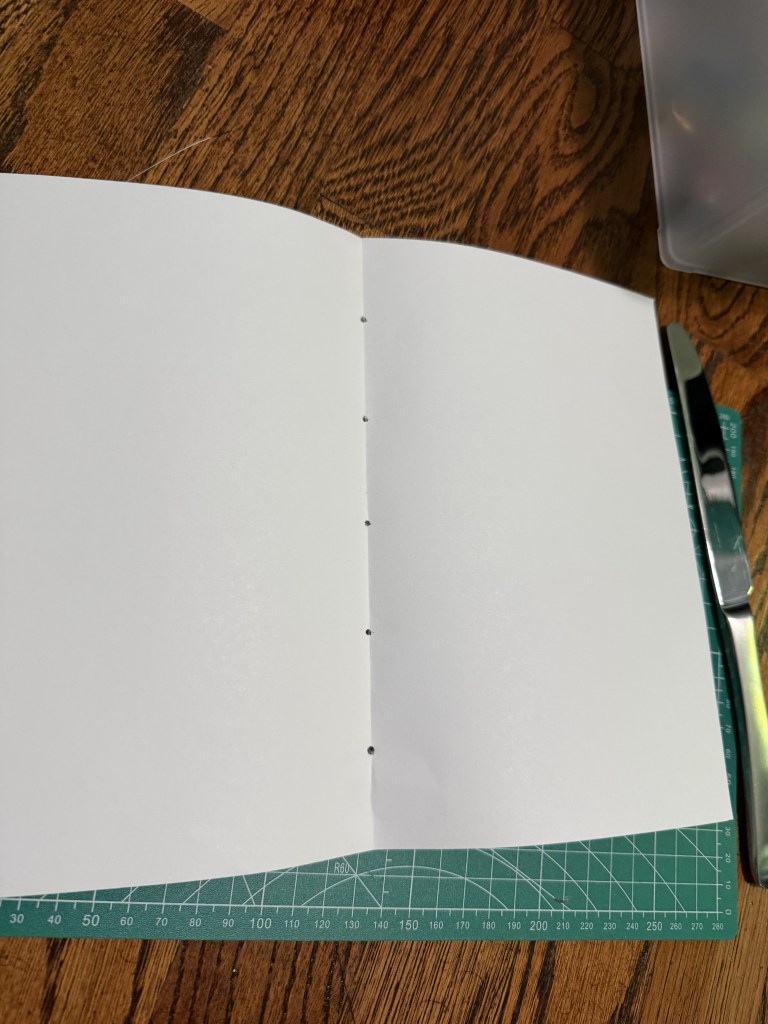
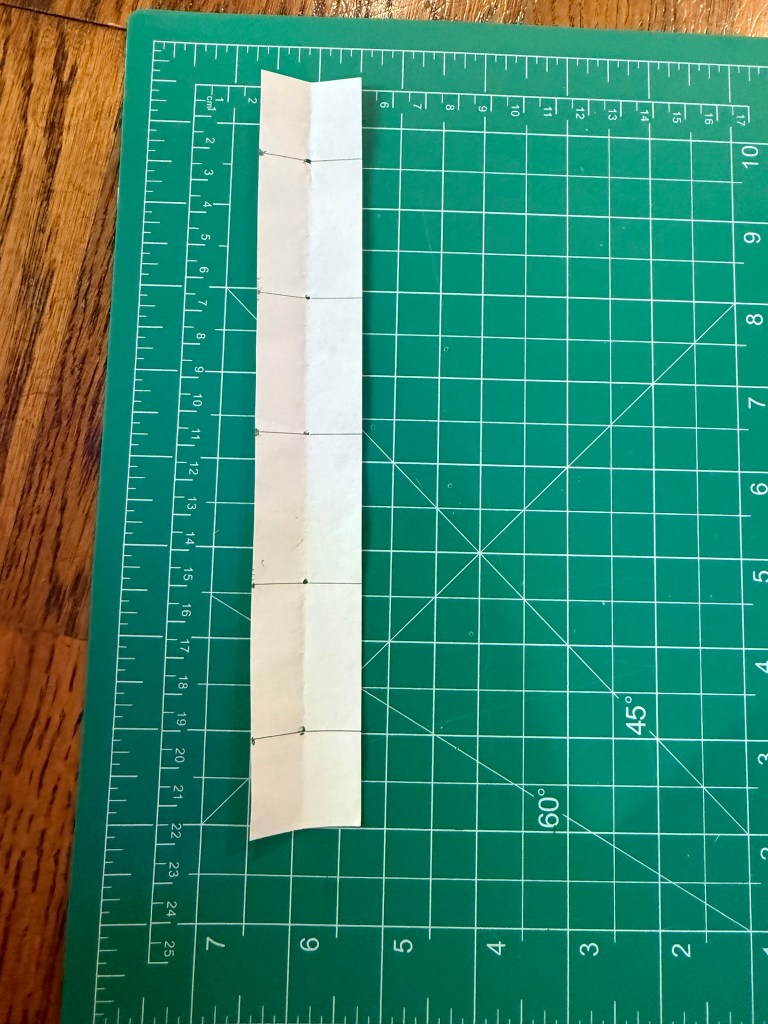
    Afterward, I made a template for poking holes in the covers and signatures, which actually turned out well. I used the awl from my upholstery kit for this.

    (Important note: DO THIS ON A CUTTING MAT or your hardwood floors will reject you forever. I, for once, made the correct life choice and used the cutting mat.)

    template to poke holes in the notebook covers and paper signatures
    Hole template

    What I learned:

    • Don’t use waxed thread on 92 lb cardstock and regular printer paper
    • Don’t trust a guillotine ruler to measure anything accurately
    • Don’t pull too hard unless you want your cover to fight back

    And finally… don’t be too hard on yourself.

    It’s a prototype.

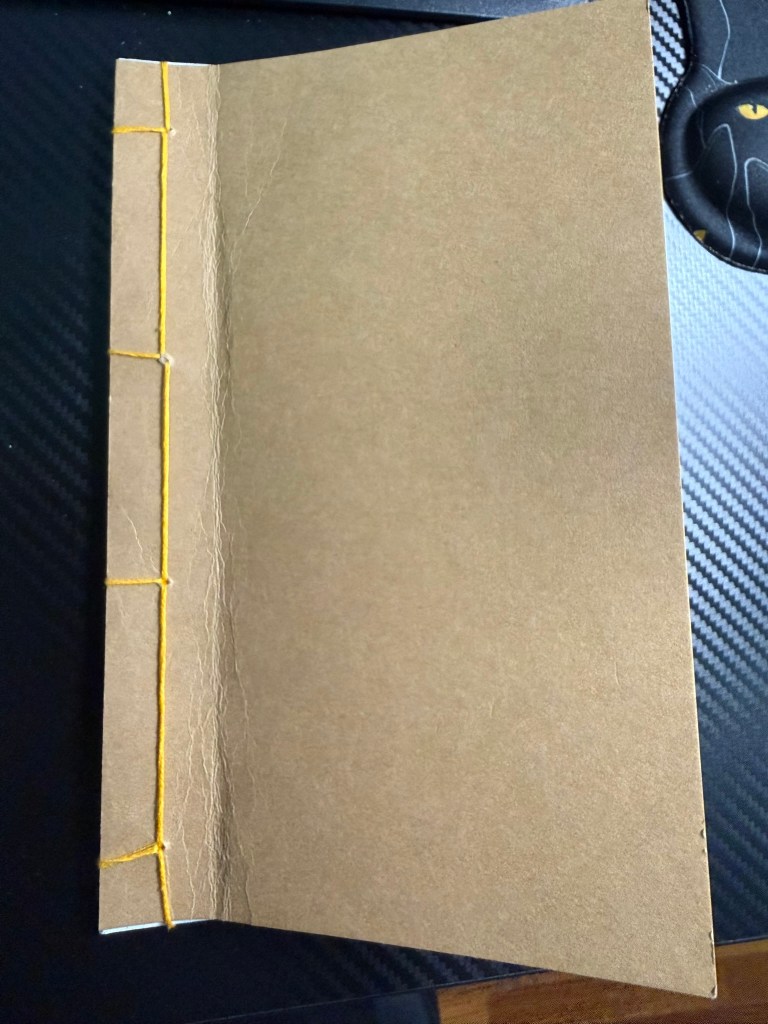
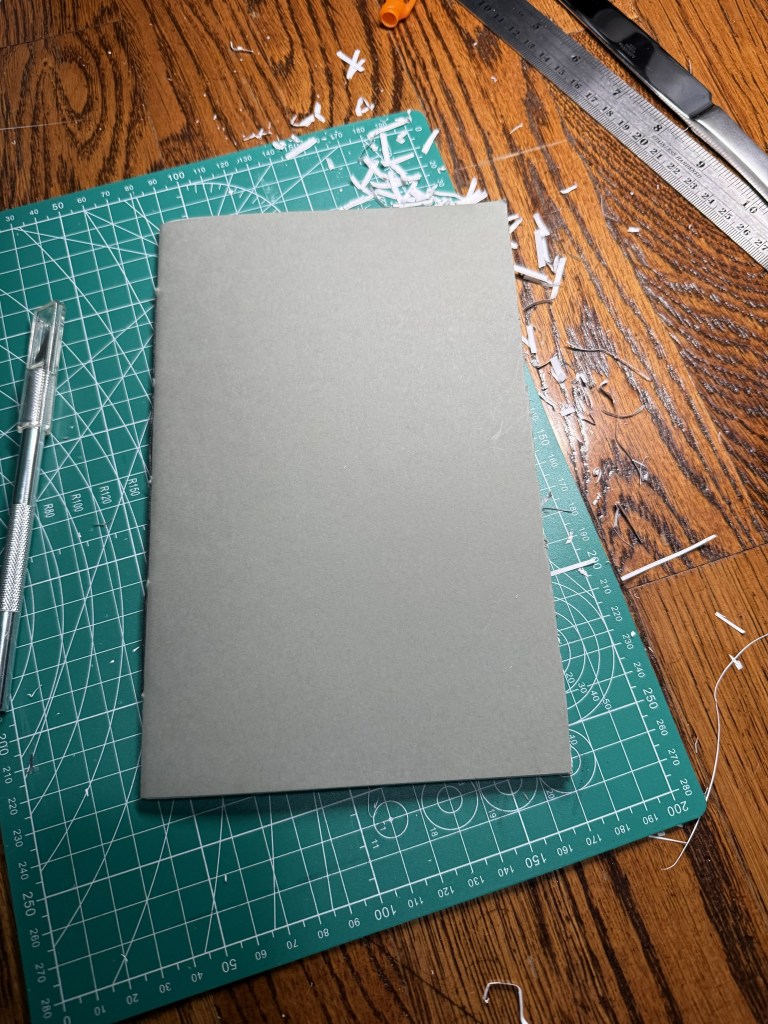
    picture of the finished prototype
    Finished prototype

  • I Don’t Need Form – I Need Function (Planner Setup)

    I Don’t Need Form – I Need Function (Planner Setup)

    When I first wrote about my commonplace book, it was mostly a place to gather notes and ideas. Since then, it has become something much more useful: part reference library, part creative workshop, and part record of what I’m learning now.

    Like most good tools, it changed as I changed.

    Commonplace books are often used to collect interesting information across many subjects. In my case, that has turned into several notebooks for several passions.

    I have one dedicated to Highland culture, where I once half-seriously decided I should write a dissertation. I have another for Torah study and Jewish learning. I even bought matching notebooks for continuity and built a reusable Traveler’s Notebook-style hardcover, which I turned into a replica of River Song’s diary from Doctor Who.

    My gardening notebook is one of the most practical. I drew the herbs I planted for easy identification, gave each herb and vegetable its own page with planting instructions and uses, and sketched a not-to-scale map of the garden with beds organized by water needs, height, and invasiveness.

    All of this eventually led me to planners.

    When I first discovered bullet journaling, planners, and sticker culture, I fell down the rabbit hole and bought far too much. Eventually I realized I am simply too minimalist for that world.

    I tried the much-loved Hobonichi Cousin. It had many good features, but the pages felt too busy and included sections I knew I would never use. I looked at other planners and couldn’t justify paying premium prices for branding.

    Then I found Wonderland222: clean, functional, and refreshingly minimal.

    Even so, it still wasn’t exactly what I wanted.

    So now I’m designing my own planner in Scribus. So far I have a daily page template and a calendar spread, but my goal is to arrange monthly, weekly, and daily pages in a way that makes sense to me. I’m also creating a custom baseball tracking section.

    I’ll print it myself, bind it myself, and design the cover myself.

    If it turns out well, I may even make a few for others someday.

    The real lesson in all of this is simple: use what works for you.

    Stickers didn’t work for me. Trend-driven planner culture didn’t work for me. Buying things because everyone else loved them didn’t work for me.

    What did work was learning my own preferences.

    I buy tools I can use for years. I choose quality over clutter. I build systems that support my actual life.

    I don’t need form.

    I need function.

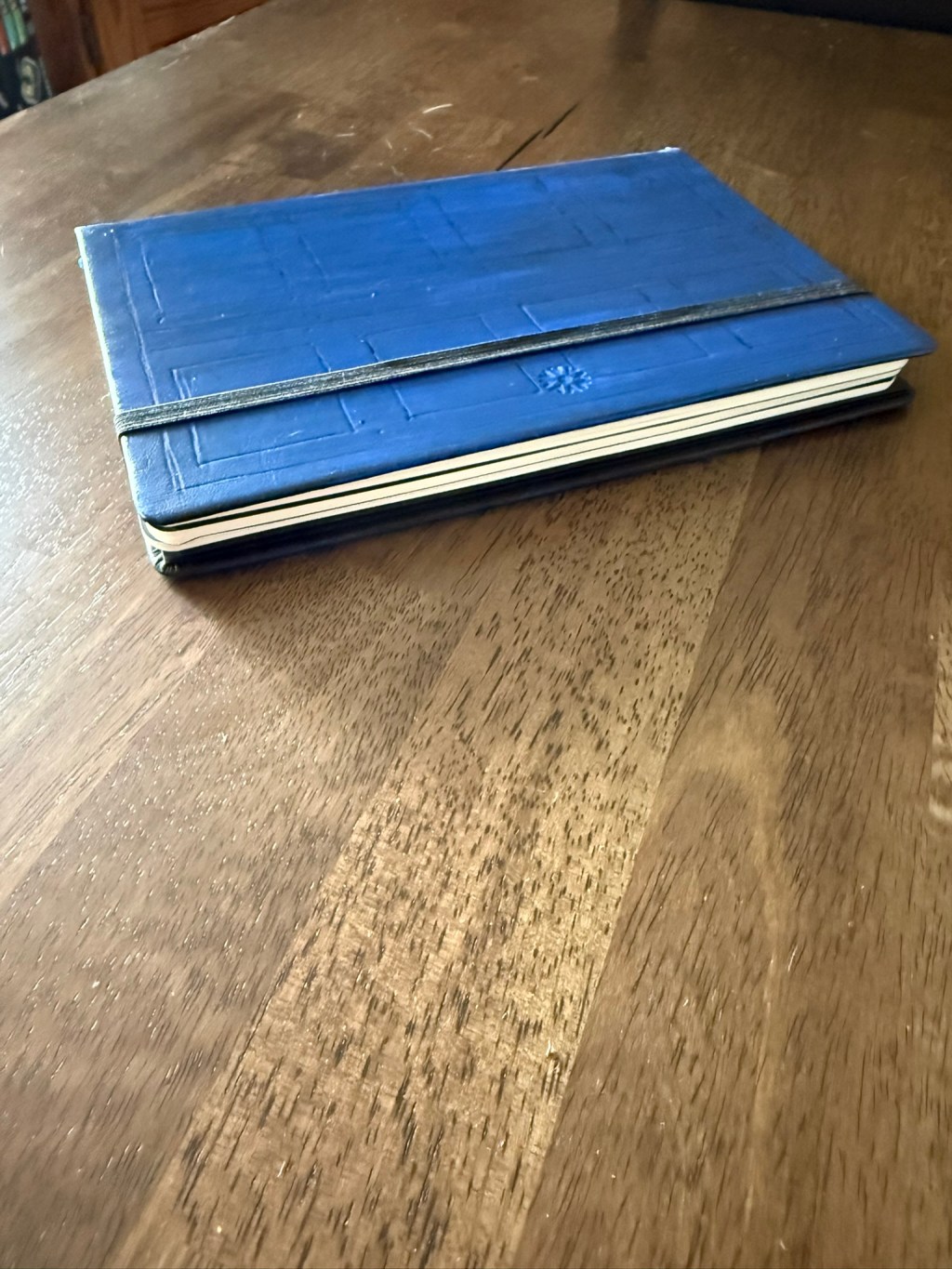
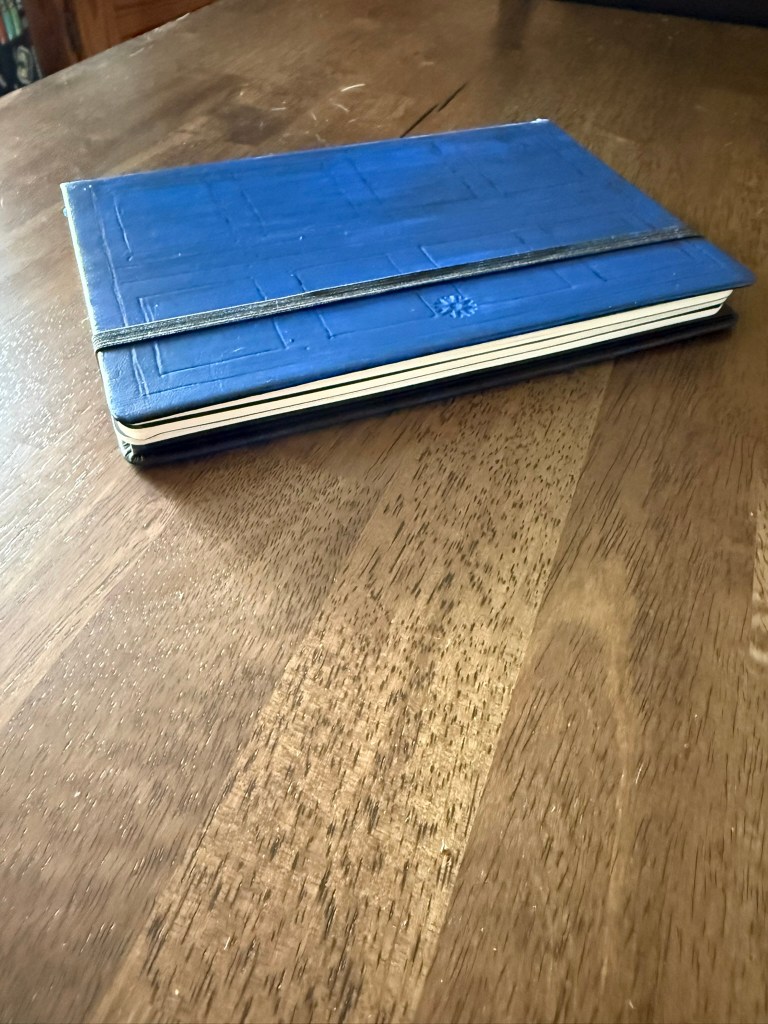
    traveler's notebook-style homemade planner cover