Category: Miscellaneous

  • The Joy of Learning to Write Grant Applications

    The Joy of Learning to Write Grant Applications

    Since I just opened an Etsy shop—with one product so niche that most people would never think to search for it—I have started applying for small business grants. I have a slight advantage as a female veteran, but that only gets my foot in the door. A strong application still has to stand on its own.

    One of the biggest hurdles will be the fact that I don’t have any revenue yet. Convincing a committee that my business has the potential to grow—and eventually become profitable—won’t be easy. Such is life.

    That said, I have a business plan that I genuinely believe in. My budget projections are also refreshingly simple because, at the moment, I have virtually no overhead. I work from home, and my current products are digital. Even when I begin selling physical products, I’ll be starting with materials and equipment I already own, including some supplies that I’m literally growing in my garden.

    One thing that gives me confidence is that I’ve written an RFP (Request for Proposal) response before. An RFP is how government agencies and other organizations request bids for a specific product or service. Writing one requires answering a lot of detailed questions, but it also results in a substantial library of material that can be reused. By the time I finished mine, I had about fifteen pages, and roughly twelve of those could be adapted for future proposals.

    I’m hoping that experience will pay off with grant applications as well. My contracts professor always said, “Why invent the wheel?” As long as I build a strong foundation now, each new application should become a little easier than the last.

    My goal is simple: secure enough funding to purchase professional equipment for the physical products I want to make. I think having the right tools from the beginning would dramatically shorten the learning curve and allow me to produce higher-quality work much sooner.

    I don’t know that grant applications will become a regular topic here. They’re not exactly thrilling reading. But if I ever receive one, you can be sure there will be an extremely excited post about it.

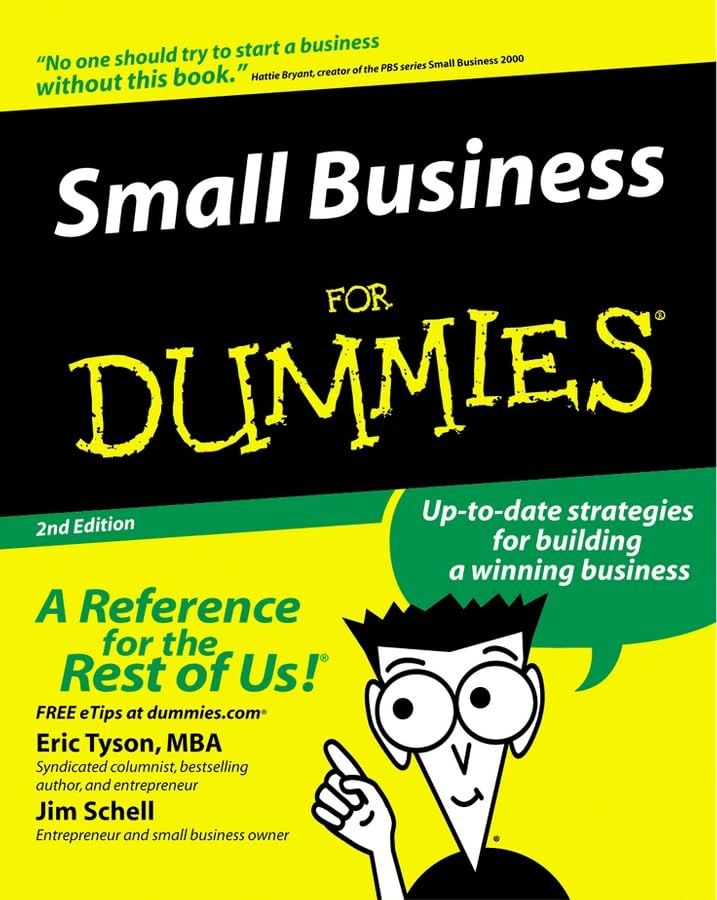
    Now, if you’ll excuse me, I’m off to read Small Business For Dummies.
  • My Very Beginner Thoughts on Whisky

    My Very Beginner Thoughts on Whisky

    Disclaimer: I am not an expert.

    So, I write this post based on a love of whisky.

    Back when I had multiple topics in one commonplace book (which sounds horrible now), I had a dedicated section on whisky. I learned about the distillation process, the different types, and the various Scotch-producing regions.

    I spent some time learning about the different regions of Scotland because I am very particular about those. Out of my three favorites, two are Highland. One is a blended malt, and one is a single malt. I am surprised that a blended made the list, but you like what you like. My third favorite is a Speyside single malt.

    Well, before I get too far into this, my favorites are The Sassenach (Highland), Glenmorangie (Highland), and The Balvenie (Speyside).

    The region I never want crossing my lips ever again is Islay (pronounced eye-luh). If I wanted to drink a campfire, I would just put a burned log in my mouth.

    So what is peat, anyway? Peat is partially decomposed plant material that has built up in bogs over thousands of years. Some distilleries burn peat during the malting process, and the smoke infuses the barley with those earthy, smoky flavors. That is why many Islay whiskies taste like smoke, campfires, iodine, or even the ocean. Plenty of people absolutely love it. I am not one of those people.

    Next came the different types.

    Blended malt – A blend of two or more single malt Scotch whiskies from more than one distillery. The Sassenach is produced by Galloway Spirits and is a blended malt.

    Single malt – Mashed, fermented, distilled, and matured at a single distillery in Scotland.

    Single cask – As the name implies, this whisky comes from one individual barrel. The run is typically very limited, usually around 200–300 bottles. I was lucky enough to find a single-cask Balvenie a few months ago that was absolutely fabulous, and I was sad to see the end of it. Since single-cask releases are limited, this one even came with its own bottle number.

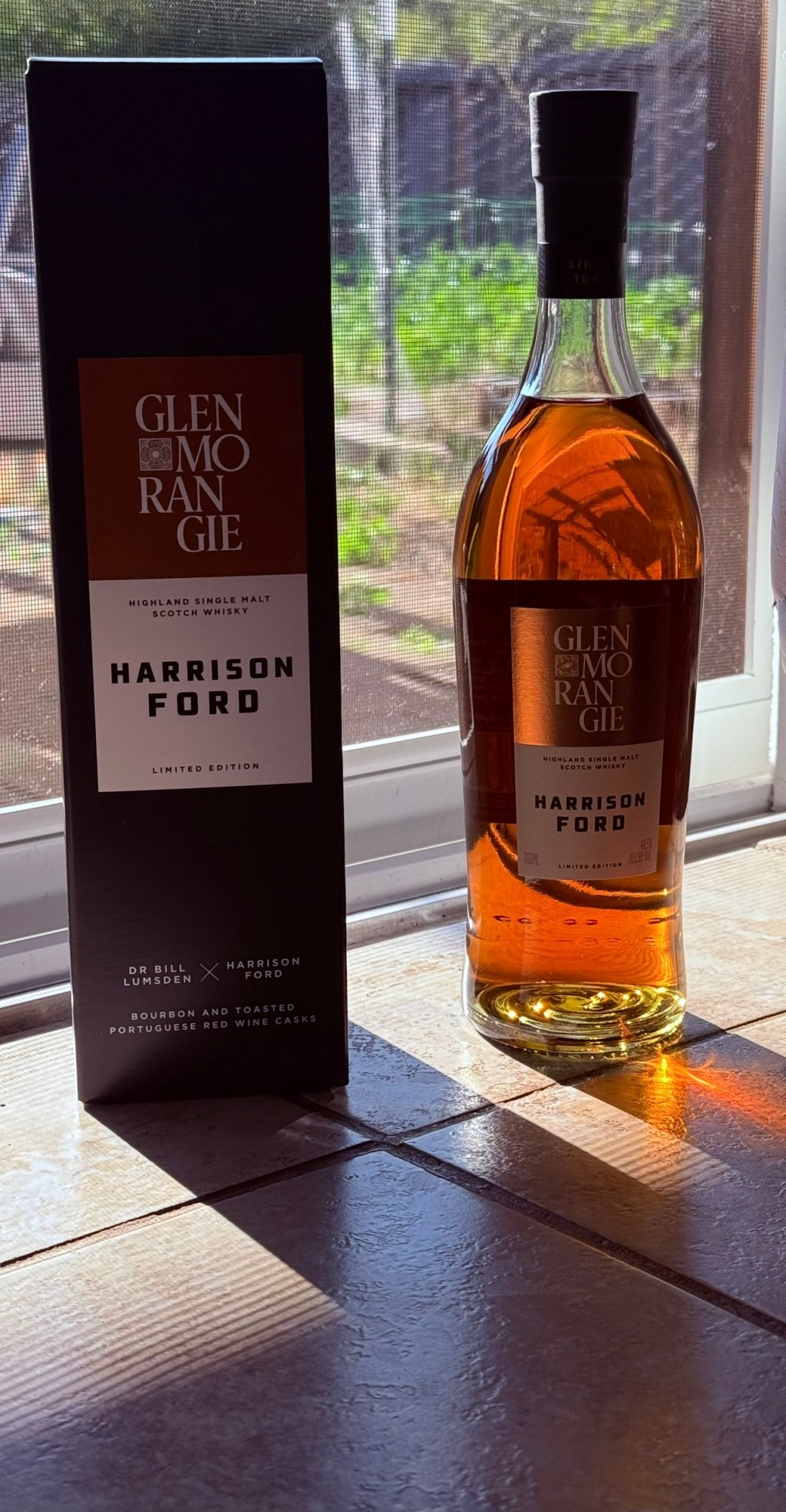
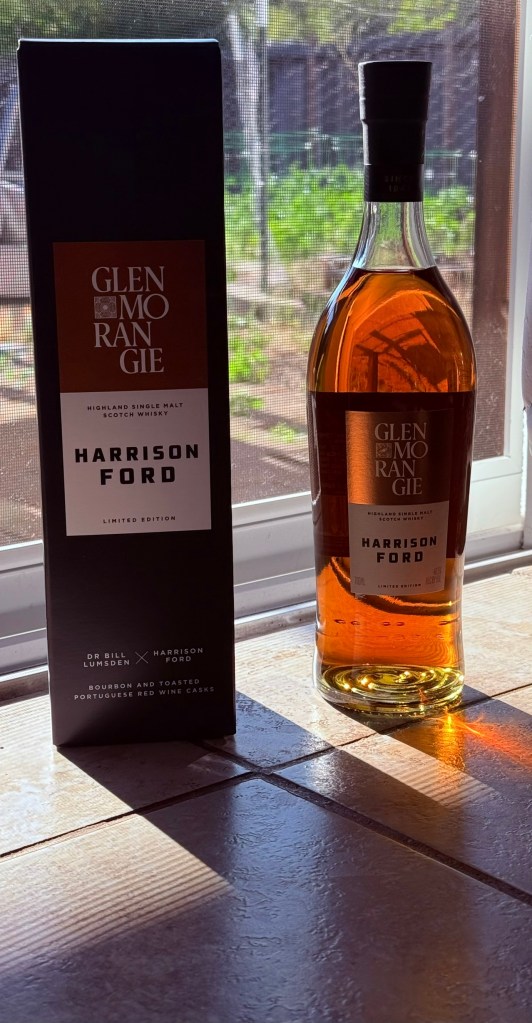
    Yesterday, I got my hands on the Harrison Ford Glenmorangie. I have been a fan of Harrison Ford since the early ’80s, and because I also love Scotch, I clearly had to buy this. It was aged in Portuguese red wine casks (I only drink red wine, so that was a bonus), and Mr. Ford asked for more “bite” in this edition. I am not quite sure what that means because I found it very smooth.

    I have looked at other types of whisky, of course.

    Bourbon must be made in the United States, though it is most commonly associated with Kentucky. It must contain at least 51% corn in the mash bill, be aged in new, charred oak barrels, and be bottled at a minimum of 80 proof.

    Irish whiskey must be distilled and aged in Ireland. It is made from cereal grains, aged in wooden casks for at least three years, and bottled at no less than 40% ABV.

    Well…those are really the only ones I care about, so I will end with this:

    You can spell it “whiskey” or “whisky.” It depends on the country of origin. An interesting rule of thumb I found is that if the country’s name has an “e” in it, the spirit is usually spelled “whiskey.” If it does not, it is usually spelled “whisky.”

    I choose “whisky.” I like consistency.

    Of course, the best whisky is the one you enjoy, regardless of where it comes from or how anyone else says you should drink it.

    bottle of glenmorangie whisky
    Harrison Ford’s whisky is only second to actually having Harrison Ford here.