Category: Garden & Seasonal Living

  • Mid-Season Garden Mistakes Have Shown Themselves

    This garden experiment/hobby/passion has shown me that the research never stops.

    I thought I had enough information to have a flourishing garden, with a dozen tinctures, infused oils, and teas in the making.

    But no.

    Right now, I have one oil and about half an ounce of tea. I do have some other herbs drying, and I’ve had much better luck with the culinary herbs, but a lot of my medicinal herbs are looking kind of done for the year.

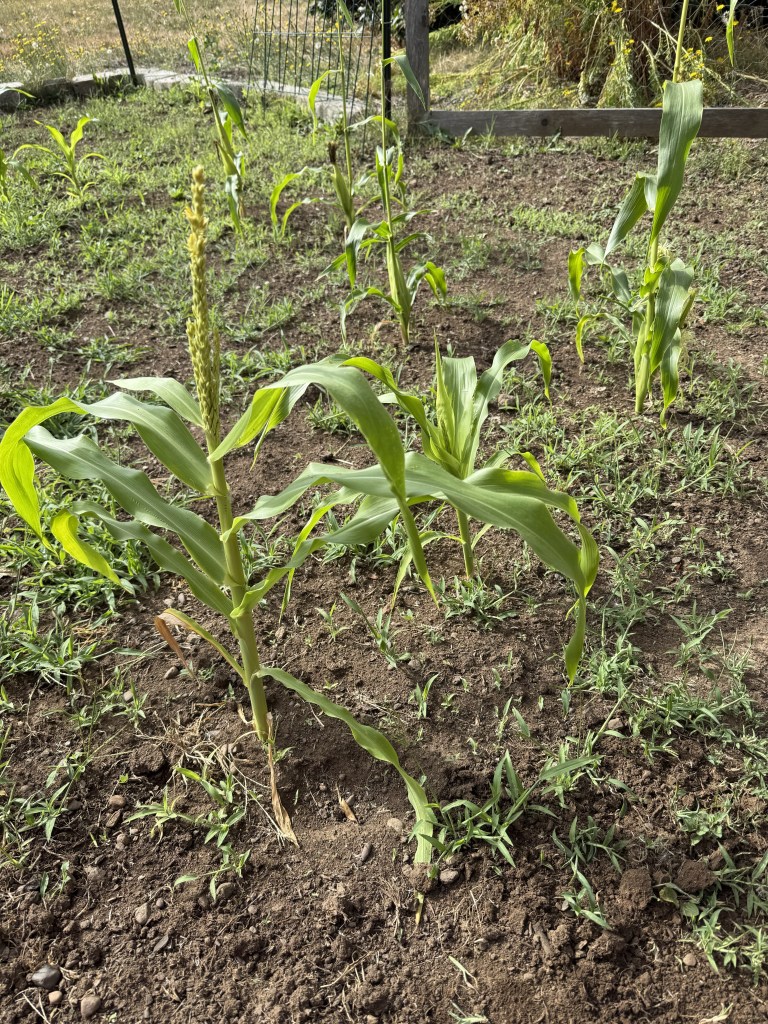
    I planted 16 corn seeds, but I messed up the timing. When I measured the soil temperature, it was warm enough, but I failed to wait until after the last frost date. So I have a few small stalks that have produced ears, but the ears are tiny and I probably won’t be able to do anything with them except save the seeds.

    stunted corn stalks

    I did plant some other corn later as an experiment, and those plants seem to be doing better. There are no ears yet—which is probably a good thing, because the stalks are still pretty short.

    The jury is still out on the tomatillos. I have dozens of husks, but so far, no fruit inside. I need to do more research to figure out whether they’re still going to fruit or if I’m just getting a magnificent crop of empty husks this year.

    However!

    The tomatoes are looking pretty good. I have, I think, 12 plants, and only a couple of them don’t have fruit. The tomatoes are getting pretty big, and about seven of them are starting to turn orange.

    So I think that in a week or two, I’ll be asking myself what the heck I am going to do with two dozen tomatoes that ripened at the same time.

    And I will not complain about that!

    And now it is time for me to log off and continue planning next year’s garden.

  • Overflowing with Herbs

    Overflowing with Herbs

    I am two days late with my usual blog post.

    Right now, I’m drying several kinds of herbs—some for cooking and others for future tinctures and infused oils. The problem is that I’ve officially run out of space.

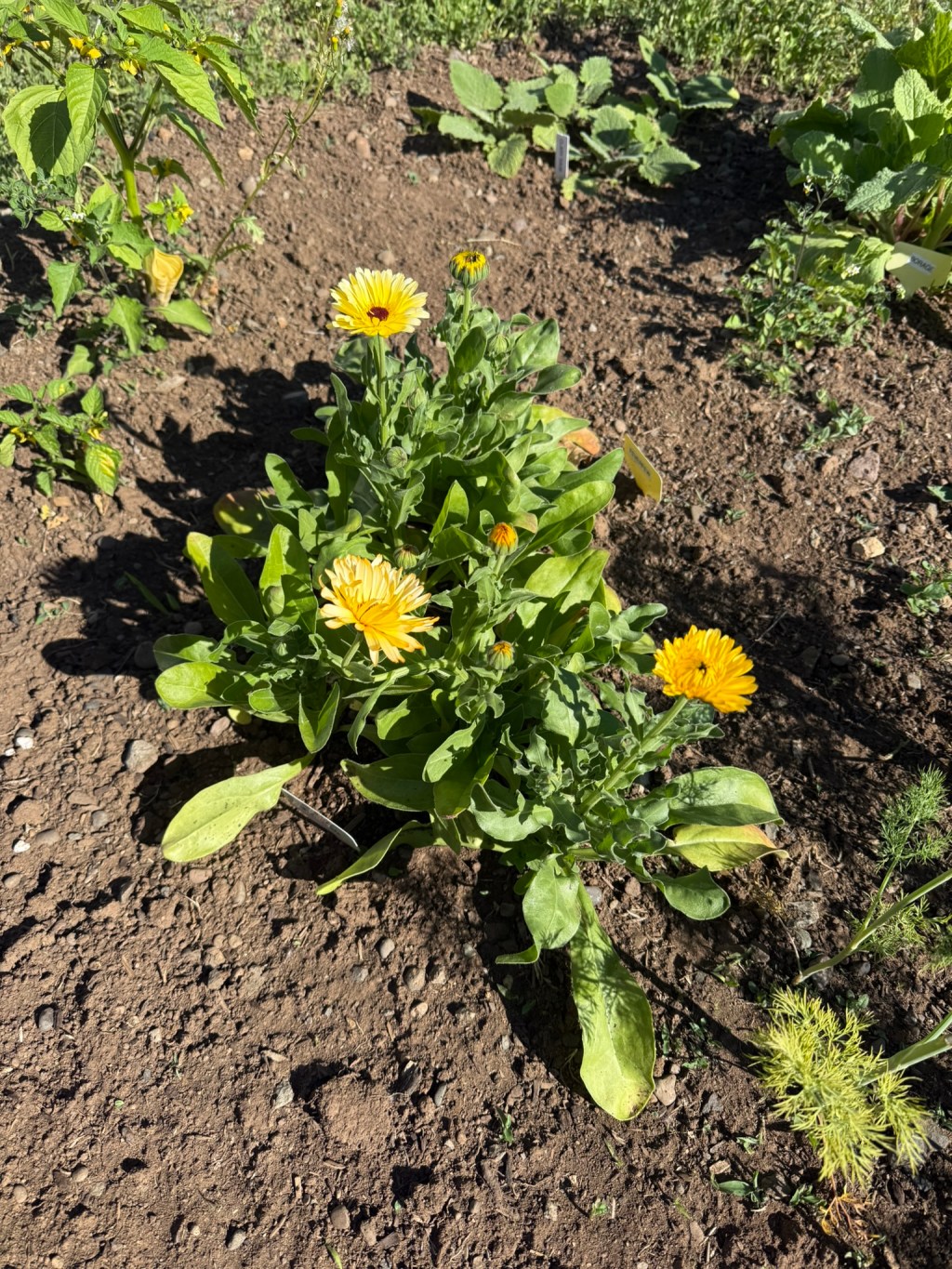
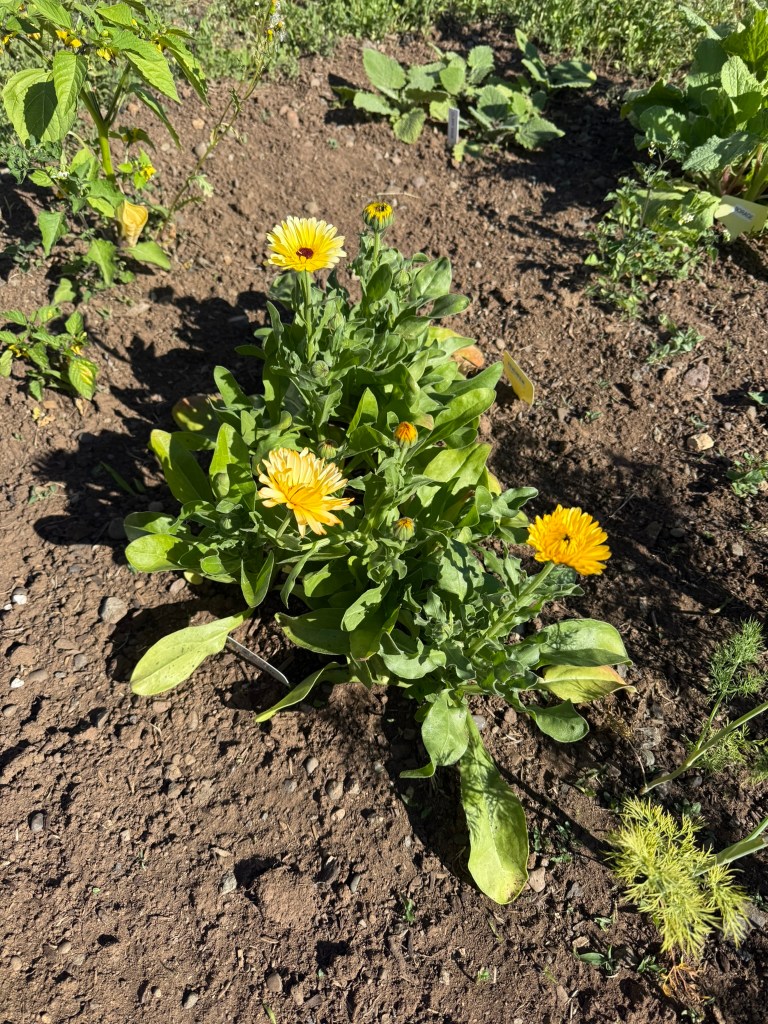
    One thing I’m especially excited about is that I was finally able to harvest calendula seeds. This is my second year growing them, and it’s the first time I’ve managed to collect seeds from my own plants. There’s something incredibly satisfying about knowing next year’s flowers can come from this year’s garden.

    The top of the bookshelf in my office is covered with plates and coffee filters full of drying herbs. As one batch finishes, I jar it up and replace it with another. There’s even a bundle of lavender hanging from a wall-mounted desk organizer.

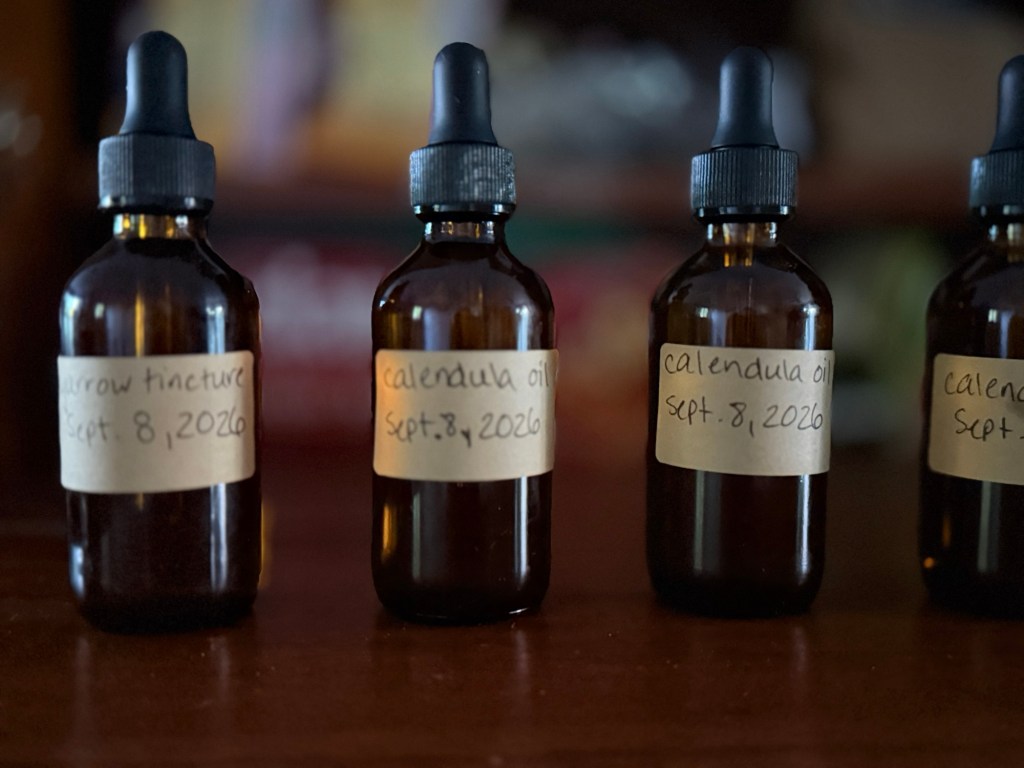
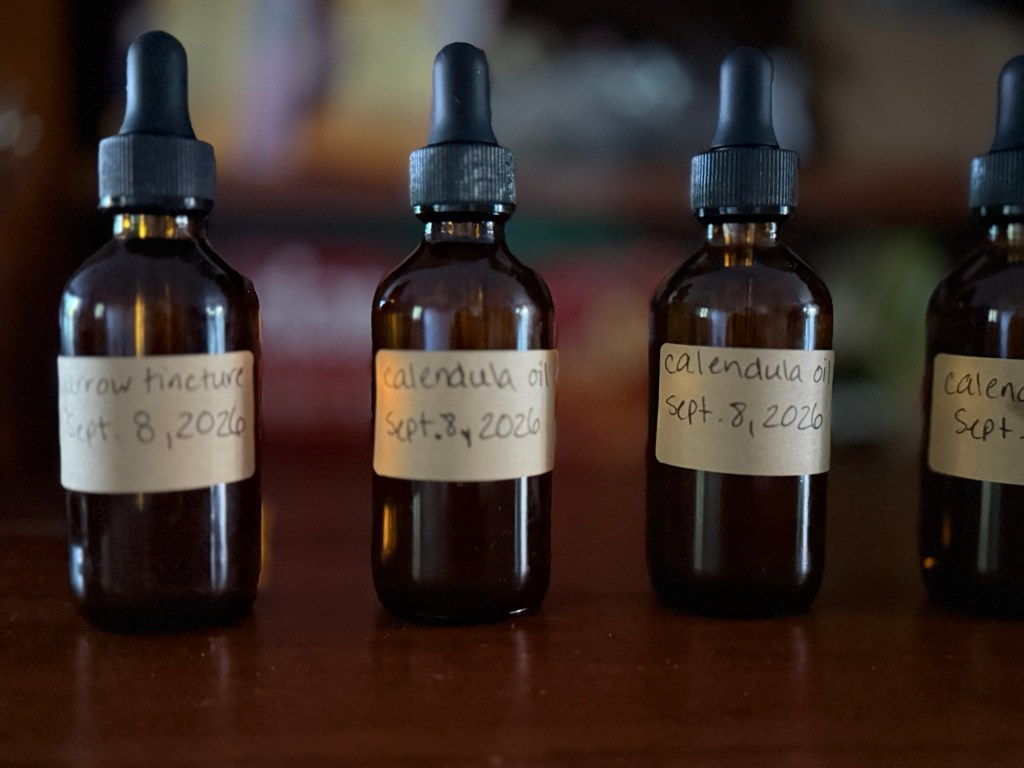
    Storage has become its own project. My herb cabinet is such a disaster that I don’t want to mix the new harvest with the old, so the culinary herbs have taken over a different cabinet. The calendula-infused oil lives there too, and once I bottle it, those bottles will need a home as well.

    I’m also pressing flowers. Since I don’t own a flower press, I’m improvising with paper, a storage container, and a very heavy book balanced on top. That setup currently lives on another bookshelf.

    Eventually, I’d like my Etsy shop to carry physical products, which means I’ll have to rethink the entire room. So far, my best idea is turning an old slatted bookshelf support into a drying rack for herb bundles. Beyond that, I’m still figuring it out.

    And don’t even get me started on next year’s seedlings. Apparently my cat decided this year’s starts made an excellent lunch, so I’ll need to find a much safer location.

    I’m certainly not complaining—having more herbs than I know where to put is a pretty good problem to have, especially while I wait for the tomatoes to ripen. But wow…everything needs a permanent home.

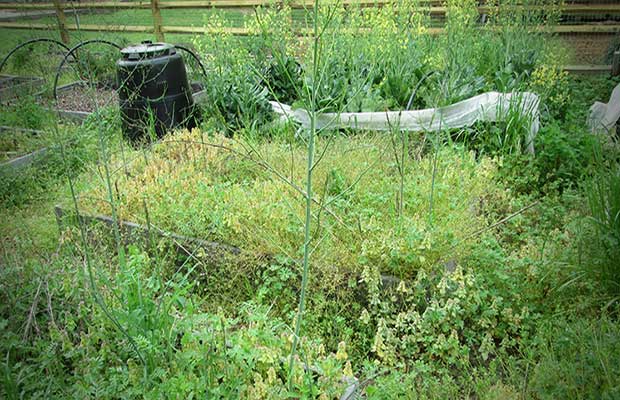
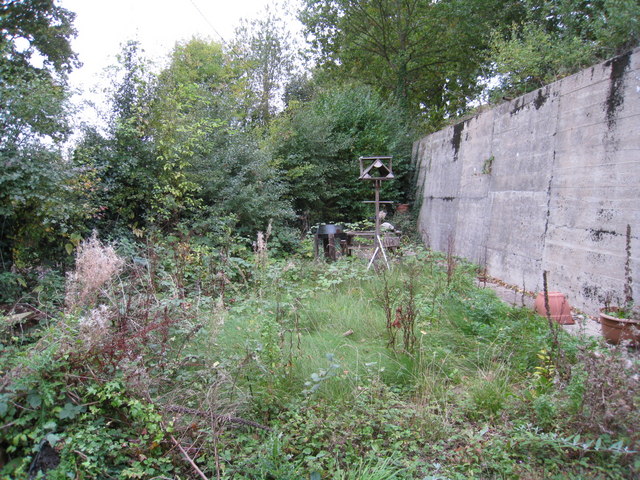
    overgrown garden
    How my bookshelf appears to me.
  • My Garden Compendium Has Already Changed

    My Garden Compendium Has Already Changed

    The garden compendium was originally meant to be a catch-all. It included medicinal herbs with drawings, uses, and recipes; planting, care, and harvest instructions for all of the herbs and vegetables I planted; a diagram of this year’s layout; a planting calendar; and a journal of what I did, what happened, and how I could fix my mistakes.

    That plan hasn’t changed. The notebook will continue into next year, or however long it takes me to fill 300 sheets.

    What has changed is everything else.

    Originally, I wrote herb recipes on the back of each herb page. It didn’t take long to realize that a tincture is a tincture, my handwriting was getting messier, and my fountain pen was ghosting through onto the drawing on the other side. So the recipes are getting their own section, but only for the preparations I’ve actually made with herbs from my own garden. The herb pages themselves will stay as a high-level overview with drawings and uses.

    Then there are the medicinal herbs.

    I have become fascinated by them and have been researching them like crazy. That rabbit hole is deep enough to fill 300 sheets all by itself, which wasn’t the original purpose of the compendium. I wanted this notebook to be something I could leave behind someday—a record of the garden that my descendants could flip through and (hopefully) ooh and ahhh over.

    So, naturally, I’m making another notebook.

    Medicinal herbs deserve one of their own. The subject is practically endless, and if you’ve been reading my blog for any length of time, you’ve probably noticed that I’m incapable of leaving well enough alone.

    I’ve also started color-coding the page edges. The notebook only came with two ribbon bookmarks, which isn’t nearly enough anymore. By highlighting the edges of each page based on the section—herbs, vegetables, diagrams, journal entries, and so on—I can find what I’m looking for without even opening the book.

    And finally…

    I did the one thing I swore I wasn’t going to do.

    I started an Excel workbook to track planting and care information for vegetables I haven’t even decided if I’m going to grow yet.

    Just in case.

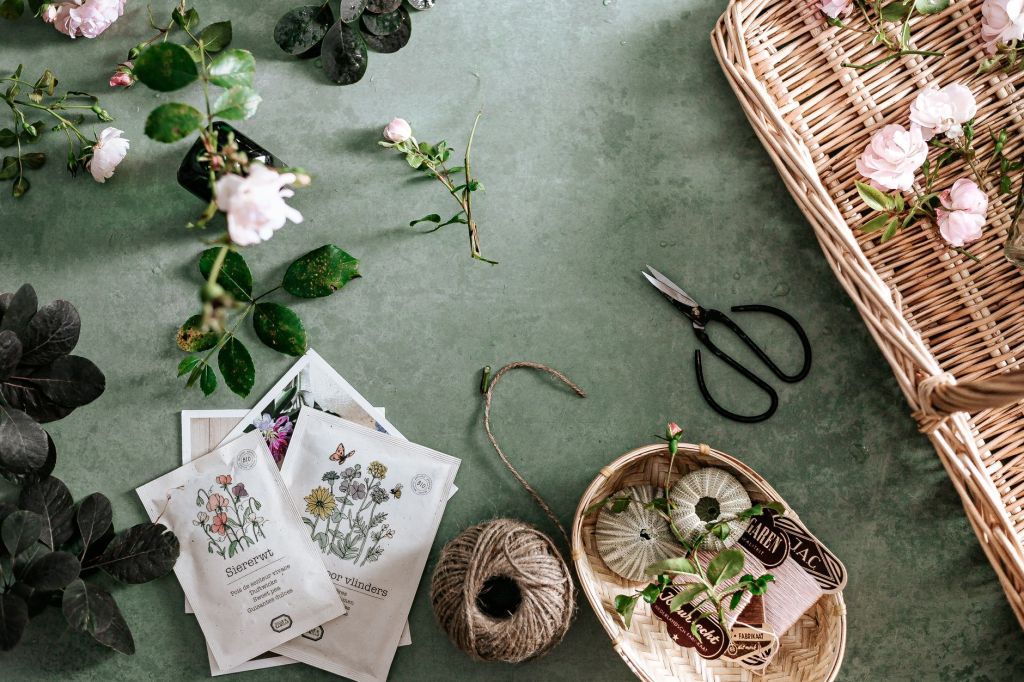
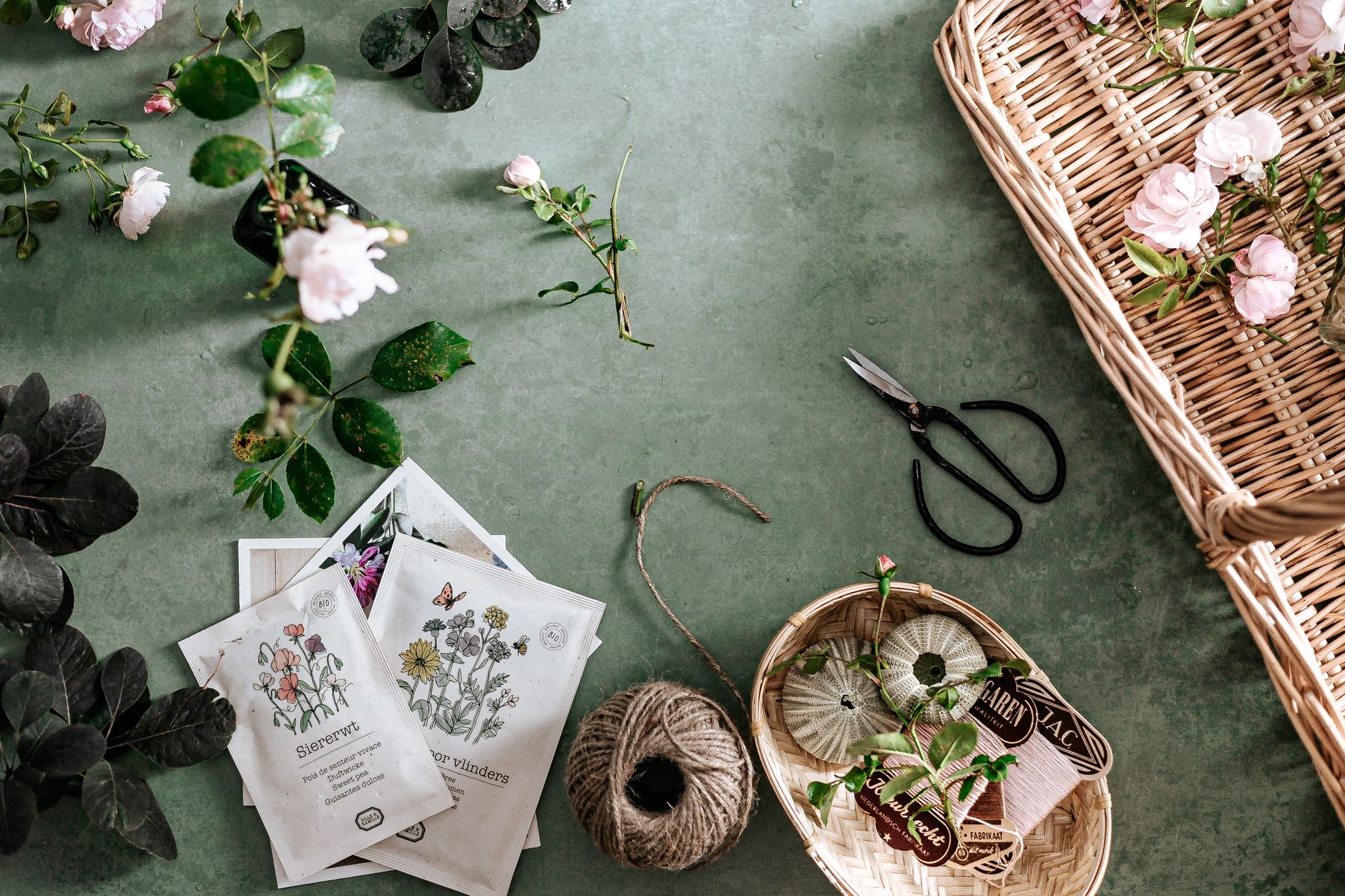
    table with seeds, twine, and scissors for gardening
    Photo by Micheile Henderson on Pexels.com
  • The Garden Doesn’t Care About My Plans

    The Garden Doesn’t Care About My Plans

    No matter how much research I did before planting my garden (and I’m certainly not finished), there were still plenty of surprises. Some things completely failed, while others did far better than I ever imagined.

    I organized my garden into separate beds based on companion planting, water needs, soil type, and a handful of other factors. It definitely created more weeding than I would have liked, but I needed to see what worked and what didn’t.

    In some beds, none of it seemed to matter. I planted starts at the right time, paired them with their companion plants, and they promptly died. I direct sowed whatever I could, and sometimes nothing came up at all. I even moved some of those stubborn plants into bins with fresh potting soil. A few are thriving, while others are either refusing to grow or have become an all-you-can-eat buffet for whatever animal keeps digging them up.

    Then there are the pleasant surprises.

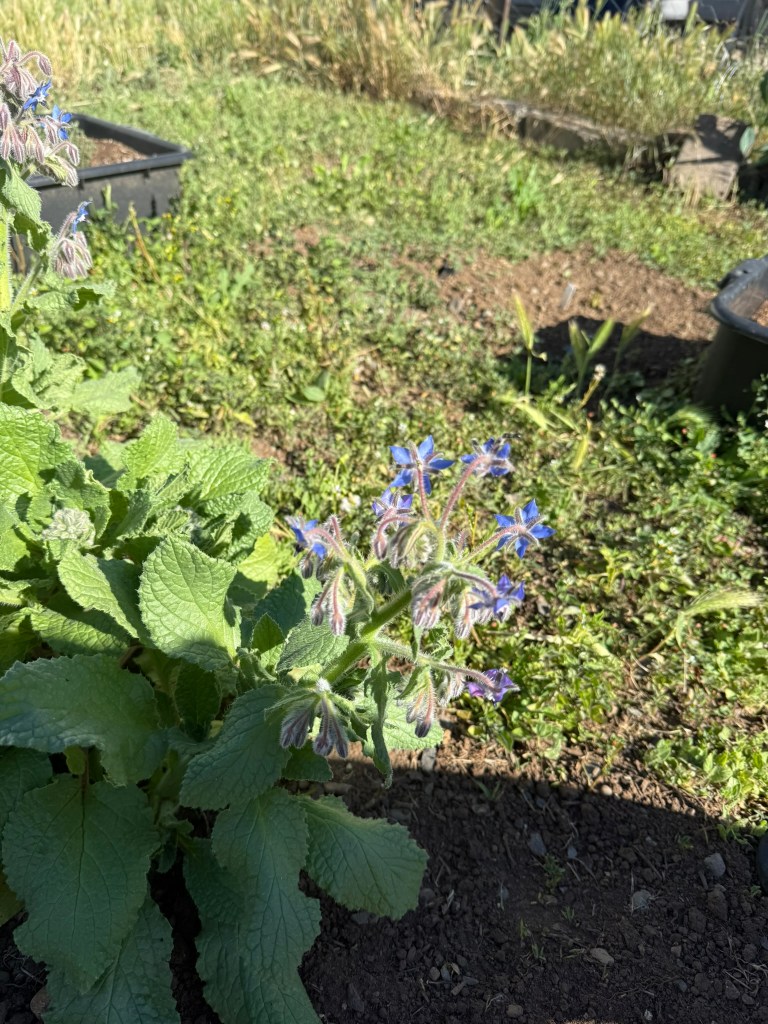
    The borage is so big that I’m honestly not sure what to do with all of it. I’ll keep tossing the flowers into salads, and the rest will probably go to seed. It’s one of the best bee attractors in the garden, though, so it’s earned its place. It also doesn’t hurt that it’s gorgeous.

    The calendula is massive. I’m drying flower heads for a future tincture, chamomile for tea, and I have dill coming out of my ears. The lettuce just keeps producing, and the carrots have done far better than I expected.

    All that being said, the garden has been a fruitful learning experience. (Fruitful. Get it?)

    As the season goes on, I’m no longer fighting the garden. I’m letting it show me what works, what doesn’t, and how I can make next year’s garden even better.

    And as the universe is my witness, I will not let the quince from hell win.

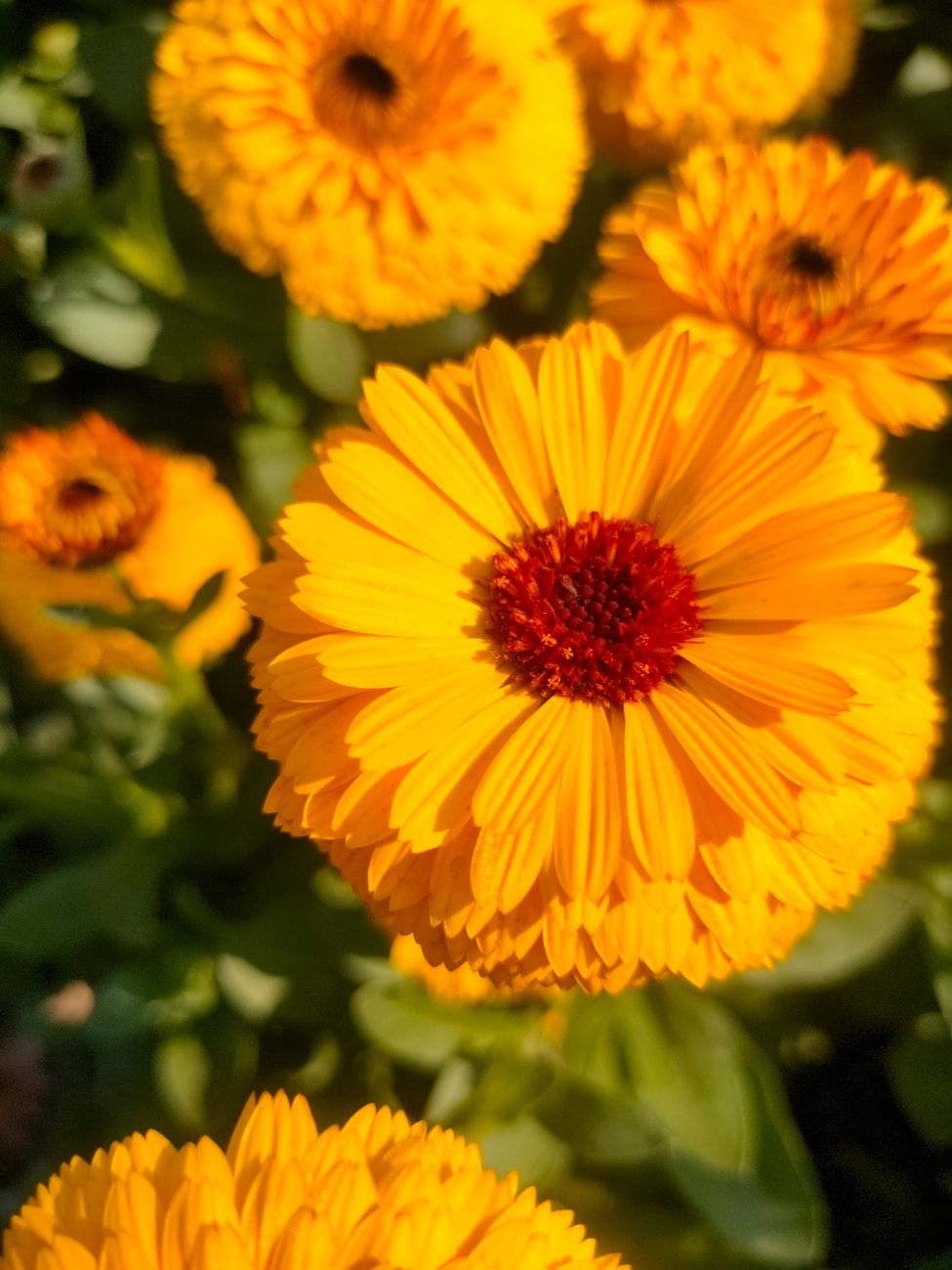
    stock photo of a calendula head
    Photo by Prashant Gangwar on Pexels.com
  • I Like Knowing Things

    I Like Knowing Things

    One of the things I’ve realized this year is that I don’t really collect hobbies.

    From the outside, it probably looks like I bounce from one thing to another. Gardening. Bookbinding. Norwegian. Citation templates. Herbs. Cocktails. Ancient history.

    They’re all over the place.

    To me, though, they’re all the same hobby.

    I like understanding how things work.

    The garden has made that clearer than anything else. Before this year, companion planting was something I’d read about. Soil composition was something I’d heard people discuss. Medicinal herbs were mostly names in books.

    Now I get to watch it happen.

    I’m seeing why one bed dries out faster than another. Why some plants seem happier next to certain neighbors. Which herbs attract pollinators and which ones don’t. Which vegetables struggle through a heat wave while others barely notice. It’s no longer just biology in a textbook. It’s biology happening in my backyard.

    That’s probably why my garden is organized the way it is. It isn’t the most efficient layout, and I’ve certainly spent more time weeding because of it. But separating plants by water needs, companion planting, shade, and other variables lets me see what works and what doesn’t. I’m treating the garden as one giant experiment.

    The same thing happens with my other projects.

    I didn’t start making notebooks because I thought notebooks were too expensive. I started because I wanted to understand how books are made. Every mistake teaches me something, and every notebook gets a little better than the last.

    I originally started learning Norwegian because I had a reason to. Somewhere along the way, though, the language became the reward. I enjoy the grammar, I enjoy listening to it, and I was ridiculously proud of myself for using it in Oslo, even if it was only a little.

    The citation bundles might be the clearest example of all. I don’t enjoy formatting bibliographies. I enjoy solving problems, and I kept thinking about how much easier graduate school would have been if I’d had something like this on my desk.

    Maybe that’s why all of these projects seem connected to me, even if they don’t to anyone else.

    I’m not really collecting hobbies.

    I’m collecting understanding.

    woman surrounded by books and studying on her bed
    Photo by MART PRODUCTION on Pexels.com
  • Finally Some Small Bounty

    Finally Some Small Bounty

    After weeks of weeding and sending good thoughts into the universe, I finally have some legitimate progress in my garden.

    My calendula and borage are starting to bloom. It’s a small thing, but it is so nice to see something that isn’t a weed.

    blooming calendula
    Calendula!

    The borage is starting to bloom, too.

    borage blooms
    The borage is starting to bloom!

    Speaking of weeds…

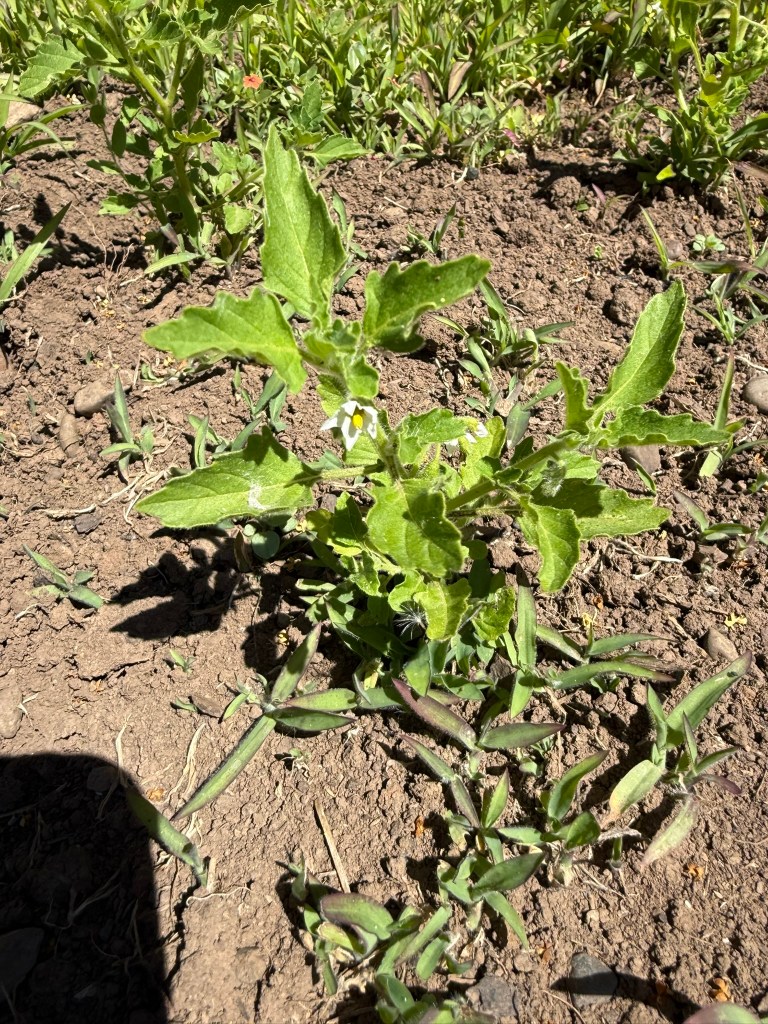
    I took a picture of something growing all over the garden, and Apple told me it was black nightshade. I wasn’t convinced, though, and looked up potato plants instead. Last year, I’m fairly certain I pulled up tiny potatoes when I cleared the beds out.

    volunteer potato plant
    Unwanted potato.

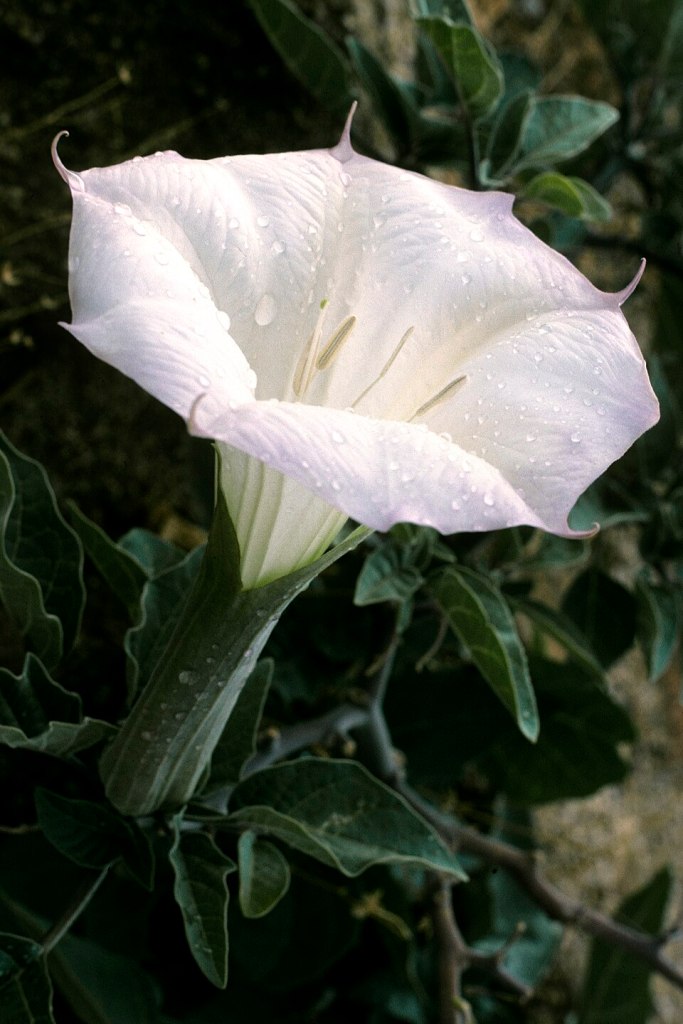
    As it turns out, potatoes are part of the nightshade family, so Apple was mostly correct. I also found some datura, which is a very toxic member of the same family. Even though the flowers are pretty, it is not welcome in my garden, just like the potatoes.

    datura flower
    Deceptively pretty datura.

    My vegetable beds are finally clear of weeds, so at this point I just need weekly maintenance. Right now, I’m working on weeding everything else so nothing can steal nutrients from the things I actually want to eat, and definitely yanking out those darned nightshades.

    Except tomatoes.

    Tomatoes are yummy.

    For the record, potato plants stink for some reason.

  • More Garden Mishaps

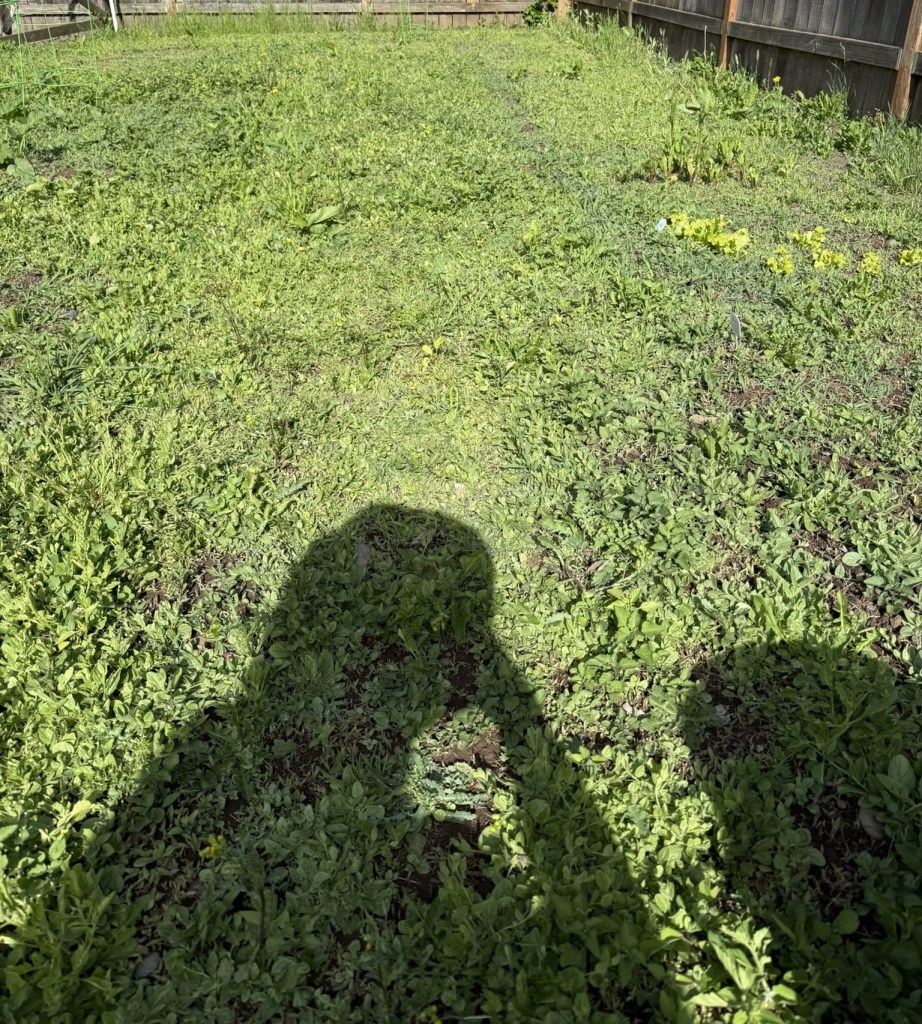
    I had to leave town for a couple of days, and when I got home, I was greeted by an overgrown nightmare. Okay, maybe “nightmare” is too strong, but the green carpet across the whole area made it incredibly difficult to find the things I actually planted.

    Over the past three days, I’ve spent eight or nine hours trying to catch up. I’m finally starting to see a modicum of progress, but overall, it’s been pretty discouraging.

    I lost a whole row of herbs because they were planted too close to a quince bush that I cannot get rid of no matter how hard I try. I lost several more herbs for unknown reasons, too. One of them grew perfectly fine last year, but not this year.

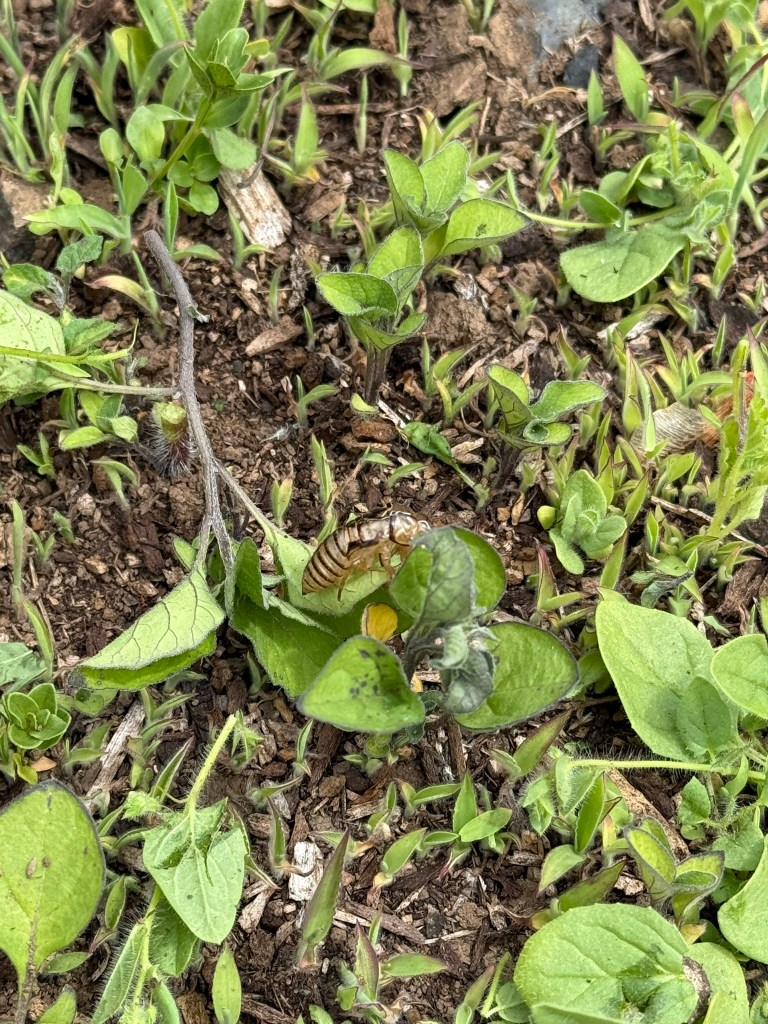
    I also found an insect that immediately triggered the “OMG what the heck is that???” response.

    The bunching onions and chives never sprouted, either.

    After about 90 minutes of work, I finally started to feel like I could at least see the garden again.

    Two hours later, I was still pulling weeds and trying to identify what was actually growing versus what had invited itself into the beds.

    At around the five-hour mark, things finally started looking a little more manageable, and I could focus less on panic-weeding and more on checking on the vegetables that were actually doing well.

    Okay, now for the better news: my tomato plants are doing well. I have a lot of carrots, lettuce, arugula, and an absurd amount of dill and cilantro.

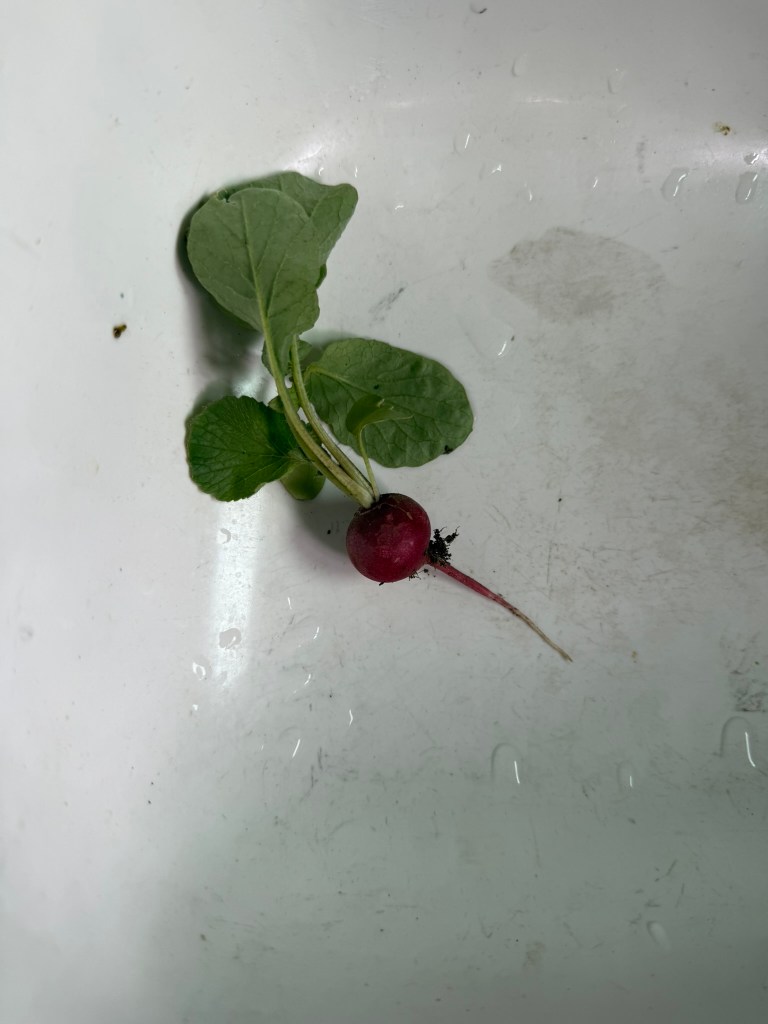
    After all of that work, I finally harvested my very first thing of the season: one single radish. 😀

    I know that in a week or two I’ll probably feel much better about all of this, but right now I mostly feel discouraged and overwhelmed. I guess the “silver lining” is that I also just lost my job, so now I get to spend a lot more time out there…

  • Some garden success! And a bit of…reevaluation…

    Some garden success! And a bit of…reevaluation…

    I spent five hours on 5/9/2026 weeding and somehow still feel like I barely made a dent. Still, I was able to confirm growth from several more plants, even if others continue to elude me.

    Vegetables I can identify so far: six carrots (not too concerning, since carrots can be reseeded every couple of weeks through July), sixteen potential heads of lettuce, six or seven heads of Swiss chard, four or five heads of arugula, and two corn stalks. I planted two rows of corn earlier than usual because the soil temperature was finally warm enough…or so I thought.

    Herbs I can identify: lots of dill, oregano, borage, lovage, lemon balm, and marsh mallow. Oh, and of course the mint I planted in the strawberry pot — the same mint I apparently dig up every single time I weed. -_-

    About a week ago, I transferred my Japanese Trifele Black tomatoes into larger pots, and by today they already looked strong enough to plant outside. I planted five of those, along with five Brandywine tomatoes that skipped the intermediate pot stage entirely. I decided not to transplant the Cuore di Bue yet because they still don’t quite have true leaves. Those will probably be ready in another couple of weeks.

    Finally, I was also able to transplant the mini bell peppers and the cayenne peppers. Huzzah!

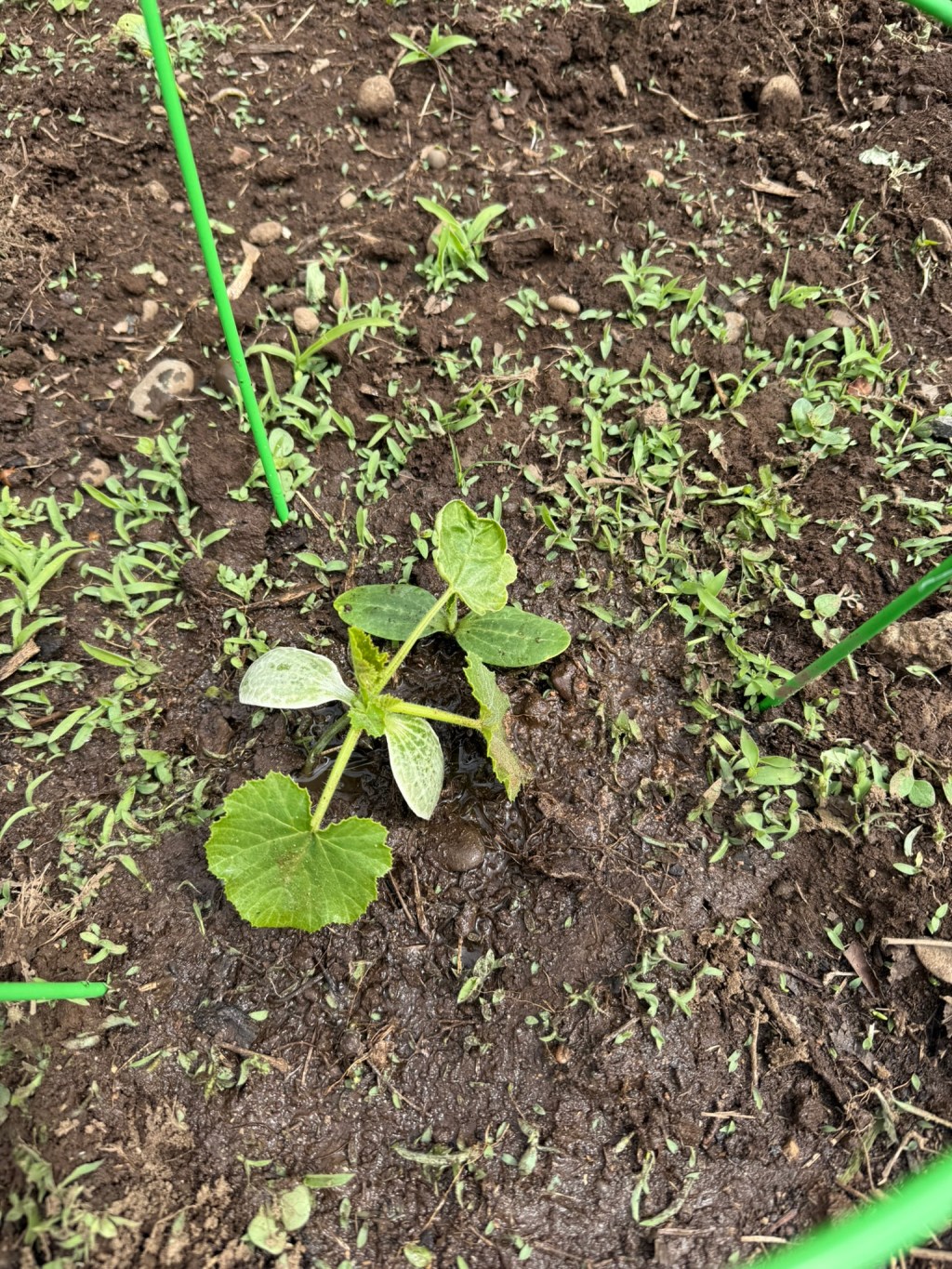
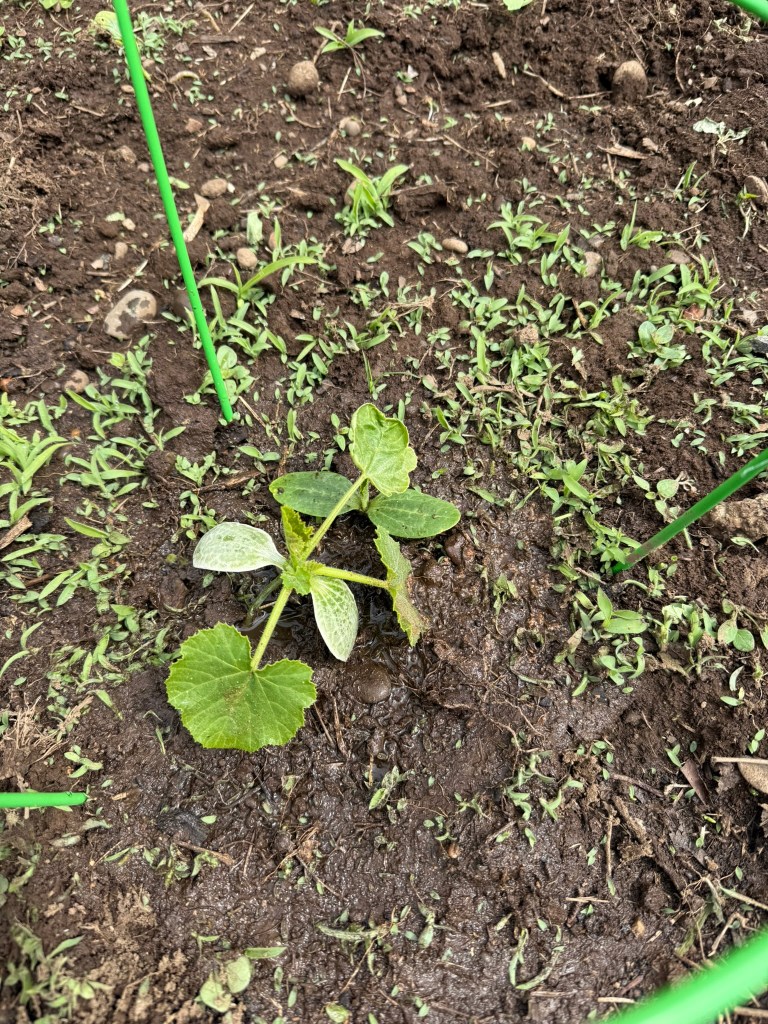
    Not everything is going smoothly, though. My zucchini and cucumber starts — which I bought to replace the pickling cucumbers that died — are already struggling with powdery mildew. Since I don’t have a drip irrigation system, these plants need extra attention to keep moisture off the leaves.

    One common treatment is mixing 1 tablespoon of baking soda with 1 gallon of water. I applied it with a watering can, although apparently spraying it directly onto the leaves would have worked better.

    I also used a vegan disease and bug repellent on the greens, tomatoes, cucumbers, and zucchini. The Swiss chard already has a few holes in the leaves, and I know from previous years that stink bugs absolutely love my squash plants. Turning over a squash leaf and discovering hundreds of stink bugs underneath is not an experience I care to repeat. No thanks.

    zucchini with a bit of powdery mildew
    One leaf on the right, one on the left with powdery mildew.
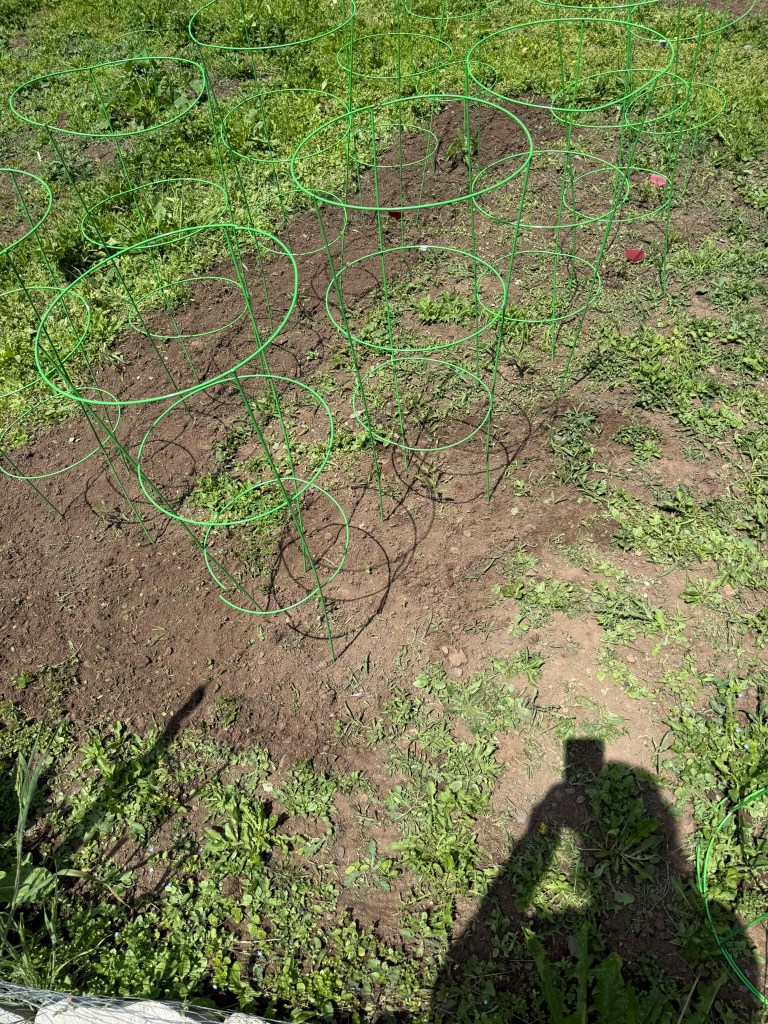
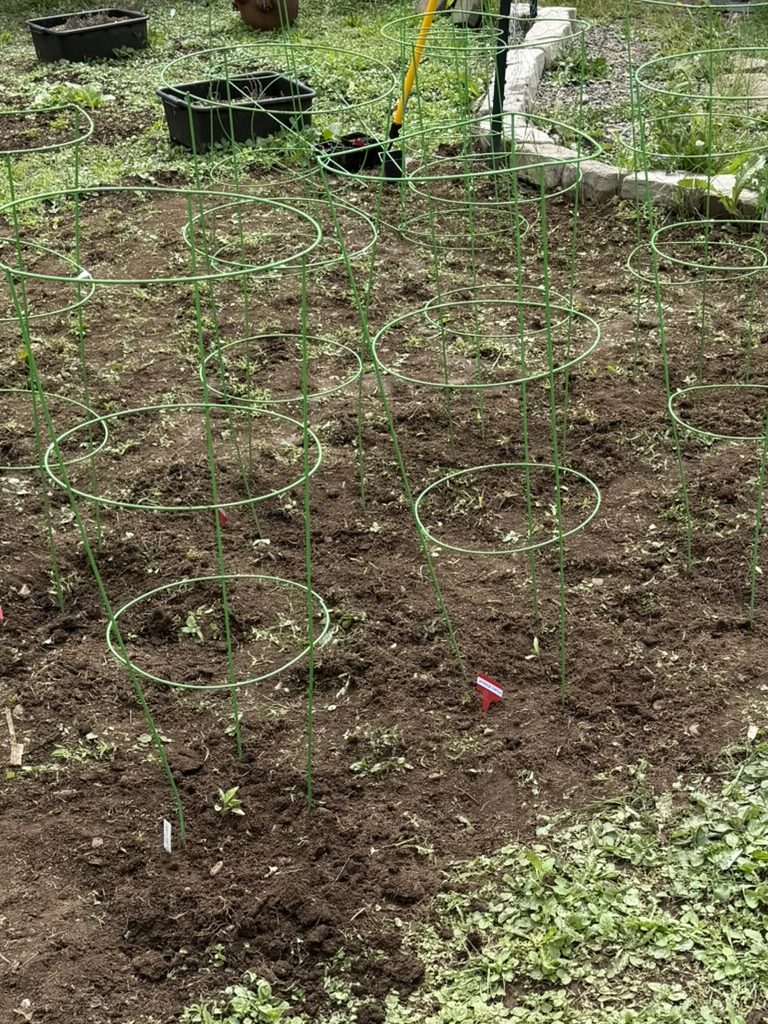
    tomato cages up with starts inside
    Total of 10 tomato plants in.

  • Latest Weekend of Begging the Earth to Provide Me Its Bounty

    Latest Weekend of Begging the Earth to Provide Me Its Bounty

    I am at a point where I can verify that food is actually growing.

    There are still a lot of seedlings, though, and many of them look alike, so I have to be careful about what I pull out when weeding.

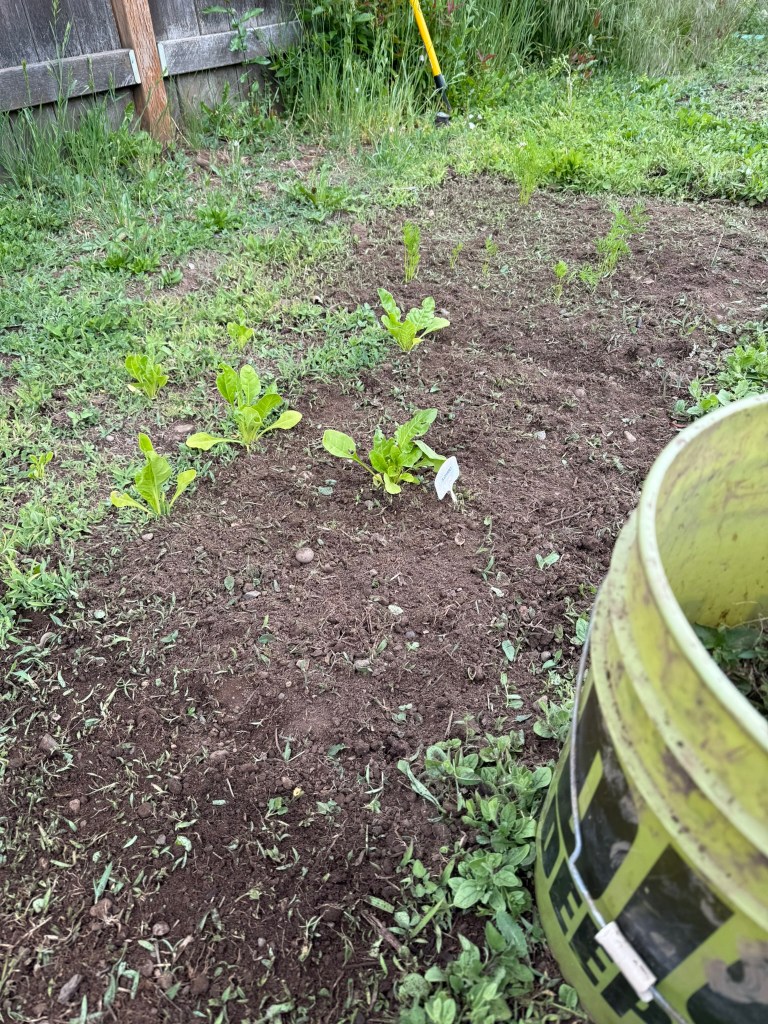
    My cucumber starts died, so I bought four new starts and planted those. The pole beans haven’t germinated yet, so I reseeded in the hopes of getting more than two beans this year.

    cucumber starts to replace the ones that didn't take
    The two middle cages are the new cucumber starts.

    I transferred my tomatillo starts to bigger containers. They were really leggy in the smaller ones and pretty floppy, so I’m not convinced these will thrive either. RIP tomatillos.

    Pepper transfers went well. I expect to plant those next week. After that, I’ll transfer my tomato starts to larger containers and start hardening them off outside.

    So far, I’ve been able to identify: carrots, lettuce, arugula, Swiss chard, chervil, dill, broccoli, Brussels sprouts, cilantro, clary sage, and lemon balm.

    chervil
    Voila! Chervil.

    To delineate the beds, I used a hoe to make sections. Then I realized that hoeing is actually the best way to get rid of weeds—if you don’t have to worry about destroying your hard-earned seedlings.

    The problem is that I can’t really hoe anything but the beds, because then I won’t know where the beds start and end anymore.

    One of the things I’m fighting is a clover cover crop (which I definitely didn’t plant), but I actually like it in between the beds. I think it looks cool. So I decided to just take out the bigger weeds in between the beds and let the clover stay.

  • My Garden System is Getting More Sophisticated (What’s Working)

    My Garden System is Getting More Sophisticated (What’s Working)

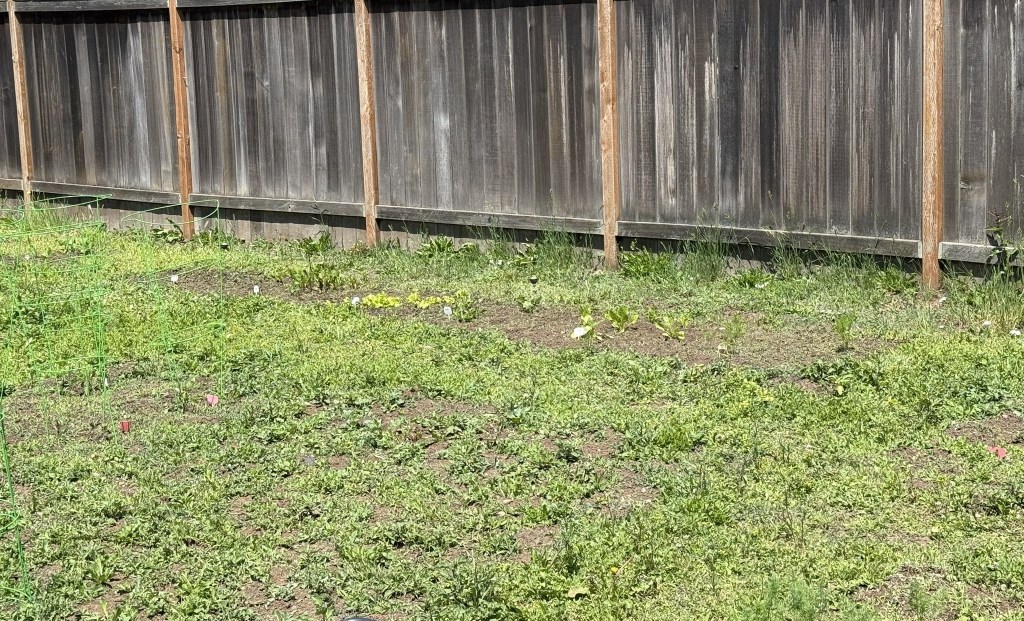
    in progress garden with no growth yet

    The garden overview photo was taken as I began this three-hour tour.

    On the left side is a cover crop of clover that I definitely did not plant. That is supposed to be a row of greens, but unfortunately nothing has grown enough for me to distinguish between actual food and the three-leaf version of a leprechaun’s dream.

    layout of garden with numbered beds and location of plants

    Why Everything Is Numbered

    I have a tendency not to plan things out, which becomes problematic when trying to grow food and medicinal herbs.

    So everything is divided into numbered beds. What you don’t see is why they were placed where they were.

    The bottom half is all herbs:

    • #1 loves water
    • #2 likes a moderate amount
    • #3 prefers it drier, grows taller, and would otherwise shade the others

    The rest is organized by nutrition, water needs, and companion planting.

    planting dates for 2026

    My Planting Spreadsheet

    This spreadsheet tracks:

    • frost dates
    • indoor starts
    • transfer dates
    • direct sow timing

    I had to start marking completed tasks with little stars because apparently I cannot be trusted to remember what I already did.

    Eventually I’ll rewrite it in fountain pen like the rest of the commonplace book, but growing actual food takes priority.

    journal with drawings of medicinal herbs and their uses

    The Commonplace Book

    This idea sprouted (yes, I did that intentionally) from a terrible mistake last year: I didn’t know what any of the herbs looked like beyond the seed packet photos.

    So I started drawing the herbs and writing what they’re useful for.

    I’m doing something similar with vegetables, but without pictures. If I can’t recognize a tomato by now, I clearly have other issues that need immediate attention.

    Also, I’m not sure why I decided to write my capital A’s like that. I appear to be passing notes in 7th grade English.

    3 types of tomato starts

    Starts Actually Worked This Year

    Last year my starts failed because I made too many mistakes to recover from and ended up buying starts.

    This year they germinated.

    I’d like that entered into the record.

    tomato cages repurposed for zucchini and cucumbers

    Improved Trellises

    I still haven’t built proper trellises because I refused to ruin my cozy “don’t leave the house” weekend by going to the home improvement store.

    Instead:

    • I flipped two tomato cages upside down and secured them to fence posts for cucumbers
    • I used another tomato cage for pole beans, buried to the first ring

    Elegant? No.

    Functional? We’ll find out.

    similar picture with the tomato cages but includes my cute dog

    Bonus Content

    This photo is similar to the previous one, but I believe everyone deserves to see my good boy.